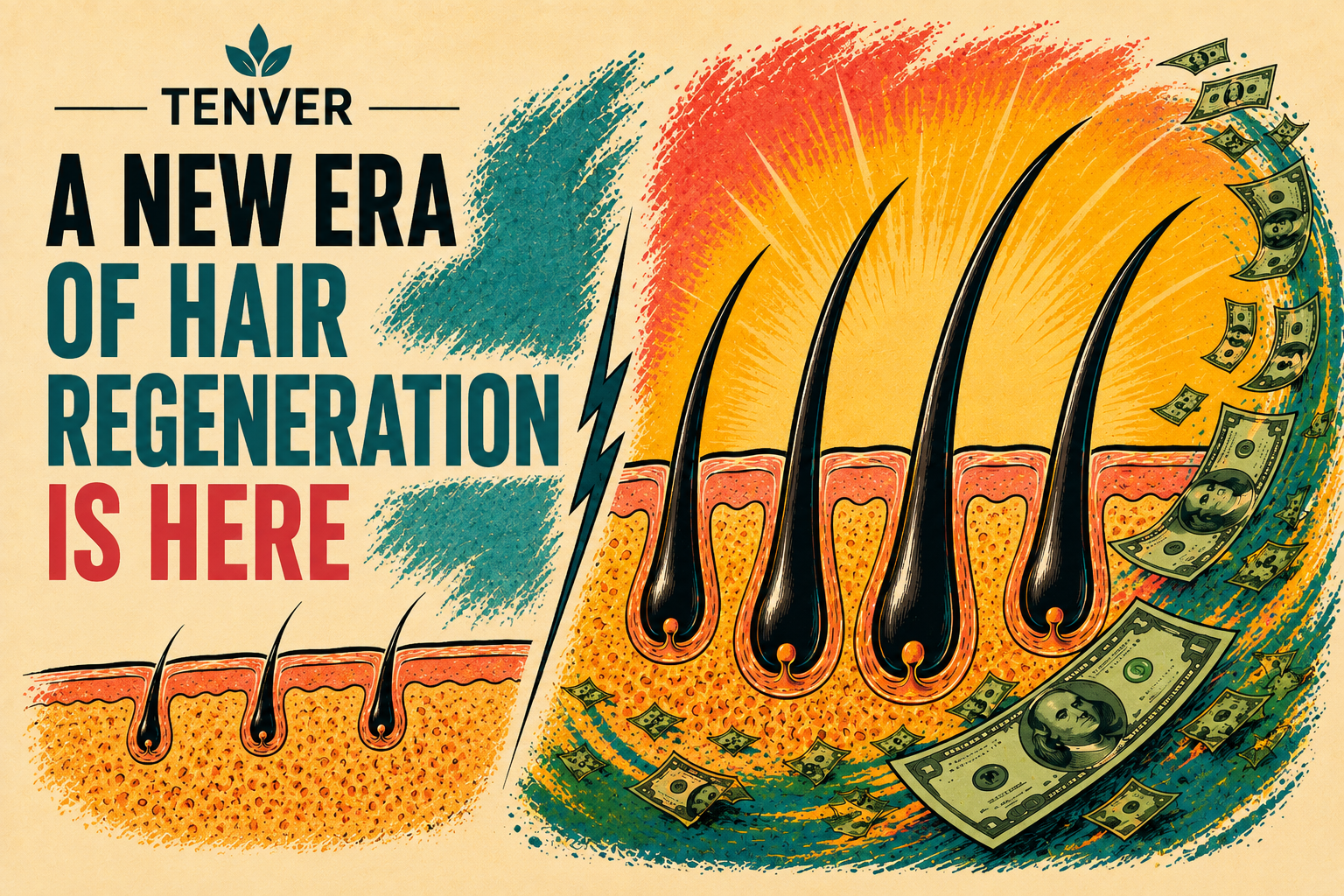
Inside the Global Race — and the $120 Million Bet — to Wake Sleeping Hair Follicles
For generations, the logic of baldness seemed brutally simple: once the hair was gone, it was gone. You could slow the loss, disguise it, or transplant follicles from one part of the scalp to another. But growing substantial new hair from areas that had gone quiet remained one of dermatology’s most stubborn problems.
Now scientists are asking a very different question: What if some of those follicles are not dead at all? What if they are simply asleep?
That question has moved far beyond speculation. A line of research that began in laboratories at UCLA has produced an experimental drug called PP405, which has now completed a randomized Phase 2a human trial. Researchers elsewhere are simultaneously pursuing stem cells, extracellular vesicles and other regenerative approaches to hair loss.
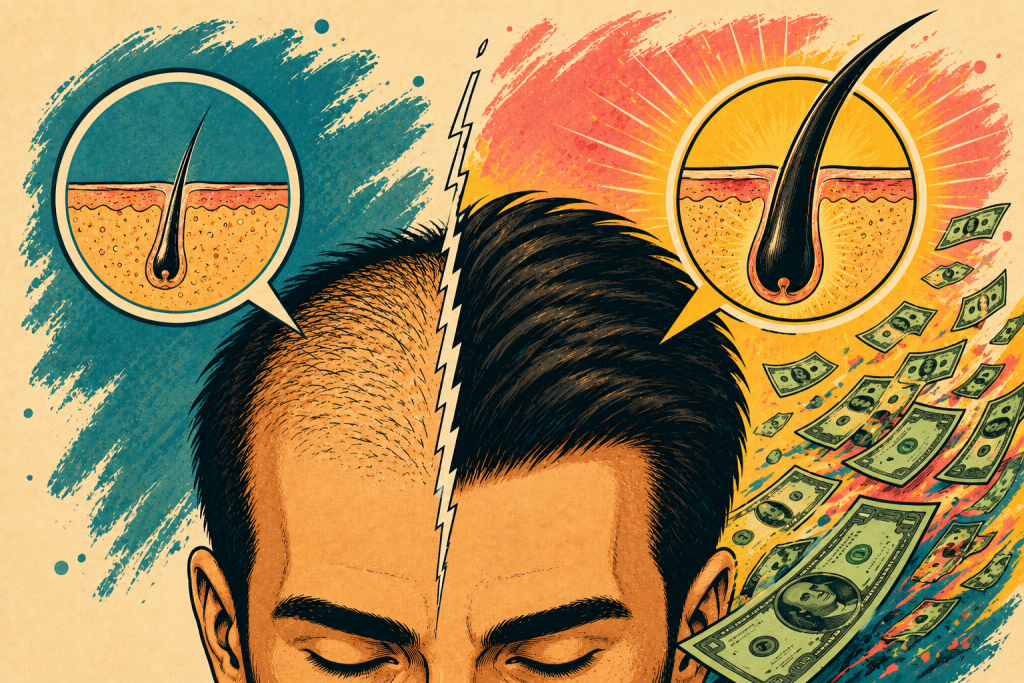
And something else is beginning to move: money. In October 2025, Pelage Pharmaceuticals — the UCLA spinout developing PP405 — raised $120 million in Series B financing co-led by ARCH Venture Partners and GV, formerly Google Ventures. Investment is not scientific proof; venture capital has backed plenty of drugs that eventually failed. But when sophisticated biotech investors put $120 million behind a treatment after seeing early human data, it becomes another signal worth watching. Science is sending one signal. Money is sending another.
The Follicle May Not Be Dead
The story begins with an unusual observation about stem cells. Hair follicle stem cells are long-lived cells capable of generating hair repeatedly throughout life. Much of the time, however, these cells are quiet — a state scientists call quiescence. When a new hair cycle begins, they awaken and become active.
Researchers at UCLA began investigating what controls that switch. In a landmark 2017 study published in Nature Cell Biology, scientists led by William Lowry and Heather Christofk found that hair follicle stem cells use metabolism differently from many neighboring skin cells. In particular, the cells produced unusually high amounts of lactate.
When researchers genetically blocked lactate production in mice, follicle stem cells failed to activate normally. When they altered metabolism in the opposite direction — increasing lactate production by interfering with the mitochondrial pyruvate carrier, or MPC — the stem cells activated more rapidly and the hair cycle accelerated.
The implication was striking: the hair follicle might contain something resembling a metabolic switch. Instead of replacing a follicle, perhaps medicine could learn how to turn that switch back on.
From a UCLA Laboratory to PP405
UCLA eventually licensed technology arising from the research to Pelage Pharmaceuticals, founded by Lowry, Christofk and medicinal chemist Michael Jung. PP405 emerged from that scientific lineage.
PP405 is a topical small molecule designed to inhibit the mitochondrial pyruvate carrier, altering cellular metabolism in a way intended to reactivate dormant hair follicle stem cells. That makes it fundamentally different from the best-known existing approaches to pattern hair loss.
Finasteride acts primarily through the androgen pathway by reducing the conversion of testosterone to DHT. Minoxidil promotes hair growth through a different mechanism and can prolong the growth phase of existing follicles. Hair transplantation physically moves viable follicles from one part of the scalp to another.
PP405 is attempting something else: wake up follicles that are already there.
Then Came the Human Trial
This is where the story becomes much more interesting. PP405 has completed a randomized, multicenter, double-blind, vehicle-controlled Phase 2a trial in adults with androgenetic alopecia — the medical term for common pattern hair loss.
The official ClinicalTrials.gov record lists 78 participants. PP405 was administered as a 0.05% topical gel; the randomized, blinded portion involved 28 days of treatment, followed by an open-label extension for eligible participants. The study is now marked Completed.
That distinction matters. PP405 is no longer simply a compound associated with intriguing laboratory biology. It has been put on human scalps under controlled clinical-trial conditions.
The 31% Signal
The trial was designed primarily to evaluate safety and pharmacokinetics, not to establish definitive efficacy.
Pelage subsequently reported a result that caught the attention of the hair-loss research community. Among men with a higher degree of hair loss, the company reported that 31% of those receiving PP405 achieved more than a 20% increase in hair density by week eight.
In the placebo group, the reported figure was 0%.
There is another intriguing detail. Participants received randomized treatment for only four weeks. The week-eight measurement therefore came approximately four weeks after treatment had stopped.
But those numbers require an important qualification. The 31% figure does not mean that 31% of all 78 trial participants grew 20% more hair. It comes from a subgroup of men with more advanced hair loss. And the figure comes from Pelage’s reported topline results rather than a complete peer-reviewed publication of the Phase 2a efficacy dataset.
That distinction is essential. The signal is strong enough to deserve attention. It is not yet strong enough to declare victory.
But Was It Actually New Hair?
This may ultimately be the more important question. Making existing miniature hairs somewhat thicker would be useful, but it would not represent the biological revolution PP405 is supposed to deliver.
The real test is whether previously inactive follicular units can begin producing mature hair again. At the 2026 American Academy of Dermatology Annual Meeting, PP405 data were presented by Dr. Arash Mostaghimi, Vice Chair of Clinical Trials and Innovation at Brigham and Women’s Hospital and an associate professor at Harvard Medical School. Pelage reported new terminal hair growth from previously dormant follicular units.
“Terminal hair” matters. It refers to the thicker, mature hair that gives visible scalp coverage rather than the fine, almost invisible vellus hairs commonly associated with miniaturization.
If larger independent trials reproduce that finding, it would provide important evidence that PP405 is doing more than protecting hair that is already growing. It may be reactivating follicular units that had stopped producing visible hair.
That is precisely the hypothesis the original UCLA science predicted.
Follow the Money
Then came the $120 million. The October 2025 Series B financing was co-led by ARCH Venture Partners and GV, with Main Street Advisors, Visionary Ventures and YK Bioventures also participating.
The investors did more than write checks. GV’s Cathy Friedman became chair of Pelage’s board, while ARCH venture partner Richard Heyman joined the board. Pelage said the financing would help advance PP405 into larger late-stage development.
Money does not validate a drug. Phase 3 trials exist precisely because promising Phase 2 drugs sometimes fail when tested in larger and more diverse populations.
But capital can reveal where sophisticated investors believe the next major scientific opportunity may lie. In this case, they are betting not simply on another hair-growth lotion, but on a larger concept: regenerative treatment for hair loss.
This Is Bigger Than PP405
PP405 is not developing in isolation. Scientists around the world are exploring regenerative approaches involving stem cells, extracellular vesicles, conditioned media, stromal vascular fraction and other techniques intended to influence the biological machinery of the follicle itself.
A 2026 systematic review in Stem Cell Research & Therapy examined 20 clinical studies involving 724 patients receiving various regenerative treatments for androgenetic alopecia. Across several categories, researchers found signals of increased hair density or thickness.
But the review also exposed the weakness of the field: small trials, inconsistent treatment protocols, different measurement methods and insufficient long-term data. That combination — promising signals but incomplete evidence — describes much of regenerative hair medicine today.
Still, the direction of travel is notable. Scientists are increasingly asking a question fundamentally different from the one that dominated hair-loss treatment for decades: instead of merely slowing hair loss, can the biological machinery responsible for producing hair be repaired or reactivated?
The answer is not yet known. But increasingly, the question is being tested in humans rather than only in laboratories.
Could This Replace a Hair Transplant?
For someone considering a hair transplant, the obvious question is unavoidable: Should I wait?
For now, the scientific answer is: not yet.
Hair transplantation has decades of clinical experience behind it. Surgeons relocate viable follicles, usually from areas resistant to androgenetic hair loss, into thinning or bald regions. PP405, by contrast, has not yet demonstrated in a large Phase 3 trial that it can restore cosmetically meaningful hair across the broad population of men and women with pattern hair loss. It is investigational, not FDA approved, and not commercially available.
There is also a biological limit worth remembering. A follicle that is dormant or miniaturized is not necessarily the same thing as a follicle that has been irreversibly destroyed. A drug cannot wake a follicle that no longer exists.
But if researchers can reliably reactivate large numbers of dormant follicles, the calculation surrounding transplantation could eventually change.
Hair transplantation moves follicles. Regenerative medicine is trying to wake them up.
COULD YOU BE IN THE NEXT TRIAL?
Phase 2a: COMPLETED — enrollment closed
Participants: 78 adults with androgenetic alopecia
Treatment studied: PP405 0.05% topical gel
Next step: Further late-stage clinical development is planned.
Interested in participating? Pelage provides a way for people to register their interest in future PP405 studies. Potential participants should confirm official trial locations, recruiting status and eligibility requirements before applying.
Check PP405 future-study information at Pelage Pharmaceuticals
Check the official PP405 study record at ClinicalTrials.gov
Tenver is not affiliated with Pelage Pharmaceuticals and does not recruit participants or determine eligibility for clinical trials. Participation and eligibility are determined by the study sponsor and investigators.
What Would Make This a Breakthrough?
Several milestones now matter. First, the Phase 2 findings need broader scientific scrutiny and confirmation. Second, substantially larger late-stage trials must reproduce the efficacy signal while establishing longer-term safety. Third, researchers need to determine how durable newly generated hair remains after treatment stops.
Perhaps most important, investigators must determine who responds. Why do some participants apparently respond strongly while others do not? Does age matter? How long a follicle has been dormant? Does the degree of miniaturization matter? What about sex, genetics or the stage of hair loss?
Those questions may ultimately determine whether PP405 becomes a broadly useful treatment or a therapy effective only for a subset of patients.
TENVER VIEWS
For decades, the hair-loss industry has largely offered three choices: slow the loss, camouflage it, or move hair from somewhere else.
Regenerative medicine proposes a fourth possibility: repair the biological system that stopped working.
PP405 may succeed. It may disappoint in larger trials. Another therapy being developed somewhere else may eventually prove superior. Science does not yet allow us to know which outcome will prevail.
But something important has already changed. The question researchers are asking is no longer simply, “How do we prevent more hair from disappearing?” Increasingly, it is: “Can we make a silent follicle work again?”
Ten years ago, that question belonged largely to the laboratory. Today it is being tested on human scalps, presented at major dermatology meetings and backed by nine figures of venture capital. Since this article was first published, PP405 has continued to move forward — we follow the latest developments here.
That does not mean the cure for baldness has arrived.
It means the race has become real.
Sources & Further Reading
Flores A, Schell J, Krall AS, et al. “Lactate dehydrogenase activity drives hair follicle stem cell activation.” Nature Cell Biology (2017). This is the foundational UCLA work on lactate metabolism and hair follicle stem-cell activation.
Nature Cell Biology — Original UCLA Research
ClinicalTrials.gov — NCT06393452. Official registry record for the randomized PP405 Phase 2a study in adults with androgenetic alopecia.
ClinicalTrials.gov — PP405 Phase 2a
Pelage Pharmaceuticals. Company reports and program information concerning PP405, including clinical development and future-study information. Company-reported efficacy data should be distinguished from independently peer-reviewed clinical results.
Pelage Pharmaceuticals — PP405 Program
Stem Cell Research & Therapy. Systematic review of regenerative approaches being investigated for androgenetic alopecia.
PP405 is investigational and is not FDA approved or commercially available. This article is for informational purposes only and does not constitute medical advice or a recommendation to participate in a clinical trial.
Leave a Reply