English | Español | 한국어 | 中文 | 日本語 | Français | Deutsch | Italiano | हिन्दी
At fourteen, he left the forge. At twenty-six, he came back. And an old family tradition began moving forward in an unexpected way.
The Boy Who Left the Forge
At fourteen, Manuel Jaén left his village.
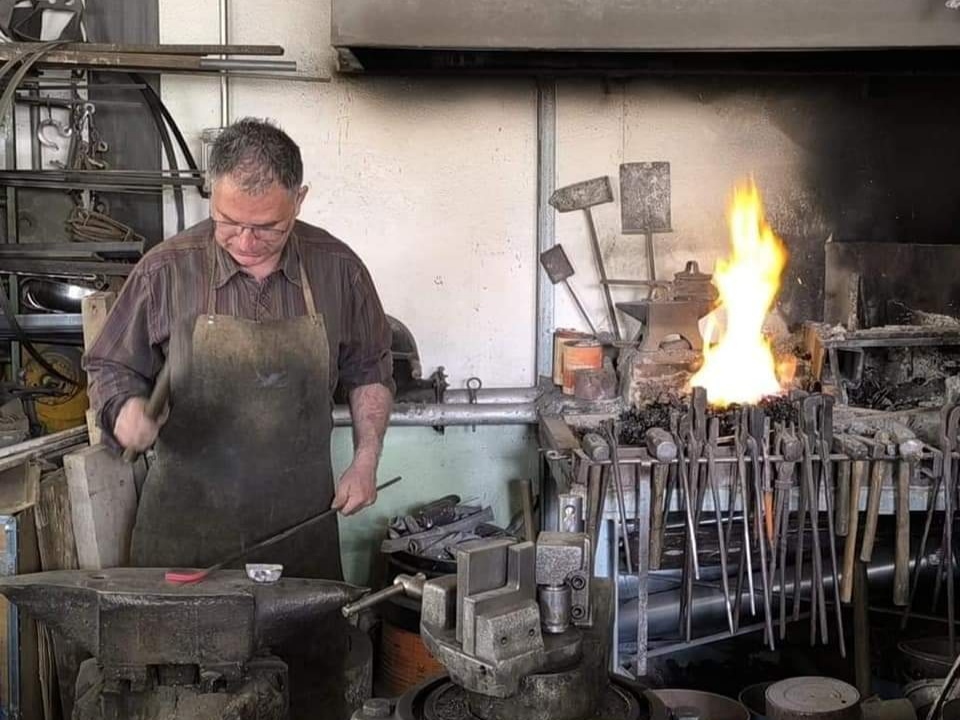
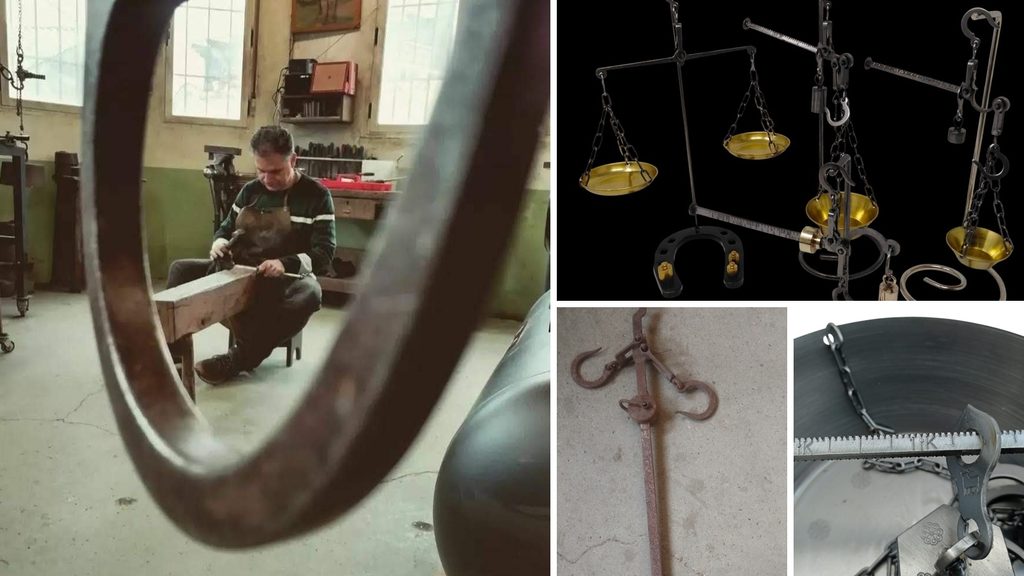
Santibáñez de Béjar is a small village in the province of Salamanca in western Spain. For generations, Manuel’s family had worked iron there. In their forge, they made a type of balance scale known in Spain as a romana — a scale that measures weight using a counterweight, a lever, and gravity. It needs no electricity. It has no screen.
Long before Manuel was born, the men in his family were already heating and hammering iron in that forge. The craft reached back at least one generation before his great-grandfather Pascual. Then came his grandfather Manuel, his father Gabriel, and his uncle Rafael.
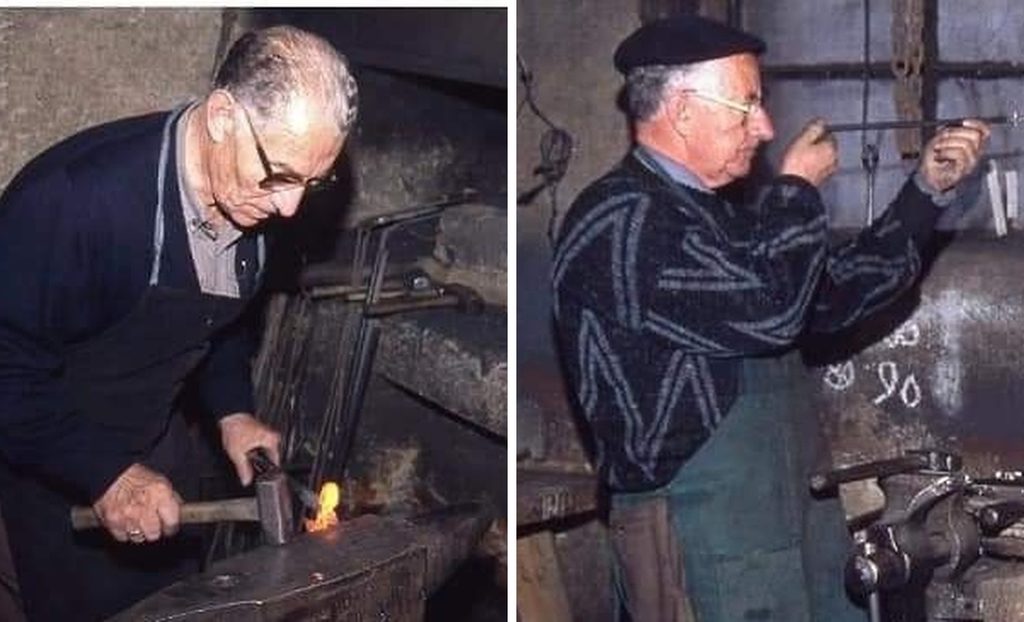
Left: Rafael Jaén Jiménez, Manuel’s uncle. Right: Gabriel Jaén Jiménez, Manuel’s father
Years later, Manuel would describe himself as “un niño de fragua” — “a child of the forge.” Fire, iron, and the sound of a hammer were part of his childhood long before he could think of them as tradition.
For his father, Gabriel, the craft had an even more practical meaning. After living through difficult times, he traveled from village to village carrying the romanas he had made and selling them. A scale held more than a family technique. It was also a way to make a living.
But his parents did not believe their son necessarily had to repeat that life.
They used to tell him: “The forge is already yours.”
The forge was a path he could always choose. It was not a path he had to choose.
They wanted Manuel to experience “other galaxies” and to have the chance to choose his own path. Manuel’s two older sisters, Leonor and María Jesús, had also followed their own paths away from the village, becoming a nurse and a biologist, respectively.
And so, at fourteen, Manuel left the forge.
We often understand which moments were truly crossroads only after we have traveled some distance beyond them. In Robert Frost’s The Road Not Taken, a man stands before two roads.
“Two roads diverged in a yellow wood.”
At first, the two roads do not look so different. Sometimes the crossroads in our lives are like that too.
When Manuel left his village, probably no one imagined that the road taking him away from the forge would one day lead him back to it.
He didn’t know either.
Manuel studied industrial electronics and later computer science. He trained at Telefónica and prepared for the possibility of working there.
If the world he had left behind was one of iron, fire, and hammers, the world ahead of him was one of electronics and computers. One was a world his family had learned over generations; the other was the rapidly approaching world of the future.
His life seemed to be heading toward the latter.
The Young Man Who Came Back
Then two things happened. The privatization of Telefónica disrupted the career path Manuel had been preparing for. Back in his village, his father Gabriel had already retired, and his uncle Rafael — the last member of the family still working in the forge — was preparing to retire as well.
Manuel went back to the forge. He was twenty-six. It was the same place. But the person who had left and the person who came back were no longer the same.
The decision surprised those around him. A young man who had finished his studies and was preparing for another path had decided to make romanas in the forge of a small village. His family, however, did not try to stop him. They helped him build his own path.
Decades later, Manuel described that moment differently: “I didn’t return. I opened a new path.” Those are the words of the Manuel of today, looking back. Because the young Manuel did not know where that path would lead.
When TENVER asked what he had been thinking at the time, Manuel answered: “I wasn’t thinking about anything. I was just getting through each day.” It was not an easy road. He learned from his mistakes and put what he earned back into the work.
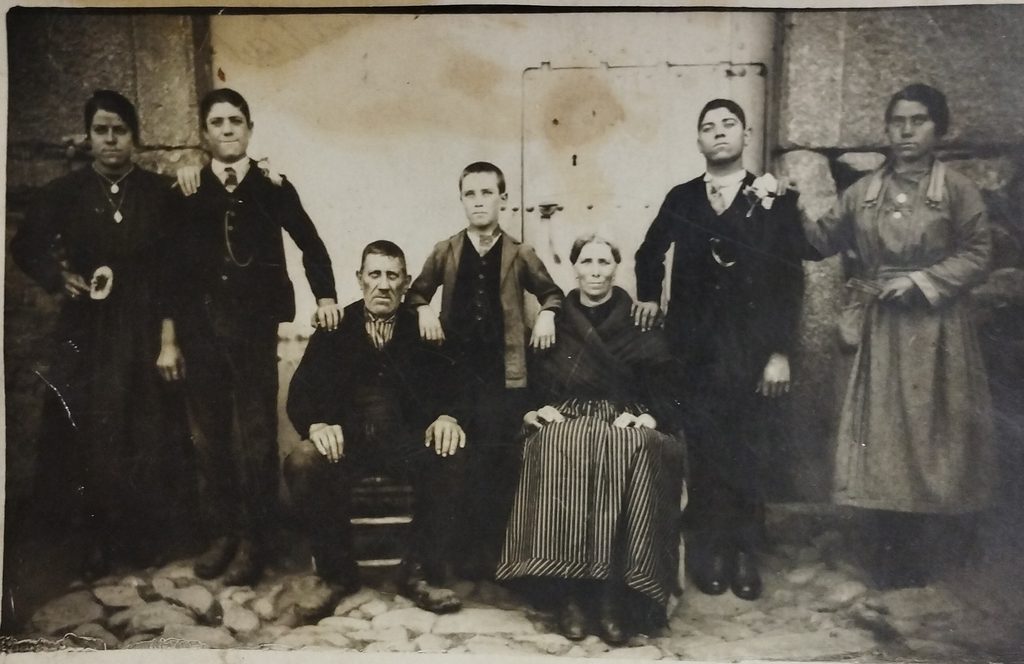
Pascual Jaén and Paula Briz with their children, around the 1920s. All of them learned to make romanas.
In his studies, Manuel had learned electronics and computing. He had learned technical drawing and ways to organize work more systematically. Little by little, he began bringing that knowledge into the forge.
The parts of the romana, made for generations through experience, began appearing one by one on graph paper. Measurements and forms passed down through generations of practiced hands were transferred into lines and numbers on paper.
We do not know whether this was the future his parents had imagined for their son. But the knowledge that had taken Manuel out of the forge was now entering the forge with him.
In old bakeries, part of the previous day’s dough is kept and mixed into a new batch. It is the sourdough starter.
Not to make yesterday’s bread again, but to ferment new dough and make today’s bread.
Perhaps continuity works something like that: not repeating the past exactly, but mixing part of it with what belongs to the present. What emerges is neither yesterday nor something entirely new.
It becomes something of today.
What Came Back With Him
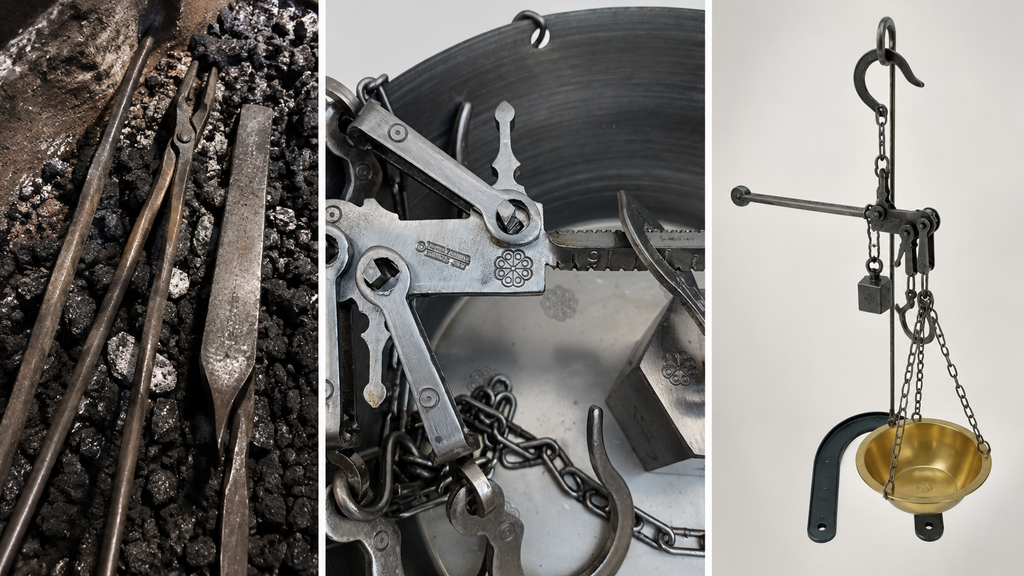
Manuel still makes romanas. He cuts the iron, heats it, and hammers it. He assembles the pieces and adjusts the balance of the scale. It is an old principle that needs neither computers nor electronic devices. He calls it “pure physics.”
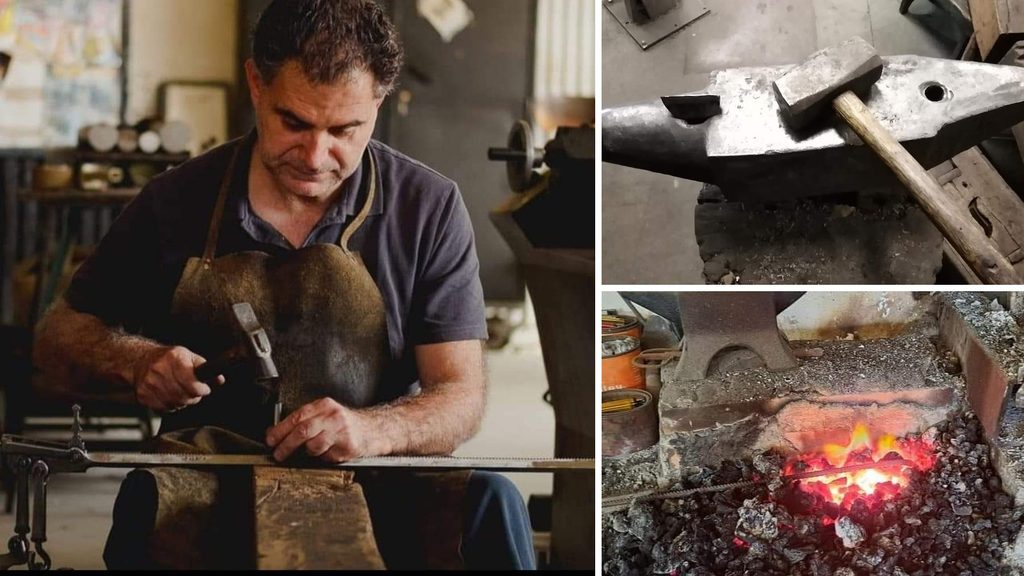
But for Manuel, the balance of a scale is not only a matter of physics. When he speaks about the romana, words such as fairness, honesty, impartiality, and neutrality begin to appear.
“Everything in this life that has weight passes through the judgment of the romana.”
After so many years of making scales, there came a point when, for Manuel, a scale was no longer simply an instrument for weighing.
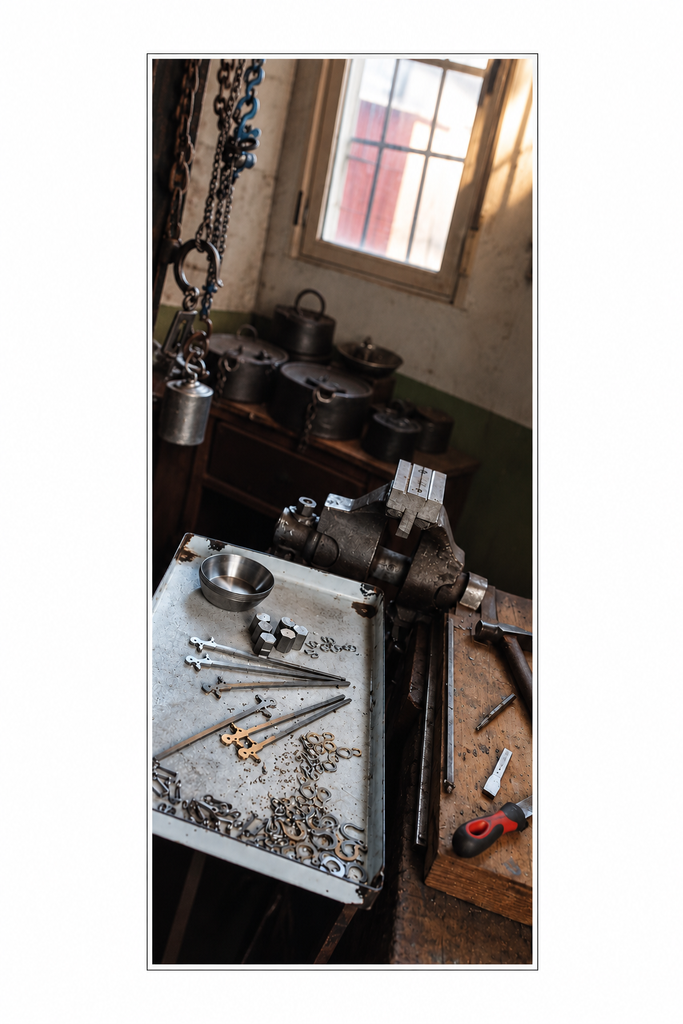
Even in a world filled with digital scales, people still seek out a romana. Some order a new one. Others return to Manuel’s workshop carrying an old scale with them. Manuel places those old romanas back on his workbench. He takes them apart, removes the rust and dirt, repairs what is damaged, and puts them back together. When necessary, he searches for old parts that fit and readjusts the balance so the scale can weigh again.
When the work is finished, Manuel returns the old scale to its owner. He still likes seeing their faces.
What Would Have Happened to the Romana If Manuel Had Not Returned?
The romana itself probably would not have disappeared from the world. Old scales would still have remained in museums, old houses, and storerooms. But an object surviving is not the same as someone surviving who knows how to make it.
Which iron to choose. How hot to make it. Where to strike it. How to find the balance. What to look at first when something goes wrong. Knowledge like this is not always written down. Some knowledge cannot be recovered simply by reading a manual.
Because sometimes knowledge is stored not in books, but in people.
The Road After Manuel
Manuel has two daughters, Nerea and Valeria.
Their stories have not yet been written.
Manuel says his daughters should open their own paths and do what they want to do. He and his wife, Merche, will be there to help them.
We do not know whether those paths will ever lead to the forge. Manuel himself did not know, when he left at fourteen, whether he would ever return.
Long ago, his parents had told him something similar:
“The forge is already yours.”
A generation ago, those words sent a boy out of the forge. No one yet knows where those same words will lead the next generation.
TENVER VIEW
A forge and computer science. Two worlds we would hardly expect to find in the same story. Yet in Manuel’s life, they met.
Their meeting created something that had not existed before.
We are now living through another enormous transformation. Artificial intelligence is rapidly changing the way we work, learn, and create. The faster the world changes, the greater the distance can seem between experience accumulated over many years and new technology. What seemed necessary yesterday can look old today and, at some point, even disappear.
At times like these, we tend to place the old and the new on opposite sides. But the path Manuel has taken shows us that they do not necessarily have to stand on opposite sides. And it leaves us with one question.
What is the sourdough starter of our time?


Leave a Reply