-
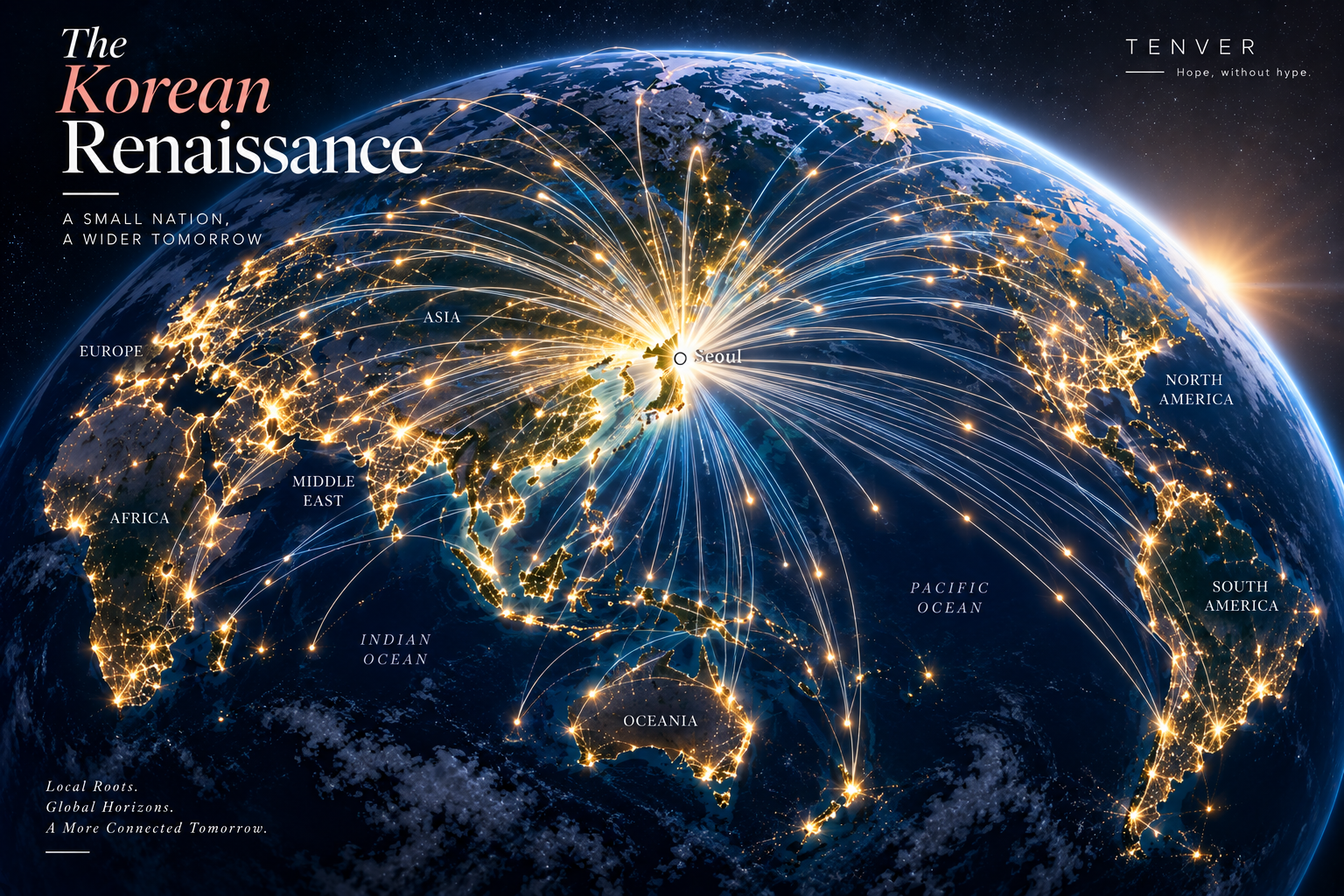
韓国ルネサンス
English | 日本語
1951年、英国の新聞『The Times』は、戦争によって荒廃した韓国に民主主義が根づくことができるのかと問いかけた。それから75年。いま韓国では何が起きているのだろうか。今日、そこで同時に進行している異なる現象とは何なのか。そして、私たちがまだ認識していない、より大きなパターンがすでに形を現し始めているのだろうか。
1951年10月1日、朝鮮戦争の休戦交渉が続くなか、英国の新聞 The Times は「War and Peace in Korea」と題する社説を掲載した。
交渉が行き詰まりを見せるなか、その社説は、国連が「統一され、独立した、民主的な」韓国を樹立するという目標を引き続き追求すべきなのか、改めて考える時が来たと論じた。同時に、当時の状況のもとで、安定した民主主義が本当に韓国に根づくことができるのか、深い疑念を示していた。
“To hope that a stable democracy will spring from this political dunghill is to expect a rose to grow in a garbage heap.”
75年後の今、この言葉に込められた皮肉を見過ごすことは難しい。しかし同時に、当時のその判断を簡単に退けてしまうのも適切ではないだろう。
1951年は、第二次世界大戦の終結からわずか6年後だった。米国とソ連の間では冷戦の対立が急速に激しさを増し、朝鮮半島は、その対立が最も激しい形で噴き出した場所の一つとなっていた。
植民地支配から解放されて間もなく、半島は分断され、そのわずか数年後には戦争によって荒廃した。数え切れないほどの人々が命を失い、あるいは故郷を追われた。戦闘は1953年の休戦協定によって止まったが、韓国の経済状況は依然として極めて厳しかった。1950年代初頭、韓国の一人当たり国民総所得(GNI)はわずか67ドルだった。そのような状況で、安定した民主主義の未来について楽観するのは容易ではなかった。
韓国の未来は、韓国人だけの問題でもなかった。多くの国の若者たちが朝鮮戦争で戦い、その多くが命を失った。だからこそ、戦争がどのように終わり、この半島にどのような未来が形づくられるのかという問いは、国際社会にとっても重要な問いとなった。
1951年、世界は韓国を見ながら、一つの問いを抱いていた。
植民地支配、戦争、分断、そして貧困を経験した社会に、民主主義は本当に根を下ろすことができるのか。
その後の75年間に起きた経済的変貌だけを見ても、韓国は現代の発展史における重要な事例となるに十分だろう。戦争によって荒廃し、外国からの援助に依存していた国が、一人の人間の生涯ほどの時間のうちに、高所得の工業経済へと変貌した。
だから75年後の今、かつてはたった一輪のバラ――根を下ろす民主主義――さえ育つとは考えにくいとされた国で、いま何が起きているのかを、もう一度見つめてみる価値があるのかもしれない。
能力から信頼へ
天然資源に恵まれていなかった韓国は、早くから輸出のための製品づくりに向かった。
当初、その輸出の中心は、主として価格で競争する労働集約型の製品だった。しかし時がたつにつれ、韓国は自動車、造船、電子機器、半導体をはじめとする産業で競争力を築いていった。
しかし、より最近の変化で重要なのは、単に韓国製品が以前より多く売れるようになったということではない。
韓国の半導体は、世界のデジタル経済を支えるインフラの一部となっている。韓国の造船所は、LNG運搬船のような高付加価値船を建造している。韓国車は世界の主要市場で競争している。
防衛と原子力の分野では、選択そのものの性格がさらに変わる。
兵器システムを購入することは、一度きりの取引ではない。そこには、保守、部品供給、訓練、運用システムなどを含む長期的な関係が伴う。
原子力は、それ以上のコミットメントを必要とする。
チェコ共和国がドコバニ原子力発電所の新規建設プロジェクトで Korea Hydro & Nuclear Power を選んだということは、数十年にわたって進められる戦略的なエネルギープロジェクトの建設を、韓国企業に委ねるということである。
世界はもはや、韓国で作られたものを買っているだけではない。世界は、重要なものを韓国に託し始めている。
必要だからではなく、欲しいから
まったく異なる分野では、別の種類の変化が起きていた。
2003年、Dae Jang Geum(大長今/宮廷女官チャングムの誓い)――16世紀の韓国王宮を舞台に、料理と医学を物語の中心に据えた歴史ドラマ――が、アジア各地、そしてその外へと広い視聴者層を獲得した。これは、今日のような世界規模のストリーミング環境が生まれる以前のことだった。
2012年には、Gangnam Style がデジタルプラットフォームを通じて驚くべき速さで世界中に広がった。
その後、BTS は巨大な世界的ファン層を築き、韓国のポピュラーカルチャーへの関心が一時的な流行として消えるのではなく、持続しうることを示した。
2020年、Parasite(パラサイト 半地下の家族) は、英語以外の言語で制作された映画として初めてアカデミー賞作品賞を受賞した。翌年、Squid Game(イカゲーム) は、Netflixで最も視聴された非英語テレビシリーズとなった。
韓国で制作された食に関するコンテンツも、世界的な注目を集めた。2024年、Culinary Class Wars は、Netflixの非英語テレビ番組の世界ランキングで3週連続1位となった。
同じ年、小説家のハン・ガン(Han Kang)は、韓国人として初めてノーベル文学賞を受賞した。韓国語で書かれた文学が、翻訳を通じて世界の読者に届き――ついにはノーベル賞にまで到達したのである。
そして、もう一つの変化が現れた。韓国文化そのものが、韓国外で制作されるコンテンツの素材になり始めたのである。2025年、米国の Sony Pictures Animation が制作した KPop Demon Hunters は、K-popと韓国文化の要素を物語の中心に据え、世界的な現象となった。
この変化はコンテンツだけにとどまらなかった。 韓国の化粧品は世界各地の市場で消費者を獲得し、ラミョン(ramyeon)や、韓国式の焼き海苔であるキム(gim)といった食品も、韓国外の日常的な消費の一部になりつつある。
先に見た産業分野での選択が主として政府や企業による決定だったとすれば、ここでは世界各地の一般の消費者が、自ら韓国の文化や製品を求めている。 必要だから選んでいるだけではない。自分自身の好みによって選んでいるのである。
韓国を見ることから、韓国へ行くことへ
選択のなかには、さらに先へ進むものもある。
ドラマ、K-pop、食、その他の文化を通じて世界の人々が韓国に触れる機会が増えるにつれ、実際に韓国を訪れることを選ぶ人も増えている。
さらに多くの時間と努力を必要とする選択もある。
世界で韓国語を学ぶ人の数は増加している。2025年には、政府が支援する世宗学堂(King Sejong Institute)のネットワークを通じて約24万人が韓国語を学び、韓国で学ぶ留学生の数は25万人を超えた。
これらの数字を過度に解釈する必要はない。日本、ドイツ、フランスをはじめとするいくつかの国には、韓国より多くの留学生がいる。また、人々が韓国語を学ぶ理由を、韓国のポピュラーカルチャーへの関心だけに還元することもできない。
それでも、言語を学ぶには時間と努力への投資が必要である。他国で学ぶとなれば、さらに多くを必要とする――時間、費用、そして機会費用である。
世界各地で起きているこれらの現象を一つずつ別々に見れば、それぞれを固有の理由によって説明することができる。しかし、それらを横に並べてみると、別の問いが浮かんでくる。
それは点描画のようなものだ。近くから見れば、一つひとつの点には意味がないように見えるかもしれない。しかし少し離れて見ると、それまで見えていなかった一枚の絵が現れ始める。
なぜ、これほど性質の異なる変化が、いずれも韓国と結びつきながら、ほぼ同じ時期に現れているのだろうか。たまたま重なっただけなのか。それとも、私たちがまだ認識していない、より大きなパターンがすでに形を取り始めているのだろうか。
これらの物語は、結びつけるべきではないのかもしれない
互いに無関係な複数の変化が偶然一つの国で起きたからといって、それだけで一つの歴史的現象になるわけではない。それらを共通する一つの現象として見るためには、より厳しい基準が必要になる。
しかし、異なる市場で、異なる理由から行われた選択が、繰り返し同じ場所を指しているのだとすれば、話は変わってくる。
韓国。
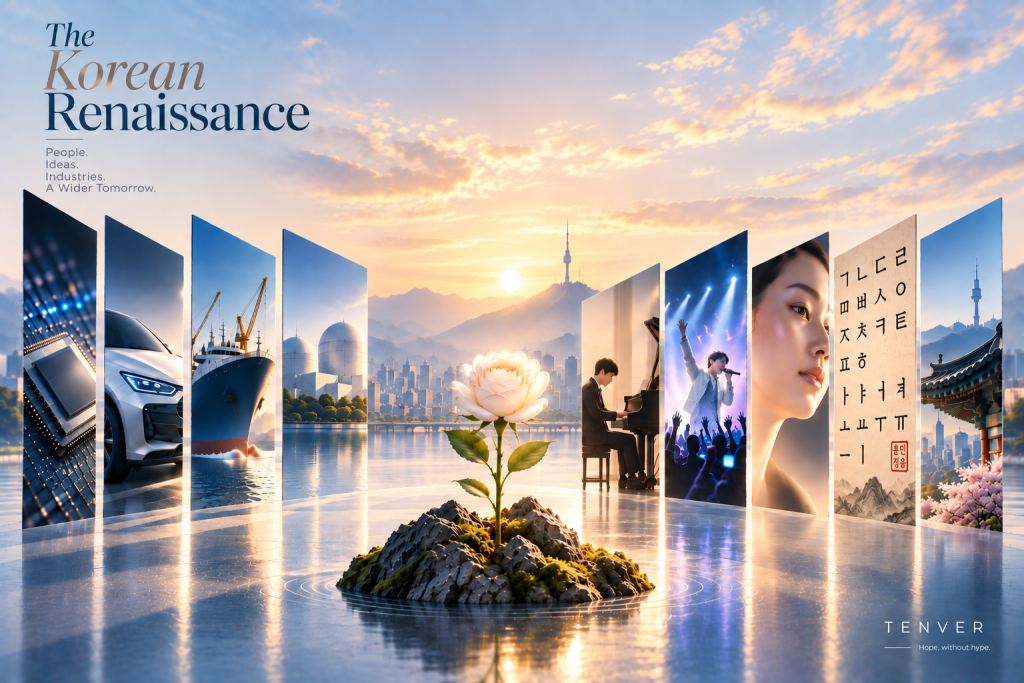
一つの庭で?
1951年、The Times は韓国を、たった一輪のバラさえ育つとは期待しにくい荒れた土地にたとえた。75年後、その比喩をもう一度借りるなら、問いはもはや一輪のバラがそこで咲いたかどうかだけではない。いま、同じ庭に異なる種類の花々が同時に現れている。
しかしここからは、見る角度を変える必要がある。
異なる種類の花々が同時に咲いている韓国を、私たちはどう理解すべきなのだろうか。
まず、重要な区別を明確にしておかなければならない。私たちが問うているのは、何がこれらの変化を引き起こしたのか、あるいはそれらがどのように生まれたのかではない。この庭でいま何が起きているのか、そしてそれらがどのように展開しているのかを問うている。言い換えれば、これは原因についての問いではなく、現象についての問いである。
そのためには、いくつかのことを確かめる必要がある。
第一に、こうした変化は本当に複数の分野で起きているのか。第二に、一時的な現象として消えるのではなく、持続しているのか。そして最後に、異なる分野で始まった変化はその分野の中にとどまっているのか、それとも元の境界を越えて広がり、互いに交差し始めているのか。
私たちの周囲に散在して見える変化が、たまたま同時に起きている別々の出来事なのか、それとも互いに結びついた現象なのかを見るためには、この三つの問いを通過しなければならない。
これまで見てきた事例からすると、最初の二つについては比較的十分な根拠があるように見える。最後の問いは、より慎重に見なければならない。
ここで「結びつき」と言うとき、一つの分野での変化が別の分野での変化を直接引き起こしたという意味ではない。私たちが問うているのは、異なる分野で始まった変化がそれぞれの元の境界を越え、別の領域へと広がり、その過程で互いに交差し始めているかどうかである。
これは重要である。なぜなら、そのような動きは、今日見えている変化が一時的なものに終わるのか、それとも今後も続いていくのかを考えるうえで重要な手がかりになり得るからだ。もしこうした動きが複数の分野で引き続き現れるなら、それらは偶然同時に起きた個別の変化にすぎないのではなく、より大きなパターンの一部かもしれないと考える根拠が生まれる。
いくつかの分野では、その動きはすでに見えている。韓国文化への関心は、食品や化粧品といった商品の消費へ、韓国そのものへの旅行へ、そして韓国語の学習へと広がっている。K-popやスクリーン上のコンテンツから始まった関心が、消費、旅行、言語学習という異なる行動へと拡大しているのである。KPop Demon Hunters のような作品は、韓国文化が韓国外のクリエイターにとっても創作の素材になり始めていることを示している。
産業でも同様の広がりを見ることができる。自動車、電子機器、その他の製品を通じて数十年にわたり蓄積された韓国の技術と品質への信頼は、高度な技術力と長期的な協力を必要とする分野で韓国が選ばれる土台となった――半導体や造船から、防衛、原子力に至るまで。
だからといって、すべての変化が同じ原因から生まれたということでも、すべてが直接結びついているということでもない。 重要なのは、独立して始まったいくつかの動きが、それぞれの元の境界を越え、互いに交差し始めているという点である。
この三つの条件を検討したうえで一歩引いて見たとき、より大きなパターンが形を取り始めているように見えるなら、それを私たちはどう理解すべきなのか。そしてさらに、それを何と呼ぶべきなのだろうか。
私たちがすでに持っている名前
韓国の工業化と経済成長は「Miracle on the Han River」と呼ばれてきた。韓国のポピュラーカルチャーが世界へ広がる現象は、Hallyu(韓流)、あるいは Korean Wave と呼ばれてきた。文化や価値を通じた韓国の国際的影響力は soft power という概念で説明され、韓国が世界の中で築いてきたイメージや評判は nation branding という概念で論じられてきた。
これらの名称や概念は、それぞれ韓国の変化の異なる側面を説明している。しかし、この四つをすべて合わせても、今日私たちが目にしている韓国に関わる現象の広がりを完全には説明できない。
だからこそ、別の名前が必要なのかもしれない――これらを一緒に見ることのできる名前である。新しい名前を与えることで、それまで別々に見えていた動きが、実はより大きなパターンの一部なのかもしれないと気づくことができる。
これは韓国だけに特有のことではない
これまで見てきた変化は、本当に韓国だけに特有のものなのだろうか。
日本は、最も近い比較例の一つである。日本の自動車や電子機器は何十年にもわたって世界市場で高く評価され、アニメや日本食も世界文化の中に深く根づいている。
ほかにも例はある。ドイツは戦争の廃墟から立ち上がり、繁栄する民主主義国家となった。台湾は民主的な体制を発展させる一方で、世界の半導体サプライチェーンの中核を担う存在となった。シンガポールは一世代のうちに、貿易、物流、金融の世界的な中心地となった。
もしこの文章の主張が、韓国が黄金時代に入ったというものなら、これらの事例はその主張に対する重大な反証となるだろう。
同時に韓国は、人口減少と高齢化、社会的対立と格差、政治的分極化、産業競争の圧力、地政学的リスクにも直面している。
しかし、ここでの主張は、韓国が他の国々より成功しているということではない。
私たちが見ようとしているのは、今日、韓国に関連して起きている現象である。それらがどのように広がり、どこで交差し、その動きがどのように続いていく可能性があるのか、ということである。
これまで見てきた事例では、異なる分野から始まった動きが元の境界を越え、互いに交差し始めている。また、一つか二つの分野だけにとどまるのではなく、相当な期間にわたって持続してきた。
歴史がまだ進行しているうちに名前を与える
1941年、米国の世界における役割がまだ形づくられつつあったとき、Henry R. Luce は自らの主張に名前を与えた。
The American Century.
Luce は、米国で起きている現象を単に観察していたわけではない。米国が世界でどのような役割を果たすべきかについて主張していた。米国の経済力と政治力を踏まえ、孤立主義を超え、より積極的な国際的役割を担うよう呼びかけたのである。
私たちの目的は Luce のそれとは異なる。韓国が何をすべきかを主張しているのではない。韓国に関連して起きている現象を観察し、そこからより大きなパターンが形成されつつあるのかを問うている。
これまで見てきた変化が時間とともに持続し、複数の分野へ広がり、互いに交差し始めているのなら、もう一歩進まなければならない。
ある時点で、観察には判断が必要になる。
これらの現象を、もはや無視できないほど重要になった一つのパターンの一部として見ることができるだろうか。そして、もしそうなら、それを何と呼ぶべきなのだろうか。
とはいえ、まだ進行中の現象に名前を与えることには慎重さが必要だ。一時的な変化を、歴史的な転換点と取り違える可能性がある。しかし Luce の例が示すように、変化そのものがまだ進行している最中に提案される名前もある。
ある時代のただ中に生きていることは、慎重であるべき理由にはなる。しかし、必ずしも沈黙すべき理由にはならない。
そこでTENVERは、一つの名前を提案する。
The Korean Renaissance.
なぜ Renaissance なのか?
ここでいう Renaissance とは「再生(rebirth)」を意味する。
ヨーロッパのルネサンスは、古典世界の文化と思想を再発見し、復興させたことと結びついている。その意味では、今日の韓国で起きていることは、ヨーロッパのルネサンスとは異なる。
ここでこの言葉によって意味しているのは、過去の文化や思想を復興させることではない。より文字どおりの意味での再生――もう一度生まれること――である。
過去75年間の韓国の変貌は、経済成長だけでは説明できない。かつて戦争の廃墟の中にあった国が、工業経済と民主的な社会を築き、今日ではその技術、文化、さらには言語までもが世界各地で選ばれる存在となっている。
この文章は、この再生――過去の韓国とは質的に異なる韓国の出現――を Renaissance と呼ぶ。
この名前は結論ではない。提案である。
バラと庭を、もう一度
民主主義という名のバラは、本当に廃墟の中から咲くことができるのか。それが The Times が韓国に向けた疑念だった。しかし、その花は咲いた。そしてそれは、血が流された民主化への闘いから生まれた花だった。
かつて廃墟だったその土地をいま見れば、異なる種類の花々が現れ、並んで育つ庭が見える。
75年にわたり、韓国は自らを変え続け、あの疑念に対して自分自身の答えを示してきた。
The Korean Renaissance.

出典・参考資料
- The Times — “War and Peace in Korea,” October 1, 1951, p. 5. The Times Digital Archive. TENVERが原文を確認。
- United Nations General Assembly — Resolution 376(V), “The Problem of the Independence of Korea,” 1950.
- United Nations — Korean Armistice Agreement / Security Council records, 1953.
- World Bank — 韓国の概要。1950年代初頭の1人当たりGNI 67ドルを含む。
- Korea Ministry of Trade, Industry and Energy — 造船、LNG運搬船などを含む産業・輸出に関する韓国政府の公式資料。
- Czech Ministry of Industry and Trade — ドコバニ原子力発電プロジェクトおよびKHNPに関する公式資料。
- Nobel Prize — ハン・ガン、2024年ノーベル文学賞。
- King Sejong Institute Foundation — 世界の世宗学堂ネットワークおよび学習者に関する公式統計。
- Study in Korea / Ministry of Education — 韓国の外国人留学生に関する公式統計。
- Joseph S. Nye Jr. / Harvard Kennedy School — soft power の概念に関する背景資料。
- WIPO — nation branding に関する背景資料。
- Henry R. Luce — “The American Century,” LIFE, February 17, 1941. TENVERが原文を確認。
- The Metropolitan Museum of Art — ルネサンスと古典古代の再発見に関する歴史的背景。
- Korea Democracy Foundation — 韓国の民主化運動に関する歴史的背景。
-
韩国文艺复兴
English | 中文
1951年,英国《泰晤士报》曾质疑,民主是否能够在一个饱受战争摧残的韩国扎下根来。七十五年后的今天,韩国正在发生什么?那里正在同时出现哪些不同的现象?一个我们尚未意识到的、更大的图景,是否已经开始形成?
1951年10月1日,在朝鲜战争停战谈判仍在进行之际,英国报纸 The Times 发表了一篇题为“War and Peace in Korea”的社论。
当时,谈判陷入僵局。社论提出,联合国是否还应继续追求建立一个“统一、独立、民主”的韩国,或许已经到了需要重新思考的时候。与此同时,文章也对在当时的条件下,一个稳定的民主制度是否真的能够在韩国扎根,表达了深深的怀疑。
“To hope that a stable democracy will spring from this political dunghill is to expect a rose to grow in a garbage heap.”
75年后的今天,我们很难忽略这句话所带来的反讽意味。但如果只是简单地否定当年的判断,也未免过于轻率。
1951年,距离第二次世界大战结束仅仅六年。美国与苏联之间的冷战对抗正在迅速加剧,而朝鲜半岛已经成为这场冲突以最激烈方式爆发的地区之一。
摆脱殖民统治后不久,半岛便遭到分裂;仅仅几年之后,又被战争摧毁。无数人失去生命,或被迫离开家园。战斗随着1953年《停战协定》的签署而停止,但韩国的经济状况仍然极为艰难。20世纪50年代初,韩国人均国民总收入只有67美元。在这样的条件下,很难对一个稳定民主制度的未来抱有乐观期待。
韩国的未来并不只是韩国人的问题。许多国家的年轻人参加了朝鲜战争,其中许多人失去了生命。因此,战争将如何结束、这个半岛最终会出现怎样的未来,也成为国际社会共同面对的问题。
1951年,世界看着韩国,提出了一个问题:
一个经历过殖民统治、战争、分裂和贫困的社会,民主真的能够在这里扎根吗?
此后75年的经济转型本身,就足以让韩国成为现代发展史上的一个重要案例。在一个人的一生之内,一个曾被战争摧毁、依赖外国援助的国家,转变成了一个高收入工业经济体。
所以,75年后的今天,也许值得我们重新看看这个国家正在发生什么——在这里,曾经连一朵玫瑰,也就是扎根的民主,都被认为很难生长。
从能力到信任
由于自然资源有限,韩国很早便转向生产出口商品。
最初,韩国的出口主要由劳动密集型产品构成,竞争优势主要来自价格。随着时间推移,韩国逐渐在汽车、造船、电子和半导体等产业建立起竞争力。
但最近这些变化的重要之处,并不只是韩国卖出了更多产品。
韩国半导体已经成为支撑全球数字经济的基础设施的一部分。韩国造船厂建造包括LNG运输船在内的高附加值船舶。韩国汽车也在世界主要市场参与竞争。
而到了国防和核能领域,选择本身的性质发生了进一步变化。
购买一个武器系统,并不是一次性的交易。它意味着一段长期关系,其中包括维护、零部件供应、培训以及运行体系。
核能所要求的承诺甚至更深。
捷克共和国在杜科瓦尼新核电项目中选择 Korea Hydro & Nuclear Power,意味着把一个建设周期延续数十年的战略能源项目交给一家韩国企业。
世界已经不只是在购买韩国制造的东西。世界开始把重要的事情托付给韩国。
不是因为需要,而是因为想要
在一个完全不同的领域,另一种变化也在发生。
2003年,Dae Jang Geum(《大长今》)——一部以16世纪韩国王宫为背景、以饮食和医学为故事核心的历史电视剧——在亚洲各地以及亚洲之外吸引了大量观众。那时,今天我们熟悉的全球流媒体环境还不存在。
2012年,Gangnam Style(《江南Style》)通过数字平台以惊人的速度传播,触及全球观众。
随后,BTS建立起庞大的全球粉丝群体,证明人们对韩国流行文化的兴趣可以持续,而不只是像短暂的潮流一样消失。
2020年,Parasite(《寄生虫》)成为第一部获得奥斯卡最佳影片奖的非英语电影。第二年,Squid Game(《鱿鱼游戏》)成为Netflix观看量最高的非英语电视剧。
韩国制作的饮食类内容也开始吸引全球关注。2024年,Culinary Class Wars(《黑白厨师》)连续三周位居Netflix全球非英语电视节目排行榜第一。
同一年,小说家韩江(Han Kang)成为首位获得诺贝尔文学奖的韩国人。以韩语写成的文学,通过翻译抵达世界各地的读者——最终也抵达了诺贝尔奖。
随后,又出现了一种新的变化。韩国文化开始成为韩国之外所制作内容的创作素材。2025年,由美国 Sony Pictures Animation 制作的 KPop Demon Hunters,把K-pop以及韩国文化元素放在故事中心,并成为一种全球现象。
这种变化并没有停留在内容领域。 韩国化妆品在世界各地的市场找到消费者,而韩式拉面(ramyeon)和韩式烤海苔(gim)等食品,也越来越多地成为韩国之外日常消费的一部分。
如果说我们前面在产业领域看到的选择,主要是由政府和企业作出的决定,那么在这里,则是世界各地的普通消费者主动寻找韩国文化和韩国产品。 他们选择这些东西,并不只是因为需要,而是出于自己的偏好。
从观看韩国,到来到韩国
有些选择还会更进一步。
随着世界各地的人们通过电视剧、K-pop、饮食以及其他文化形式更多地接触韩国,越来越多人也开始选择亲自来到韩国。
还有一些选择,需要投入更多的时间和精力。
世界各地学习韩语的人数正在增加。2025年,大约24万人通过政府支持的世宗学堂(King Sejong Institute)网络学习韩语,而在韩国的国际学生人数已经超过25万。
没有必要过度解读这些数字。日本、德国、法国以及其他一些国家拥有比韩国更多的国际学生,而人们学习韩语的原因,也不能仅仅归结为对韩国流行文化的兴趣。
即便如此,学习一门语言仍然意味着投入时间和精力。到另一个国家留学,需要投入得更多——时间、金钱,以及机会成本。
如果我们分别观察世界各地正在发生的这些现象,每一种都可以用自身的原因来解释。但当我们把它们放在一起时,另一个问题便出现了。
这就像点彩画。近距离看,一个个独立的点可能显得没有意义。但当我们向后退几步,一幅此前看不到的图像便开始显现。
为什么这些性质如此不同、却都与韩国有关的变化,大致出现在同一个时期?它们只是偶然重叠在一起吗?还是一个更大的模式已经开始形成——只是我们还没有认出它?
也许这些故事本不应该被连接起来
几个彼此无关的变化碰巧发生在同一个国家,并不会因此自动成为一个统一的历史现象。如果要把它们视为一个共同的现象,我们需要更严格的标准。
但是,如果在不同市场、出于不同原因作出的选择,却一次又一次指向同一个地方,情况就不同了。
韩国。
在同一个花园里?
1951年,The Times 把韩国比作一片荒芜之地,在那里,甚至很难期待一朵玫瑰能够生长。75年后,如果我们再次借用这个比喻,问题已经不再只是那一朵玫瑰是否开花。如今,不同种类的花正在同一个花园里一起出现。
但从这里开始,我们需要改变观察的角度。
我们应该如何理解一个不同种类的花正在同时开放的韩国?
首先,需要明确一个重要区别。我们并不是在问,是什么造成了这些变化,也不是在问它们是如何产生的。我们问的是:这个花园现在正在发生什么,这些事情又是如何展开的。换句话说,这是关于现象的问题,而不是关于原因的问题。
这意味着,有几件事情需要得到说明。
第一,这些变化是否真的出现在多个领域?第二,它们是否持续存在,而不是像暂时的潮流那样消失?最后,那些开始于不同领域的变化,是一直停留在各自原来的领域之内,还是正在跨越最初的边界,向其他领域扩展,并开始彼此交汇?
我们需要回答这三个问题,才能判断周围这些看似分散的变化,究竟只是同时发生的彼此独立的发展,还是彼此连接的现象。
从我们已经观察过的案例来看,前两个问题似乎有相对充分的证据。最后一个问题则需要更谨慎地考察。
当我们说“连接”时,并不是说一个领域的变化直接导致了另一个领域的变化。我们要问的是:那些从不同领域开始的变化,是否正在跨越自己原来的边界,扩展到其他领域,并在这个过程中开始相互交汇。
这一点很重要,因为这种移动可以成为判断今天看到的变化究竟只是暂时现象,还是可能在未来继续下去的重要线索。如果这种移动持续出现在多个领域,我们便有理由考虑另一种可能:这些并不仅仅是偶然同时发生的个别变化,而可能是一个更大模式的组成部分。
在一些领域,这种移动已经可以看到。对韩国文化的兴趣正在扩展到食品、化妆品等商品消费,扩展到亲自前往韩国旅行,也扩展到韩语学习。最初从K-pop以及屏幕上的内容开始的兴趣,如今正延伸到不同形式的行为——消费、旅行和语言学习。像 KPop Demon Hunters 这样的作品也表明,韩国文化正在成为韩国之外创作者的创作素材。
产业领域也可以看到类似的扩展。通过汽车、电子产品以及其他商品,几十年来逐渐积累起来的对韩国技术和质量的信任,为韩国在那些需要深厚技术能力和长期合作的领域被选择奠定了基础——从半导体和造船,到国防和核能。
这些都不意味着所有变化来自同一个原因,也不意味着它们彼此之间都有直接联系。 重要的是,一些原本独立开始的运动已经越过自己最初的边界,并开始相互交汇。
如果在检验这三个条件之后,我们向后退几步,看到一个更大的模式开始成形,那么我们应该如何理解它?更进一步,我们又应该如何称呼它?
我们已经拥有的名称
韩国的工业化和经济增长被称为“Miracle on the Han River”。韩国流行文化在全球的扩散被称为Hallyu(韩流),或 Korean Wave。韩国通过文化和价值观产生的国际影响力,可以用 soft power 的概念来描述,而韩国在世界上建立的形象与声誉,则常通过 nation branding 的概念来讨论。
这些名称和概念分别描述了韩国转型的不同侧面。但即使把这四者放在一起,也仍然无法完全解释我们今天看到的、与韩国相关的各种现象所具有的广度。
因此,也许我们需要另一个名字——一个能够让我们把这些事情放在一起观察的名字。一个新的名称,可能会帮助我们意识到,那些过去看起来彼此分离的运动,实际上也许属于一个更大的模式。
这并非韩国独有
我们所看到的这些变化,真的只有韩国才有吗?
日本提供了一个最接近的比较案例。几十年来,日本汽车和电子产品一直在全球市场受到高度评价,而动漫和日本料理也已经深深扎根于世界文化之中。
还有其他例子。德国从战争废墟中重新站起来,成为一个繁荣的民主国家。台湾在发展民主制度的同时,也成为全球半导体供应链的核心部分。新加坡则在一代人的时间里成为全球贸易、物流和金融中心。
如果这篇文章的论点是韩国已经进入了一个黄金时代,那么这些例子将对这一论点构成严肃挑战。
与此同时,韩国也面对人口减少与老龄化、社会冲突与不平等、政治极化、产业竞争压力以及地缘政治风险。
但本文的论点并不是韩国比其他国家更加成功。
我们关注的是今天与韩国相关的这些现象——它们如何扩展,在哪里彼此交汇,以及这些运动可能如何继续。
在我们已经观察的案例中,从不同领域开始的运动正在跨越自己原来的边界,并开始相互交汇。而且,它们已经持续了相当长的时间,而不是只局限在一两个领域之中。
在历史仍在展开时,为它命名
1941年,当美国在世界上的角色仍在形成之际,Henry R. Luce 为自己的论点取了一个名字。
The American Century.
Luce 并不只是在观察美国正在发生的一种现象。他提出的是一个关于美国应该在世界上扮演何种角色的主张。基于美国的经济和政治力量,他主张美国超越孤立主义,在国际事务中承担更加积极的角色。
我们的目的与 Luce 不同。我们并不是在提出韩国应该做什么的主张。我们是在观察与韩国相关的现象,并追问:一个更大的模式是否正在从这些现象之中形成?
如果我们看到的这些变化能够随着时间持续,扩展到多个领域,并开始彼此交汇,那么我们就需要再向前走一步。
在某个时刻,观察需要判断。
我们现在是否可以把这些现象看作一个已经重要到无法忽视的模式的组成部分?如果可以,我们又应该怎样称呼它?
然而,在一个现象仍然不断展开的时候给它命名,需要谨慎。暂时的变化可能被误认为历史性的转折。但正如 Luce 的例子所显示的,有些名称,正是在变化本身仍然进行的时候被提出的。
生活在一个时代的正中央,是我们保持谨慎的理由。但它并不一定是我们保持沉默的理由。
因此,TENVER提出一个名称。
The Korean Renaissance.
为什么是 Renaissance?
这里,Renaissance 的意思是“重生(rebirth)”。
欧洲文艺复兴与对古典世界文化和思想的重新发现与复兴联系在一起。从这个意义上说,今天韩国正在发生的事情,与欧洲文艺复兴并不相同。
我们使用这个词,并不是指过去文化与思想的复兴,而是取它最字面的意义——重新诞生。
韩国过去75年的转型,无法仅仅用经济增长来解释。一个曾经身处战争废墟中的国家,建立起工业经济和民主社会;而今天,它的技术、文化,甚至语言,都正在世界各地被人们主动选择。
本文把这种重生——一个在性质上已经不同于过去韩国的韩国之出现——称为 Renaissance。
这个名称不是结论,而是一个提议。
再一次,回到玫瑰与花园
一朵名为民主的玫瑰,真的能够在废墟中开花吗?这正是当年 The Times 对韩国表达的疑问。然而,那朵花开了。而且,那是一朵从民主化斗争中诞生的花,在那场斗争中,有人流过血。
今天再看看那片曾经满是废墟的土地,你会看到一个花园——不同种类的花正在那里出现,并肩生长。
75年来,韩国不断改变自己,以自己的方式回答着当年的那个疑问。
The Korean Renaissance.
资料来源与延伸阅读
- The Times — “War and Peace in Korea,” October 1, 1951, p. 5. The Times Digital Archive. TENVER查阅原文。
- United Nations General Assembly — Resolution 376(V), “The Problem of the Independence of Korea,” 1950.
- United Nations — Korean Armistice Agreement / Security Council records, 1953.
- World Bank — Republic of Korea overview,包括20世纪50年代初韩国人均GNI为67美元的资料。
- Korea Ministry of Trade, Industry and Energy — 韩国官方产业与出口资料,包括造船业及LNG运输船相关数据。
- Czech Ministry of Industry and Trade — 关于杜科瓦尼核电项目及韩国水力原子力公司的官方资料。
- Nobel Prize — 韩江,2024年诺贝尔文学奖。
- King Sejong Institute Foundation — 世宗学堂全球网络及学习者官方统计资料。
- Study in Korea / Ministry of Education — 韩国国际学生官方统计资料。
- Joseph S. Nye Jr. / Harvard Kennedy School — 关于 soft power 概念的背景资料。
- WIPO — 关于 nation branding 的背景资料。
- Henry R. Luce — “The American Century,” LIFE, February 17, 1941. TENVER查阅原文。
- The Metropolitan Museum of Art — 关于文艺复兴及古典文化重新发现的历史背景资料。
- Korea Democracy Foundation — 韩国民主化运动的历史背景资料。
-
La Renaissance coréenne
English | Français
En 1951, le journal britannique The Times se demandait si la démocratie pouvait prendre racine dans une Corée dévastée par la guerre. Soixante-quinze ans plus tard, que se passe-t-il en Corée ? Quels sont les différents phénomènes qui s’y déploient aujourd’hui ? Un schéma plus vaste pourrait-il déjà être en train de prendre forme — un schéma que nous n’avons pas encore reconnu ?
Le 1er octobre 1951, alors que se poursuivaient les négociations d’armistice de la guerre de Corée, le journal britannique The Times publia un éditorial intitulé « War and Peace in Korea ».
Alors que les négociations étaient dans l’impasse, l’éditorial estimait qu’il était temps de se demander à nouveau si les Nations unies devaient continuer à poursuivre l’objectif d’établir une Corée « unifiée, indépendante et démocratique ». Dans le même temps, il exprimait de profonds doutes quant à la possibilité qu’une démocratie stable puisse réellement prendre racine en Corée dans les conditions de l’époque.
“To hope that a stable democracy will spring from this political dunghill is to expect a rose to grow in a garbage heap.”
Soixante-quinze ans plus tard, il est difficile de ne pas percevoir l’ironie de ces mots. Mais il serait également trop facile de simplement écarter ce jugement.
L’année 1951 ne se situait que six ans après la fin de la Seconde Guerre mondiale. La confrontation de la guerre froide entre les États-Unis et l’Union soviétique s’intensifiait rapidement, et la péninsule coréenne était devenue l’un des endroits où ce conflit avait éclaté sous sa forme la plus violente.
Peu après avoir été libérée de la domination coloniale, la péninsule fut divisée et, quelques années plus tard seulement, ravagée par la guerre. D’innombrables personnes furent tuées ou contraintes de quitter leur foyer. Les combats cessèrent avec l’Accord d’armistice de 1953, mais la situation économique de la Corée du Sud demeurait désespérée. Au début des années 1950, le revenu national brut par habitant de la Corée du Sud n’était que de 67 dollars. Dans de telles conditions, il était difficile d’être optimiste quant à l’avenir d’une démocratie stable.
L’avenir de la Corée ne concernait pas seulement les Coréens. Des jeunes de nombreux pays combattirent pendant la guerre de Corée, et beaucoup y perdirent la vie. La question de savoir comment la guerre se terminerait et quel avenir émergerait sur cette péninsule devint donc également une question pour la communauté internationale.
En 1951, le monde regardait la Corée avec une question :
La démocratie pouvait-elle réellement prendre racine dans une société qui avait traversé la colonisation, la guerre, la division et la pauvreté ?
À elle seule, la transformation économique des soixante-quinze années suivantes suffirait à faire de la Corée un cas important dans l’histoire du développement moderne. En l’espace d’une seule vie humaine, un pays ravagé par la guerre et dépendant de l’aide étrangère est devenu une économie industrielle à revenu élevé.
Ainsi, 75 ans plus tard, peut-être vaut-il la peine de regarder à nouveau ce qui se passe dans un pays où l’on pensait autrefois qu’il était peu probable que pousse ne serait-ce qu’une seule rose — une démocratie prenant racine.
De la capacité à la confiance
Disposant de ressources naturelles limitées, la Corée s’est très tôt tournée vers la production de biens destinés à l’exportation.
Au départ, ses exportations étaient dominées par des produits à forte intensité de main-d’œuvre, qui rivalisaient principalement par les prix. Avec le temps, la Corée a acquis une forte compétitivité dans des secteurs tels que l’automobile, la construction navale, l’électronique et les semi-conducteurs, entre autres.
Mais ce qui importe dans les transformations les plus récentes n’est pas simplement que davantage de produits coréens soient vendus.
Les semi-conducteurs coréens sont devenus une partie de l’infrastructure qui soutient l’économie numérique mondiale. Les chantiers navals coréens construisent des navires à forte valeur ajoutée, notamment des méthaniers transporteurs de GNL. Les automobiles coréennes sont en concurrence sur les principaux marchés mondiaux.
Dans la défense et l’énergie nucléaire, cependant, la nature même du choix change.
Acheter un système d’armement n’est pas une transaction ponctuelle. Cela implique une relation de long terme comprenant la maintenance, les pièces détachées, la formation et les systèmes d’exploitation.
L’énergie nucléaire exige un engagement encore plus important.
Le choix de Korea Hydro & Nuclear Power par la République tchèque pour le nouveau projet nucléaire de Dukovany signifie confier à une entreprise coréenne la construction d’un projet énergétique stratégique dont le développement s’étendra sur plusieurs décennies.
Le monde ne se contente plus d’acheter des choses fabriquées en Corée. Il commence à confier à la Corée des choses qui comptent.
Non parce qu’ils en ont besoin, mais parce qu’ils le veulent
Dans un domaine complètement différent, un autre type de changement était en cours.
En 2003, Dae Jang Geum — un drame historique situé dans le palais royal coréen du XVIe siècle, avec la cuisine et la médecine au cœur de son récit — a touché un vaste public dans toute l’Asie et au-delà. Cela s’est produit avant même l’existence de l’environnement mondial du streaming que nous connaissons aujourd’hui.
En 2012, Gangnam Style s’est propagé à travers les plateformes numériques et a atteint un public mondial à une vitesse extraordinaire.
Puis BTS a constitué une immense communauté mondiale de fans, montrant que l’intérêt pour la culture populaire coréenne pouvait durer plutôt que disparaître comme une mode passagère.
En 2020, Parasite est devenu le premier film en langue non anglaise à remporter l’Oscar du meilleur film. L’année suivante, Squid Game est devenue la série télévisée en langue non anglaise la plus regardée sur Netflix.
Les contenus produits en Corée autour de la cuisine ont eux aussi attiré l’attention mondiale. En 2024, Culinary Class Wars s’est classé numéro un du classement mondial de Netflix des programmes télévisés non anglophones pendant trois semaines consécutives.
La même année, la romancière Han Kang est devenue la première Coréenne à recevoir le prix Nobel de littérature. Une littérature écrite en coréen a atteint, grâce à la traduction, des lecteurs du monde entier — et finalement le Nobel.
Puis un autre changement est apparu. La culture coréenne a commencé à devenir une matière première pour des contenus produits en dehors de la Corée elle-même. En 2025, KPop Demon Hunters, produit aux États-Unis par Sony Pictures Animation, a placé la K-pop et des éléments de la culture coréenne au cœur de son récit et est devenu un phénomène mondial.
Ce changement ne s’est pas arrêté aux contenus. Les cosmétiques coréens ont trouvé des consommateurs sur les marchés du monde entier, tandis que des aliments comme le ramyeon et le gim — des algues grillées à la coréenne — font de plus en plus partie de la consommation quotidienne en dehors de la Corée.
Si les choix que nous avons vus plus tôt dans l’industrie étaient principalement des décisions prises par des gouvernements et des entreprises, ici ce sont des consommateurs ordinaires du monde entier qui recherchent d’eux-mêmes la culture et les produits coréens. Ils ne les choisissent pas simplement parce qu’ils en ont besoin, mais selon leurs propres préférences.
De regarder la Corée à venir en Corée
Certains choix vont encore plus loin.
À mesure que des personnes du monde entier découvrent davantage la Corée à travers les séries, la K-pop, la cuisine et d’autres formes de culture, un nombre croissant d’entre elles choisissent également de venir personnellement en Corée.
D’autres choix exigent encore davantage de temps et d’efforts.
Le nombre de personnes qui apprennent le coréen dans le monde augmente. En 2025, environ 240 000 personnes ont étudié le coréen par l’intermédiaire du réseau des King Sejong Institute, soutenu par le gouvernement, tandis que le nombre d’étudiants internationaux en Corée a dépassé 250 000.
Il n’y a aucune raison de surinterpréter ces chiffres. Le Japon, l’Allemagne, la France et plusieurs autres pays accueillent davantage d’étudiants internationaux que la Corée, et les raisons pour lesquelles les gens apprennent le coréen ne peuvent être réduites au seul intérêt pour la culture populaire coréenne.
Néanmoins, apprendre une langue exige un investissement en temps et en efforts. Étudier dans un autre pays en exige davantage encore — du temps, de l’argent et un coût d’opportunité.
Si nous examinons séparément chacun de ces phénomènes qui se produisent à travers le monde, chacun peut être expliqué par ses propres causes. Mais lorsque nous les plaçons côte à côte, une autre question apparaît.
C’est comme le pointillisme : de près, les points individuels peuvent sembler dépourvus de sens. Mais lorsque nous reculons de quelques pas, une image que nous ne pouvions pas voir auparavant commence à apparaître.
Pourquoi des changements aussi différents, tous liés à la Corée, apparaissent-ils approximativement au même moment ? Se sont-ils simplement superposés par hasard ? Ou bien un schéma plus vaste commence-t-il déjà à prendre forme — un schéma que nous n’avons pas encore reconnu ?
Peut-être ces histoires ne devraient-elles pas être reliées
Le fait que plusieurs changements sans rapport entre eux se produisent par hasard dans un même pays ne suffit pas à en faire un phénomène historique unique. Pour les considérer comme un phénomène commun, il faut des critères plus rigoureux.
Mais si des choix effectués sur des marchés différents et pour des raisons différentes pointent de manière répétée vers le même endroit, alors l’histoire change.
La Corée.
Dans un même jardin ?
En 1951, The Times comparait la Corée à une terre stérile où l’on pouvait difficilement espérer voir pousser ne serait-ce qu’une seule rose. Soixante-quinze ans plus tard, si nous empruntons à nouveau cette métaphore, la question n’est plus simplement de savoir si une rose y a fleuri. Différentes sortes de fleurs apparaissent désormais ensemble dans le même jardin.
Mais à partir d’ici, nous devons changer notre angle d’observation.
Comment comprendre une Corée où différentes sortes de fleurs s’épanouissent au même moment ?
Il faut d’abord clarifier une distinction importante. Nous ne demandons pas ce qui a causé ces changements ni comment ils sont apparus. Nous demandons ce qui se passe maintenant dans ce jardin et comment ces choses se déploient. Autrement dit, il s’agit d’une question sur le phénomène, et non sur la cause.
Cela signifie que plusieurs éléments doivent être établis.
Premièrement, ces changements apparaissent-ils réellement dans plusieurs domaines ? Deuxièmement, persistent-ils au lieu de disparaître comme des phénomènes temporaires ? Enfin, les changements qui ont commencé dans des domaines différents restent-ils confinés à ces domaines, ou dépassent-ils leurs frontières d’origine, s’étendent-ils ailleurs et commencent-ils à se croiser ?
Nous devons répondre à ces trois questions pour savoir si les changements apparemment dispersés autour de nous ne sont que des évolutions distinctes se produisant au même moment, ou s’ils constituent des phénomènes reliés entre eux.
D’après les cas que nous avons examinés, les éléments en faveur des deux premières questions semblent relativement solides. La dernière exige un examen plus attentif.
Lorsque nous parlons de « connexion », nous ne voulons pas dire qu’un changement dans un domaine provoque directement un changement dans un autre. La question est de savoir si des changements ayant commencé dans des domaines différents dépassent leurs frontières d’origine, s’étendent vers d’autres domaines et commencent à se croiser en chemin.
Cela compte parce qu’un tel mouvement peut constituer un indice important pour déterminer si les changements que nous observons aujourd’hui sont simplement temporaires ou s’ils peuvent se poursuivre à l’avenir. Si ce mouvement continue d’apparaître dans plusieurs domaines, nous aurons une raison d’envisager qu’il ne s’agisse pas simplement de changements individuels ayant coïncidé par hasard, mais des éléments d’un schéma plus vaste.
Dans certains domaines, ce mouvement est déjà visible. L’intérêt pour la culture coréenne s’étend à la consommation de produits tels que l’alimentation et les cosmétiques, aux voyages en Corée elle-même et à l’apprentissage de la langue coréenne. L’intérêt qui a commencé avec la K-pop et ce que l’on voit à l’écran s’étend désormais à différentes formes de comportement — consommation, voyage et apprentissage linguistique. Des œuvres telles que KPop Demon Hunters montrent également que la culture coréenne devient une matière première pour des créateurs situés hors de Corée.
Une expansion comparable peut être observée dans l’industrie. La confiance accumulée pendant des décennies dans la technologie et la qualité coréennes, à travers les automobiles, l’électronique et d’autres produits, a contribué à créer les bases permettant à la Corée d’être choisie dans des domaines qui exigent une capacité technique approfondie et une coopération à long terme — des semi-conducteurs et de la construction navale à la défense et à l’énergie nucléaire.
Rien de tout cela ne signifie que tous ces changements soient nés de la même cause ou qu’ils soient tous directement liés les uns aux autres. Ce qui importe, c’est que certains mouvements ayant commencé indépendamment ont dépassé leurs frontières d’origine et commencé à se croiser.
Si, après avoir examiné ces trois conditions, nous reculons de quelques pas et voyons qu’un schéma plus vaste commence à prendre forme, comment devrions-nous le comprendre ? Et, au-delà, comment devrions-nous l’appeler ?
Les noms que nous avons déjà
L’industrialisation et la croissance économique de la Corée ont été qualifiées de « Miracle on the Han River ». L’expansion mondiale de la culture populaire coréenne a été appelée Hallyu, ou Korean Wave. L’influence internationale de la Corée par la culture et les valeurs a été décrite à travers le concept de soft power, tandis que l’image et la réputation que la Corée a construites dans le monde ont été analysées à travers le concept de nation branding.
Ces noms et concepts décrivent séparément différents aspects de la transformation de la Corée. Mais même si nous réunissons les quatre, ils n’expliquent pas entièrement l’ampleur des phénomènes liés à la Corée que nous observons aujourd’hui.
Peut-être avons-nous donc besoin d’un autre nom — un nom qui nous permette de voir ces choses ensemble. Un nouveau nom pourrait nous aider à reconnaître que des mouvements qui semblaient auparavant séparés peuvent en réalité faire partie d’un schéma plus vaste.
Ce phénomène n’est pas propre à la Corée
Les changements que nous avons observés sont-ils réellement propres à la Corée ?
Le Japon offre l’un des cas de comparaison les plus proches. Les automobiles et les produits électroniques japonais sont très appréciés sur les marchés mondiaux depuis des décennies, tandis que les anime et la cuisine japonaise ont profondément pris racine dans la culture mondiale.
Il existe d’autres exemples. L’Allemagne est sortie des ruines de la guerre pour devenir une démocratie prospère. Taïwan a développé un système démocratique tout en devenant un élément central de la chaîne mondiale d’approvisionnement en semi-conducteurs. Singapour est devenu, en l’espace d’une seule génération, un centre mondial du commerce, de la logistique et de la finance.
Si l’argument de cet article était que la Corée est entrée dans un âge d’or, ces exemples constitueraient un sérieux défi à cette affirmation.
Dans le même temps, la Corée est confrontée au déclin et au vieillissement de sa population, aux conflits sociaux et aux inégalités, à la polarisation politique, aux pressions de la concurrence industrielle et aux risques géopolitiques.
Mais l’argument ici n’est pas que la Corée réussit mieux que les autres pays.
Ce qui nous intéresse, ce sont les phénomènes aujourd’hui liés à la Corée — la manière dont ils s’étendent, les endroits où ils se croisent et la façon dont ces mouvements pourraient se poursuivre.
Dans les cas que nous avons examinés, des mouvements ayant commencé dans des domaines différents dépassent leurs frontières d’origine et commencent à se croiser. Ils ont également persisté pendant une période considérable, au lieu de rester confinés à un ou deux domaines.
Nommer l’histoire alors qu’elle est encore en train de se dérouler
En 1941, alors que le rôle des États-Unis dans le monde était encore en train de prendre forme, Henry R. Luce donna un nom à son argument.
The American Century.
Luce ne se contentait pas d’observer un phénomène qui se produisait aux États-Unis. Il formulait un argument sur le rôle que l’Amérique devait jouer dans le monde. S’appuyant sur la puissance économique et politique des États-Unis, il appelait le pays à dépasser l’isolationnisme et à assumer un rôle international plus actif.
Notre objectif est différent de celui de Luce. Nous ne formulons pas un argument sur ce que la Corée devrait faire. Nous observons des phénomènes liés à la Corée et nous demandons si un schéma plus vaste est en train d’en émerger.
Si les changements que nous avons observés persistent dans le temps, s’étendent à plusieurs domaines et commencent à se croiser, nous devons faire un pas de plus.
À un certain moment, l’observation exige un jugement.
Pouvons-nous désormais considérer ces phénomènes comme les éléments d’un schéma devenu trop important pour être ignoré ? Et si c’est le cas, comment devrions-nous l’appeler ?
Pourtant, nommer un phénomène alors qu’il continue de se dérouler exige de la prudence. Un changement temporaire peut être pris à tort pour un tournant historique. Mais, comme le montre l’exemple de Luce, certains noms sont proposés alors même que le changement est encore en cours.
Vivre au cœur d’une époque est une raison d’être prudent. Mais ce n’est pas nécessairement une raison de garder le silence.
C’est pourquoi TENVER propose un nom.
The Korean Renaissance.
Pourquoi Renaissance ?
Ici, Renaissance signifie « renaissance », au sens de « naître de nouveau ».
La Renaissance européenne était associée à la redécouverte et à la renaissance de la culture et des idées du monde classique. En ce sens, ce qui se passe aujourd’hui en Corée est différent de la Renaissance européenne.
Ce que nous entendons par ce terme n’est pas la renaissance de la culture et des idées du passé, mais la renaissance dans son sens le plus littéral — naître de nouveau.
La transformation de la Corée au cours des soixante-quinze dernières années ne peut être expliquée par la seule croissance économique. Un pays qui se trouvait autrefois parmi les ruines de la guerre a construit une économie industrielle et une société démocratique et apparaît aujourd’hui comme un pays dont la technologie, la culture et même la langue sont choisies dans le monde entier.
Cet article appelle cette renaissance — l’émergence d’une Corée qualitativement différente de la Corée du passé — Renaissance.
Ce nom n’est pas une conclusion. C’est une proposition.
La rose et le jardin, une fois encore
Une rose appelée démocratie pouvait-elle réellement fleurir parmi les ruines ? Tel était le doute que The Times exprimait à propos de la Corée. Mais cette fleur a fleuri. Et c’est une fleur née d’une lutte pour la démocratisation au cours de laquelle du sang a été versé.
Regardez aujourd’hui la terre qui se trouvait autrefois en ruines, et vous verrez un jardin dans lequel différentes sortes de fleurs apparaissent et poussent côte à côte.
Pendant soixante-quinze ans, la Corée n’a cessé de se transformer, apportant sa propre réponse à ce doute.
The Korean Renaissance.
Sources et lectures complémentaires
- The Times — “War and Peace in Korea,” 1er octobre 1951, p. 5. The Times Digital Archive. Original consulté par TENVER.
- United Nations General Assembly — Resolution 376(V), “The Problem of the Independence of Korea,” 1950.
- United Nations — Korean Armistice Agreement / Security Council records, 1953.
- World Bank — Présentation de la République de Corée, notamment le RNB par habitant de 67 dollars au début des années 1950.
- Korea Ministry of Trade, Industry and Energy — Données officielles sur l’industrie et les exportations, notamment la construction navale et les méthaniers transportant du GNL.
- Czech Ministry of Industry and Trade — Informations officielles sur le projet nucléaire de Dukovany et KHNP.
- Nobel Prize — Han Kang, prix Nobel de littérature 2024.
- King Sejong Institute Foundation — Statistiques officielles sur le réseau mondial des Instituts Roi Sejong et leurs apprenants.
- Study in Korea / Ministry of Education — Statistiques officielles sur les étudiants internationaux en Corée.
- Joseph S. Nye Jr. / Harvard Kennedy School — Présentation du concept de soft power.
- WIPO — Présentation du concept de nation branding.
- Henry R. Luce — “The American Century,” LIFE, 17 février 1941. Original consulté par TENVER.
- The Metropolitan Museum of Art — Contexte historique sur la Renaissance et la redécouverte de l’Antiquité classique.
- Korea Democracy Foundation — Contexte historique sur le mouvement de démocratisation en Corée.
-
Die koreanische Renaissance
English | Deutsch
1951 stellte die britische Zeitung The Times die Frage, ob die Demokratie in einem vom Krieg verwüsteten Korea Wurzeln schlagen könne. Fünfundsiebzig Jahre später: Was geschieht heute in Korea? Welche unterschiedlichen Entwicklungen entfalten sich dort? Könnte sich bereits ein größeres Muster abzeichnen – eines, das wir bislang noch nicht erkannt haben?
Am 1. Oktober 1951, während die Waffenstillstandsverhandlungen im Koreakrieg noch andauerten, veröffentlichte die britische Zeitung The Times einen Leitartikel mit dem Titel „War and Peace in Korea“.
Da die Verhandlungen ins Stocken geraten waren, stellte der Leitartikel die Frage, ob die Vereinten Nationen weiterhin das Ziel verfolgen sollten, ein „vereintes, unabhängiges und demokratisches“ Korea zu schaffen. Zugleich äußerte er erhebliche Zweifel daran, ob unter den damaligen Bedingungen eine stabile Demokratie in Korea tatsächlich Wurzeln schlagen könne.
“To hope that a stable democracy will spring from this political dunghill is to expect a rose to grow in a garbage heap.”
Fünfundsiebzig Jahre später ist die Ironie dieser Worte kaum zu übersehen. Doch es wäre ebenso zu einfach, die damalige Einschätzung einfach beiseitezuschieben.
Das Jahr 1951 lag nur sechs Jahre nach dem Ende des Zweiten Weltkriegs. Die Konfrontation des Kalten Krieges zwischen den Vereinigten Staaten und der Sowjetunion verschärfte sich rasch, und die koreanische Halbinsel war zu einem der Orte geworden, an denen dieser Konflikt in seiner gewaltsamsten Form ausbrach.
Kurz nach der Befreiung von der Kolonialherrschaft wurde die Halbinsel geteilt und nur wenige Jahre später durch den Krieg verwüstet. Unzählige Menschen wurden getötet oder aus ihrer Heimat vertrieben. Die Kämpfe endeten mit dem Waffenstillstandsabkommen von 1953, doch die wirtschaftliche Lage Südkoreas blieb verzweifelt. Anfang der 1950er Jahre betrug das Bruttonationaleinkommen pro Kopf in Südkorea lediglich 67 US-Dollar. Unter solchen Bedingungen fiel es schwer, hinsichtlich der Zukunft einer stabilen Demokratie optimistisch zu sein.
Die Zukunft Koreas war nicht allein eine Angelegenheit der Koreaner. Junge Menschen aus vielen Ländern kämpften im Koreakrieg, und viele von ihnen verloren dabei ihr Leben. Deshalb wurde die Frage, wie der Krieg enden und welche Zukunft auf dieser Halbinsel entstehen würde, auch zu einer Frage für die internationale Gemeinschaft.
1951 blickte die Welt auf Korea und stellte eine Frage:
Konnte die Demokratie in einer Gesellschaft, die Kolonialherrschaft, Krieg, Teilung und Armut erlebt hatte, tatsächlich Wurzeln schlagen?
Allein die wirtschaftliche Transformation der folgenden fünfundsiebzig Jahre würde ausreichen, um Korea zu einem bedeutenden Fall in der Geschichte moderner Entwicklung zu machen. Innerhalb der Spanne eines einzigen Menschenlebens wurde aus einem vom Krieg verwüsteten und von ausländischer Hilfe abhängigen Land eine Industriewirtschaft mit hohem Einkommen.
75 Jahre später lohnt es sich daher vielleicht, noch einmal darauf zu schauen, was in einem Land geschieht, in dem einst selbst das Wachsen einer einzigen Rose — einer Demokratie, die Wurzeln schlägt — für unwahrscheinlich gehalten wurde.
Von Fähigkeit zu Vertrauen
Mit begrenzten natürlichen Ressourcen wandte sich Korea früh der Produktion von Gütern für den Export zu.
Anfangs wurden seine Exporte von arbeitsintensiven Produkten bestimmt, die vor allem über den Preis konkurrierten. Mit der Zeit baute Korea jedoch in Branchen wie Automobilbau, Schiffbau, Elektronik und Halbleitern sowie in weiteren Bereichen eine starke Wettbewerbsfähigkeit auf.
Doch das Entscheidende an den jüngeren Veränderungen ist nicht einfach, dass mehr koreanische Produkte verkauft werden.
Koreanische Halbleiter sind zu einem Teil der Infrastruktur geworden, auf der die globale digitale Wirtschaft beruht. Koreanische Werften bauen hochwertige Schiffe wie LNG-Tanker. Koreanische Automobile konkurrieren auf den wichtigsten Märkten der Welt.
In der Verteidigungsindustrie und bei der Kernenergie verändert sich jedoch die Natur der Entscheidung selbst.
Der Kauf eines Waffensystems ist keine einmalige Transaktion. Er bedeutet eine langfristige Beziehung, die Wartung, Ersatzteile, Ausbildung und Betriebssysteme umfasst.
Kernenergie verlangt ein noch größeres langfristiges Engagement.
Dass die Tschechische Republik Korea Hydro & Nuclear Power für das neue Kernenergieprojekt Dukovany ausgewählt hat, bedeutet, einem koreanischen Unternehmen den Bau eines strategischen Energieprojekts anzuvertrauen, dessen Entwicklung sich über Jahrzehnte erstrecken wird.
Die Welt kauft nicht mehr nur Dinge, die in Korea hergestellt werden. Sie beginnt, Korea Dinge anzuvertrauen, auf die es ankommt.
Nicht weil sie müssen, sondern weil sie wollen
In einem völlig anderen Bereich vollzog sich eine andere Art von Veränderung.
2003 erreichte Dae Jang Geum — ein historisches Drama, das im koreanischen Königspalast des 16. Jahrhunderts spielt und Essen und Medizin in den Mittelpunkt seiner Geschichte stellt — ein großes Publikum in ganz Asien und darüber hinaus. Dies geschah noch bevor die globale Streaming-Umgebung existierte, wie wir sie heute kennen.
2012 verbreitete sich Gangnam Style über digitale Plattformen mit erstaunlicher Geschwindigkeit und erreichte ein weltweites Publikum.
Danach bauten BTS eine enorme globale Fangemeinde auf und zeigten damit, dass das Interesse an koreanischer Populärkultur anhalten konnte, statt wie eine vorübergehende Mode wieder zu verschwinden.
2020 wurde Parasite zum ersten nicht englischsprachigen Film, der den Oscar für den besten Film gewann. Im folgenden Jahr wurde Squid Game zur meistgesehenen nicht englischsprachigen Fernsehserie auf Netflix.
Auch in Korea produzierte Inhalte rund um das Thema Essen fanden weltweit Beachtung. 2024 stand Culinary Class Wars drei Wochen in Folge auf Platz eins der weltweiten Netflix-Rangliste für nicht englischsprachige Fernsehprogramme.
Im selben Jahr wurde die Schriftstellerin Han Kang zur ersten Koreanerin, die den Nobelpreis für Literatur erhielt. Literatur, die auf Koreanisch geschrieben wurde, erreichte durch Übersetzungen Leser auf der ganzen Welt — und schließlich den Nobelpreis.
Dann zeigte sich eine weitere Veränderung. Koreanische Kultur begann zum Ausgangsmaterial für Inhalte zu werden, die außerhalb Koreas selbst produziert wurden. 2025 stellte KPop Demon Hunters, produziert in den Vereinigten Staaten von Sony Pictures Animation, K-pop und Elemente koreanischer Kultur in den Mittelpunkt seiner Geschichte und wurde zu einem globalen Phänomen.
Diese Veränderung blieb nicht auf Inhalte beschränkt. Koreanische Kosmetikprodukte fanden Verbraucher auf Märkten in aller Welt, während Lebensmittel wie Ramyeon und Gim — geröstete Algen nach koreanischer Art — zunehmend Teil des alltäglichen Konsums außerhalb Koreas wurden.
Wenn die Entscheidungen, die wir zuvor in der Industrie gesehen haben, hauptsächlich von Regierungen und Unternehmen getroffen wurden, sind es hier gewöhnliche Verbraucher auf der ganzen Welt, die aus eigener Initiative koreanische Kultur und koreanische Produkte suchen. Sie entscheiden sich nicht einfach dafür, weil sie sie brauchen, sondern aufgrund ihrer eigenen Vorlieben.
Vom Betrachten Koreas zum Kommen nach Korea
Manche Entscheidungen gehen noch weiter.
Je mehr Menschen auf der ganzen Welt durch Dramen, K-pop, Essen und andere Formen von Kultur mit Korea in Berührung kommen, desto mehr von ihnen entscheiden sich auch dafür, Korea persönlich zu besuchen.
Andere Entscheidungen verlangen noch mehr Zeit und Aufwand.
Die Zahl der Menschen, die weltweit Koreanisch lernen, steigt. Im Jahr 2025 lernten rund 240.000 Menschen Koreanisch über das staatlich unterstützte Netzwerk der King Sejong Institutes, während die Zahl der internationalen Studierenden in Korea 250.000 überstieg.
Es gibt keinen Grund, diese Zahlen überzubewerten. Japan, Deutschland, Frankreich und mehrere andere Länder haben mehr internationale Studierende als Korea, und die Gründe dafür, dass Menschen Koreanisch lernen, lassen sich nicht allein auf ihr Interesse an koreanischer Populärkultur reduzieren.
Dennoch erfordert das Erlernen einer Sprache eine Investition von Zeit und Mühe. In einem anderen Land zu studieren verlangt noch mehr — Zeit, Geld und Opportunitätskosten.
Wenn wir jedes dieser Phänomene, die überall auf der Welt auftreten, einzeln betrachten, lässt sich jedes durch seine eigenen Ursachen erklären. Doch wenn wir sie nebeneinanderstellen, entsteht eine andere Frage.
Es ist wie beim Pointillismus: Aus der Nähe können einzelne Punkte bedeutungslos erscheinen. Treten wir jedoch einige Schritte zurück, beginnt ein Bild sichtbar zu werden, das wir zuvor nicht erkennen konnten.
Warum treten so unterschiedliche Veränderungen, die alle mit Korea verbunden sind, ungefähr zur gleichen Zeit auf? Haben sie sich lediglich zufällig überschnitten? Oder beginnt sich bereits ein größeres Muster herauszubilden — eines, das wir noch nicht erkannt haben?
Vielleicht sollten diese Geschichten nicht miteinander verbunden werden
Dass mehrere voneinander unabhängige Veränderungen zufällig im selben Land auftreten, macht sie noch nicht zu einem einzigen historischen Phänomen. Um sie als ein gemeinsames Phänomen betrachten zu können, brauchen wir strengere Kriterien.
Wenn jedoch Entscheidungen, die in unterschiedlichen Märkten und aus unterschiedlichen Gründen getroffen werden, immer wieder auf denselben Ort weisen, verändert sich die Geschichte.
Korea.
In einem Garten?
1951 verglich The Times Korea mit einem unfruchtbaren Boden, auf dem man kaum erwarten könne, dass auch nur eine einzige Rose wachse. Fünfundsiebzig Jahre später, wenn wir diese Metapher noch einmal aufgreifen, lautet die Frage nicht mehr nur, ob dort eine Rose erblüht ist. Nun erscheinen verschiedene Arten von Blumen gemeinsam im selben Garten.
Doch von hier an müssen wir unsere Perspektive verändern.
Wie sollten wir ein Korea verstehen, in dem unterschiedliche Arten von Blumen zur gleichen Zeit blühen?
Zunächst müssen wir eine wichtige Unterscheidung klarstellen. Wir fragen nicht danach, was diese Veränderungen verursacht hat oder wie sie entstanden sind. Wir fragen, was jetzt in diesem Garten geschieht und wie sich diese Dinge entwickeln. Mit anderen Worten: Dies ist eine Frage nach dem Phänomen, nicht nach der Ursache.
Das bedeutet, dass einige Dinge gezeigt werden müssen.
Erstens: Treten diese Veränderungen tatsächlich in mehreren Bereichen auf? Zweitens: Bestehen sie fort, anstatt als vorübergehende Erscheinungen wieder zu verschwinden? Und schließlich: Bleiben Veränderungen, die in unterschiedlichen Bereichen begonnen haben, innerhalb dieser Bereiche, oder überschreiten sie ihre ursprünglichen Grenzen, breiten sich weiter aus und beginnen sich miteinander zu überschneiden?
Wir müssen alle drei Fragen beantworten, um beurteilen zu können, ob die scheinbar verstreuten Veränderungen um uns herum lediglich getrennte Entwicklungen sind, die zufällig zur selben Zeit stattfinden, oder ob es sich um miteinander verbundene Phänomene handelt.
Nach den Fällen, die wir betrachtet haben, scheinen die Belege für die ersten beiden Fragen relativ stark zu sein. Die letzte Frage verlangt eine sorgfältigere Prüfung.
Wenn wir von „Verbindung“ sprechen, meinen wir nicht, dass eine Veränderung in einem Bereich direkt eine Veränderung in einem anderen verursacht. Die Frage ist vielmehr, ob Veränderungen, die in unterschiedlichen Bereichen begonnen haben, ihre ursprünglichen Grenzen überschreiten, sich in andere Bereiche ausweiten und sich auf diesem Weg zu überschneiden beginnen.
Das ist wichtig, weil eine solche Bewegung ein bedeutender Hinweis darauf sein kann, ob die Veränderungen, die wir heute sehen, lediglich vorübergehend sind oder sich in Zukunft fortsetzen könnten. Wenn eine solche Bewegung weiterhin in mehreren Bereichen auftritt, hätten wir eine Grundlage für die Überlegung, dass es sich nicht einfach um einzelne Veränderungen handelt, die zufällig zusammenfallen, sondern möglicherweise um Teile eines größeren Musters.
In einigen Bereichen ist diese Bewegung bereits sichtbar. Das Interesse an koreanischer Kultur weitet sich auf den Konsum von Produkten wie Lebensmitteln und Kosmetika, auf Reisen nach Korea selbst und auf das Erlernen der koreanischen Sprache aus. Ein Interesse, das mit K-pop und dem begann, was auf Bildschirmen zu sehen ist, erweitert sich nun auf unterschiedliche Verhaltensweisen — Konsum, Reisen und Sprachenlernen. Werke wie KPop Demon Hunters zeigen zudem, dass koreanische Kultur auch für Kreative außerhalb Koreas zum Ausgangsmaterial wird.
Eine ähnliche Ausweitung lässt sich in der Industrie beobachten. Das über Jahrzehnte durch Automobile, Elektronik und andere Produkte aufgebaute Vertrauen in koreanische Technologie und Qualität hat dazu beigetragen, die Grundlage dafür zu schaffen, dass Korea in Bereichen ausgewählt wird, die hohe technische Fähigkeiten und langfristige Zusammenarbeit erfordern — von Halbleitern und Schiffbau bis hin zu Verteidigung und Kernenergie.
Nichts davon bedeutet, dass alle diese Veränderungen aus derselben Ursache entstanden sind oder dass sie alle unmittelbar miteinander verbunden sind. Entscheidend ist, dass einige Bewegungen, die unabhängig voneinander begonnen haben, ihre ursprünglichen Grenzen überschritten haben und sich nun zu überschneiden beginnen.
Wenn wir nach der Prüfung dieser drei Bedingungen einige Schritte zurücktreten und sehen, dass sich ein größeres Muster herauszubilden beginnt, wie sollten wir es verstehen? Und darüber hinaus: Wie sollten wir es nennen?
Die Namen, die wir bereits haben
Koreas Industrialisierung und Wirtschaftswachstum wurden als „Miracle on the Han River“ bezeichnet. Die weltweite Verbreitung koreanischer Populärkultur wurde Hallyu oder Korean Wave genannt. Koreas internationaler Einfluss durch Kultur und Werte wurde mit dem Konzept der soft power beschrieben, während das Image und der Ruf, die Korea in der Welt aufgebaut hat, mit dem Konzept des nation branding diskutiert wurden.
Diese Namen und Konzepte beschreiben jeweils unterschiedliche Aspekte der Transformation Koreas. Doch selbst wenn wir alle vier zusammennehmen, erklären sie nicht vollständig die Breite der mit Korea verbundenen Phänomene, die wir heute beobachten.
Vielleicht brauchen wir deshalb einen weiteren Namen — einen Namen, der es uns ermöglicht, diese Dinge gemeinsam zu betrachten. Ein neuer Name könnte uns helfen zu erkennen, dass Bewegungen, die zuvor getrennt erschienen, möglicherweise Teile eines größeren Musters sind.
Dies ist nicht einzigartig für Korea
Sind die Veränderungen, die wir beobachtet haben, wirklich einzigartig für Korea?
Japan bietet einen der naheliegendsten Vergleichsfälle. Japanische Automobile und Elektronikprodukte werden seit Jahrzehnten auf den Weltmärkten hoch geschätzt, während Anime und japanische Küche tiefe Wurzeln in der globalen Kultur geschlagen haben.
Es gibt weitere Beispiele. Deutschland erhob sich aus den Ruinen des Krieges und wurde zu einer wohlhabenden Demokratie. Taiwan entwickelte ein demokratisches System und wurde zugleich zu einem zentralen Bestandteil der globalen Halbleiter-Lieferkette. Singapur wurde innerhalb einer einzigen Generation zu einem globalen Zentrum für Handel, Logistik und Finanzen.
Wenn die These dieses Artikels lautete, Korea sei in ein goldenes Zeitalter eingetreten, würden diese Beispiele eine ernsthafte Herausforderung für diese Behauptung darstellen.
Gleichzeitig steht Korea vor einer schrumpfenden und alternden Bevölkerung, sozialen Konflikten und Ungleichheit, politischer Polarisierung, dem Druck des industriellen Wettbewerbs und geopolitischen Risiken.
Doch die These hier lautet nicht, dass Korea erfolgreicher sei als andere Länder.
Was uns interessiert, sind die Phänomene, die heute mit Korea verbunden sind — wie sie sich ausweiten, wo sie sich überschneiden und wie sich diese Bewegungen fortsetzen könnten.
In den Fällen, die wir betrachtet haben, überschreiten Bewegungen, die in unterschiedlichen Bereichen begonnen haben, ihre ursprünglichen Grenzen und beginnen sich zu überschneiden. Sie haben zudem über einen beträchtlichen Zeitraum angehalten, statt auf nur ein oder zwei Bereiche beschränkt zu bleiben.
Geschichte benennen, während sie sich noch entfaltet
1941, als die Rolle der Vereinigten Staaten in der Welt noch im Entstehen begriffen war, gab Henry R. Luce seiner These einen Namen.
The American Century.
Luce beobachtete nicht einfach nur ein Phänomen, das sich in den Vereinigten Staaten abspielte. Er formulierte eine These darüber, welche Rolle Amerika in der Welt spielen sollte. Ausgehend von der wirtschaftlichen und politischen Macht der Vereinigten Staaten forderte er das Land auf, den Isolationismus hinter sich zu lassen und eine aktivere internationale Rolle zu übernehmen.
Unser Ziel unterscheidet sich von dem von Luce. Wir formulieren keine These darüber, was Korea tun sollte. Wir beobachten Phänomene, die mit Korea verbunden sind, und fragen, ob sich daraus ein größeres Muster herausbildet.
Wenn die Veränderungen, die wir beobachtet haben, über die Zeit hinweg bestehen bleiben, sich auf mehrere Bereiche ausweiten und beginnen, sich zu überschneiden, müssen wir einen weiteren Schritt gehen.
An einem bestimmten Punkt erfordert Beobachtung ein Urteil.
Können wir diese Phänomene inzwischen als Teile eines Musters betrachten, das bedeutend genug geworden ist, um nicht länger ignoriert werden zu können? Und wenn ja, wie sollten wir es nennen?
Ein Phänomen zu benennen, während es sich noch entwickelt, verlangt jedoch Vorsicht. Eine vorübergehende Veränderung könnte mit einem historischen Wendepunkt verwechselt werden. Doch wie das Beispiel von Luce zeigt, werden manche Namen vorgeschlagen, während der Wandel selbst noch im Gange ist.
Mitten in einer Epoche zu leben, ist ein Grund zur Vorsicht. Aber es ist nicht notwendigerweise ein Grund zum Schweigen.
Deshalb schlägt TENVER einen Namen vor.
The Korean Renaissance.
Warum Renaissance?
Hier bedeutet Renaissance „Wiedergeburt“ — rebirth.
Die europäische Renaissance war mit der Wiederentdeckung und Wiederbelebung der Kultur und der Ideen der klassischen Welt verbunden. In diesem Sinne unterscheidet sich das, was heute in Korea geschieht, von der europäischen Renaissance.
Was wir mit diesem Begriff meinen, ist nicht die Wiederbelebung der Kultur und der Ideen der Vergangenheit, sondern Wiedergeburt in ihrem wörtlichsten Sinn — neu geboren zu werden.
Die Transformation Koreas in den vergangenen fünfundsiebzig Jahren lässt sich nicht allein durch Wirtschaftswachstum erklären. Ein Land, das einst in den Ruinen des Krieges lag, baute eine Industriewirtschaft und eine demokratische Gesellschaft auf und tritt heute als ein Ort hervor, dessen Technologie, Kultur und sogar Sprache auf der ganzen Welt gewählt werden.
Dieser Artikel bezeichnet diese Wiedergeburt — das Entstehen eines Korea, das sich qualitativ vom Korea der Vergangenheit unterscheidet — als Renaissance.
Dieser Name ist keine Schlussfolgerung. Er ist ein Vorschlag.
Die Rose und der Garten, noch einmal
Konnte eine Rose namens Demokratie wirklich zwischen den Ruinen erblühen? Das war der Zweifel, den The Times gegenüber Korea zum Ausdruck brachte. Doch diese Blume erblühte. Und sie war eine Blume, die aus einem Kampf um Demokratisierung hervorging, in dem Blut vergossen wurde.
Betrachtet man heute den Boden, der einst in Trümmern lag, sieht man einen Garten, in dem unterschiedliche Arten von Blumen erscheinen und Seite an Seite wachsen.
Fünfundsiebzig Jahre lang hat Korea sich immer weiter verändert und damit seine eigene Antwort auf jenen Zweifel gegeben.
The Korean Renaissance.
Quellen und weiterführende Literatur
- The Times — “War and Peace in Korea,” 1. Oktober 1951, S. 5. The Times Digital Archive. Original von TENVER eingesehen.
- United Nations General Assembly — Resolution 376(V), “The Problem of the Independence of Korea,” 1950.
- United Nations — Korean Armistice Agreement / Security Council records, 1953.
- World Bank — Überblick über die Republik Korea, einschließlich des Pro-Kopf-BNE von 67 US-Dollar Anfang der 1950er Jahre.
- Korea Ministry of Trade, Industry and Energy — Offizielle Daten zu Industrie und Exporten, einschließlich Schiffbau und LNG-Tankern.
- Czech Ministry of Industry and Trade — Offizielle Informationen zum Kernkraftprojekt Dukovany und zu KHNP.
- Nobel Prize — Han Kang, Literaturnobelpreis 2024.
- King Sejong Institute Foundation — Offizielle Statistiken zum weltweiten Netzwerk der King-Sejong-Institute und zu dessen Lernenden.
- Study in Korea / Ministry of Education — Offizielle Statistiken zu internationalen Studierenden in Korea.
- Joseph S. Nye Jr. / Harvard Kennedy School — Hintergrund zum Konzept der Soft Power.
- WIPO — Hintergrund zum Konzept des Nation Branding.
- Henry R. Luce — “The American Century,” LIFE, 17. Februar 1941. Original von TENVER eingesehen.
- The Metropolitan Museum of Art — Historischer Hintergrund zur Renaissance und zur Wiederentdeckung der klassischen Antike.
- Korea Democracy Foundation — Historischer Hintergrund zur Demokratisierungsbewegung in Korea.
-
한국의 르네상스
English | 한국어
1951년, 영국의 일간신문 The Times는 전쟁으로 폐허가 된 한국에서 민주주의가 뿌리내릴 수 있을지 의문을 제기했다. 75년이 지난 지금, 한국에선 무슨 일이 일어나고 있는가. 오늘 한국에서 발생하는 다양한 현상들은 무엇인가. 혹시 우리가 미처 알아보지 못한 어떤 흐름이 이미 형성되고 있는 것은 아닐까.
1951년 10월 1일, 한국전쟁 중 휴전협상이 진행되던 때, 런던의 The Times는 “War and Peace in Korea”라는 사설을 실었다.
그 사설은 교착된 휴전협상 속에서 유엔이 추구해온 ‘통일되고 독립된 민주적 한국’이라는 목표를 계속 추구하는 것이 현실적인지를 다시 생각해야 한다고 주장했다. 그러면서 당시 한국에서 안정된 민주주의가 뿌리내릴 가능성에 대해서도 강한 의문을 제기했다.
“To hope that a stable democracy will spring from this political dunghill is to expect a rose to grow in a garbage heap.”
75년이 지난 지금 이 문장을 돌아보면 대단한 아이러니가 아닐 수 없다. 그러나 당시의 판단을 가볍게 볼 수는 없다.
1951년은 제2차 세계대전이 끝난 지 불과 6년 뒤였다. 미국과 소련을 중심으로 냉전의 대립이 빠르게 깊어지고 있었고, 한반도는 그 충돌이 가장 격렬하게 벌어진 장소 가운데 하나였다.
식민지배에서 벗어난 한반도는 곧 분단되었고, 불과 몇 년 뒤 전쟁에 휩싸였다. 수많은 사람들이 죽거나 삶의 터전을 잃었다. 1953년 정전협정이 체결되면서 전투는 멈췄지만, 한국의 경제 상황은 여전히 참담했다. 1950년대 초 한국의 1인당 국민총소득(GNI)은 67달러에 불과했다. 그런 상황에서 안정된 민주주의의 미래를 낙관하기란 쉽지 않았다.
한국의 미래는 한국인들만의 관심사가 아니었다. 왜냐하면 한국전쟁에는 여러 나라의 젊은이들이 참전했고, 많은 이들이 목숨을 잃었기 때문이다. 전쟁을 어떻게 끝낼 것인지, 한반도의 미래를 어떻게 만들 것인지는 국제사회의 문제이기도 했던 것이다.
1951년, 세계는 하나의 질문을 가지고 한국을 바라보고 있었다.
전쟁과 식민지배, 분단과 빈곤을 겪은 사회에서 과연 민주주의가 뿌리내릴 수 있는가?
그 후 지난 75년 동안의 경제적 변화만으로도 한국은 현대 개발사의 중요한 사례가 되었다. 전쟁의 폐허와 해외 원조에 의존하던 사회가 고소득 산업경제로 변하는 과정의 대부분이 한 사람의 생애 안에서 일어났기 때문이다.
그렇다면 75년이 지난 지금, ‘민주주의라는 장미 한 송이조차 뿌리내리기를 기대하기 어렵다’는 회의적인 시선을 받았던 한국에서, 지금 무슨 일이 일어나고 있는지를 다시 한번 살펴볼 필요가 있지 않을까.
능력에서 신뢰로
지하자원이 거의 없는 한국은 일찍부터 세계시장에 무엇인가를 만들어 파는 길을 택했다.
처음에는 가격 경쟁력을 앞세운 노동집약적 제품이 중심이었지만, 점차 자동차와 조선, 전자, 반도체 같은 산업에서 경쟁력을 키워갔다.
그러나 최근의 변화에서 주목할 것은 단순히 한국산 제품이 더 많이 팔린다는 사실만은 아니다.
한국의 반도체는 세계의 디지털 경제를 떠받치고, 한국의 조선소는 LNG 운반선 같은 고부가가치 선박을 건조하며, 한국 자동차는 세계 주요 시장에서 경쟁한다.
방산과 원전에서는 선택의 성격이 한층 달라진다.
무기를 구입한다는 것은 한 번 제품을 사고 끝나는 일이 아니다. 유지보수와 부품, 훈련과 운용체계까지 장기간의 관계가 뒤따른다.
원전은 또 다른 차원의 선택이다.
체코가 두코바니 신규 원전 사업에서 한국수력원자력을 선택했다는 것은 수십 년에 걸친 건설과 운영, 연료와 기술지원의 관계까지 맡긴다는 뜻이다.
이제 세계는 한국의 제품을 사가는 데 그치지 않고, 자국의 중요한 것들을 한국에 맡기려 하고 있는 것이다.
필요해서가 아니라, 원해서
그런데 또 다른 변화는 전혀 다른 곳에서 일어나고 있었다.
2003년 방영된 *대장금*은 16세기 조선의 왕궁을 배경으로 음식과 의술을 다룬 사극이었다. 이 드라마는 아시아를 넘어 세계 여러 지역으로 퍼져나갔다. 오늘날과 같은 글로벌 스트리밍 환경이 만들어지기 전의 일이었다.
2012년 *Gangnam Style*은 디지털 플랫폼을 통해 세계의 대중에게 놀라울 정도로 빠르게 퍼져나갔다.
그 뒤 BTS는 세계 곳곳에서 대규모 팬덤을 형성했다. 한국 대중문화를 향한 관심이 일회적인 열광에 그치지 않고 오랫동안 이어질 수 있다는 것을 보여준 사례다.
2020년 *Parasite*는 비영어권 영화로는 처음으로 아카데미 작품상을 받았다. 이듬해 공개된 *Squid Game*은 넷플릭스 역사상 가장 많이 시청된 비영어권 TV 시리즈가 되었다.
한국에서 제작된 요리 콘텐츠도 세계의 관심을 끌었다. 2024년 *흑백요리사(Culinary Class Wars)*는 넷플릭스 비영어권 TV 부문에서 3주 연속 세계 1위를 기록했다.
같은 해 소설가 한강은 한국인 최초로 노벨문학상을 받았다. 한국어로 쓰인 문학이 번역을 통해 세계의 독자들에게 읽히고, 노벨문학상에까지 이른 것이다.
그리고 또 하나의 변화가 나타났다. 한국 문화가 이제 한국 밖에서 만들어지는 콘텐츠의 소재로까지 확장되고 있는 것이다. 2025년 미국 Sony Pictures Animation이 제작한 *KPop Demon Hunters*는 K-pop과 한국의 문화적 요소들을 이야기의 중심에 놓았고, 세계적인 흥행을 기록했다.
이러한 변화는 콘텐츠에만 머물지 않았다. 한국 화장품은 이제 세계 여러 시장에서 소비자들의 호응을 받고 있고, 라면과 김을 비롯한 한국 식품도 그들의 일상적인 소비 품목으로 자리 잡고 있다.
앞서 살펴본 산업 분야의 선택이 주로 국가와 기업의 영역에서 이루어졌다면, 여기서는 세계 곳곳의 일반 소비자들이 한국의 문화와 상품을 스스로 찾고 있다. 그들은 필요를 넘어 자신의 선호를 따라 그것들을 선택하는 것이다.
바라보는 것에서 직접 찾아오는 것으로
그리고 어떤 선택은 여기서 한 걸음 더 나아간다.
드라마와 K-pop, 음식 등으로 한국에 관심을 보이는 사람들이 늘어나는 가운데, 한국을 직접 찾는 사람들도 늘어나고 있다.
더 많은 시간과 노력을 들이는 선택도 있다.
세계 곳곳에서 한국어를 배우는 사람들이 늘어나고 있다. 한국 정부가 지원하는 세종학당에서 한국어를 배우는 사람만 해도 2025년 약 24만 명에 이르렀고, 한국의 외국인 유학생도 25만 명을 넘어섰다.
이 숫자들에 큰 의미를 부여할 이유는 없다. 일본과 독일, 프랑스 등에는 한국보다 더 많은 국제학생이 공부하고 있으며, 한국어를 배우는 이유도 한국 대중문화에 대한 관심만으로 설명할 수 없기 때문이다.
그러나 언어를 배운다는 것은 시간과 노력을 투자해야 하는 일이다. 다른 나라에서 공부한다는 것은 그보다 더 많은 시간과 비용, 그리고 기회비용까지 감수하는 일이다.
세계 도처에서 일어나고 있는 이러한 현상들을 하나씩 살펴보면 저마다 설명이 가능하지만, 이 모든 것을 함께 놓고 보면 다른 질문이 생긴다.
마치 가까이에서는 무의미하게 보이는 작은 점들이 한 걸음 물러서면 미처 알아보지 못했던 형상을 드러내는 점묘화와 비슷하다.
왜 이처럼 서로 다른 변화들이 비슷한 시기에 한국과 관련해 나타나고 있는가. 단지 우연히 겹쳐 보이는 것일까. 아니면 우리가 아직 보지 못한 더 큰 흐름이 이미 형성되고 있는 것은 아닐까.
어쩌면 이 이야기들을 연결해서는 안 되는지도 모른다
서로 관계없는 여러 변화가 같은 나라를 통해 일어났다고 해서 그것이 하나의 역사적 현상이 되는 것은 아니다. 이들을 하나의 현상으로 연결하려면 더 엄격한 기준이 필요하다는 말이다.
그런데도 서로 다른 시장에서, 다른 이유로 이루어진 선택들이 반복해서 같은 곳을 가리킨다면 이야기는 달라진다.
Korea.
한 정원에서?
1951년 The Times는 한국을 장미를 피워내기 어려운 폐허에 비유했다. 75년 뒤 그 비유를 다시 빌려본다면, 이제 질문은 과연 그곳에 한 송이의 장미가 피었는가에 그치지 않는다. 서로 다른 종류의 꽃들이 한 정원에서 함께 모습을 드러내고 있기 때문이다.
그렇다면 여기서부터는 우리의 시선을 달리해야 한다. 다양한 꽃이 같은 시기에 피어나고 있는 오늘의 한국을 우리는 어떻게 이해해야 하는가.
먼저 구분해야 할 것이 있다. 우리가 묻는 것은 무엇이, 어떻게 이 변화들을 만들어냈는가가 아니라, 지금 이 정원에서는 어떤 일이 일어나고 있으며 그것이 또 어떤 모습을 이루고 있는가이다. 즉, 원인이 아니라 현상에 대한 질문이다.
그렇다면 몇 가지를 확인해야 한다.
먼저, 이런 변화가 실제로 여러 영역에서 나타나고 있는가. 둘째, 이런 변화가 일시적인 현상에 그치지 않고 지속되고 있는가. 마지막으로, 서로 다른 영역에서 시작된 변화들이 그 안에만 머물지 않고 다른 영역으로 확장되고 서로 맞닿고 있는가.
이 세 가지를 확인해야 서로 흩어져 보이는 변화들이 단지 같은 시기에 나타난 별개의 것들인지, 아니면 서로 관련된 현상들인지를 판단할 수 있기 때문이다.
앞의 두 질문은 지금까지 살펴본 사례들에서 비교적 분명하게 확인된다. 그러나 마지막 질문은 조금 더 자세히 들여다볼 필요가 있다.
여기서 말하는 연결은 한 영역의 변화가 다른 영역의 변화를 직접 일으킨다는 뜻이 아니다. 우리가 살펴보려는 것은 서로 다른 곳에서 시작된 변화들이 자기 영역을 넘어 다른 영역으로 확장되고, 그 과정에서 서로 맞닿는 움직임이 실제로 나타나고 있는가 하는 점이다.
이 점이 중요한 이유는 그러한 움직임이 지금 나타나는 변화가 일시적인 현상에 그칠 것인지 앞으로도 지속될 것인지를 가늠하는 중요한 단서가 될 수 있기 때문이다. 만일 그러한 움직임이 여러 영역에서 지속적으로 나타나고 있다면, 우리는 이 현상들이 우연히 겹친 개별적인 변화가 아니라 하나의 더 큰 흐름으로 이어질 것이라는 판단의 근거를 갖게 된다.
그런 움직임은 일부 영역에서 이미 나타나고 있다. 한국 문화에 대한 관심은 음식과 화장품 같은 상품의 소비로 이어지고, 한국을 직접 찾는 방문과 한국어를 배우려는 관심으로도 넓어지고 있다. K-pop과 스크린에서 시작된 관심이 소비와 방문, 언어 학습이라는 서로 다른 행동으로 확장되고 있는 것이다. 여기에 *KPop Demon Hunters*처럼 한국 문화가 해외에서 만들어지는 콘텐츠의 소재로까지 확장되는 모습도 나타나고 있다.
산업에서도 이런 확장의 움직임을 볼 수 있다. 자동차와 전자제품 등을 통해 오랫동안 쌓아온 한국의 기술력과 품질에 대한 신뢰는 반도체와 조선, 나아가 방산과 원전처럼 더 높은 기술력과 장기적인 협력을 요구하는 분야에서 한국이 선택되는 데 하나의 기반이 되었다고 볼 수 있다.
그렇다고 해서 모든 변화가 하나의 원인에서 시작되었거나 서로 직접 연결되어 있다고 말할 수는 없다. 중요한 것은 서로 다른 곳에서 시작된 변화들 가운데 일부가 이미 자기 영역을 넘어 확장되고 서로 맞닿기 시작했다는 점이다.
이 세 가지 조건을 살펴본 뒤, 이 현상들을 한 걸음 떨어져 바라보았을 때 무시할 수 없는 하나의 흐름이 보인다면, 우리는 이 현상을 어떻게 볼 것인가, 나아가 그것을 무엇이라 불러야 하는가.
이미 존재하는 이름들
한국의 산업화와 경제성장은 ‘한강의 기적’이라 불렸고, 대중문화의 세계적 확산에는 Hallyu, 즉 한류라는 이름이 붙었다. 문화와 가치가 만들어내는 한국의 국제적 영향력은 Soft Power라는 개념으로, 한국이 그동안 세계에서 형성해온 이미지와 평판은 Nation Branding이라는 개념으로 설명되어 왔다.
그러나 이러한 명칭과 개념들은 한국에서 일어난 변화들을 개별적으로 설명할 뿐이다. 따라서 이 네 가지만으로는 오늘날 한국에서 나타나는 여러 현상을 온전히 설명하기 어렵다.
그렇다면 이들을 함께 바라볼 수 있는 또 다른 이름이 필요한 것은 아닐까. 새로운 이름은 흩어져 보이던 움직임을 하나의 현상으로 인식하게 하는 역할을 할 수 있기 때문이다.
이것은 한국에만 있는 일이 아니다
지금까지 살펴본 변화들이 정말 한국에만 있는 것인가.
가장 가까운 비교 대상 가운데 하나는 일본이다. 일본의 자동차와 전자제품은 수십 년 동안 세계시장에서 높은 평가를 받아왔고, 애니메이션과 음식은 세계문화에 깊게 자리 잡았다.
그 밖에도 독일은 전쟁의 폐허에서 민주주의와 경제적 번영을 이루었고, 대만은 반도체를 중심으로 세계 기술 공급망에서 핵심적인 위치를 차지하면서 민주주의를 발전시켰으며, 싱가포르는 한 세대 안에 세계적인 무역·물류·금융 중심지로 성장했다.
만일 오늘의 한국이 전성기에 들어섰다는 것이 이 글의 주장이라면, 앞서 살펴본 여러 나라의 사례는 그 주장에 심각한 반증을 제시한다.
한국에는 인구 감소와 고령화, 사회적 갈등과 불평등, 정치적 양극화, 산업 경쟁의 압력과 지정학적 위험이 동시에 존재하기 때문이다.
그러나 이 글의 주장은 한국이 다른 나라보다 더 성공했는가가 아니다.
우리의 관심은 오늘날 한국을 둘러싸고 나타나는 여러 현상들이 어떻게 서로 영향을 주고 확장되고 있으며, 이러한 움직임이 앞으로 어떻게 이어질 것인가에 있다.
지금까지 살펴본 사례들에서는 서로 다른 분야에서 시작된 움직임들이 각자의 영역에 머물지 않고 다른 영역으로 뻗어나가 서로 맞닿는 모습이 나타나고 있다. 그리고 그 움직임은 한두 분야에 국한되지 않은 채 상당한 시간에 걸쳐 이어져 오고 있다.
진행 중인 역사에 이름을 붙인다는 것
1941년, 미국의 세계적 역할이 아직 형성되는 과정에 있을 때 Henry R. Luce는 자신의 주장을 하나의 이름에 담았다.
The American Century.
Luce가 말한 것은 당시 미국에서 일어나고 있는 현상에 대한 관찰이 아니라, 미국이 국제사회에서 어떤 역할을 해야 하는가에 대한 주장이었다. 그는 미국이 가진 경제적·정치적 힘을 바탕으로 고립주의에서 벗어나 더 적극적인 역할을 맡아야 한다고 역설했다.
그러나 우리의 목적은 Luce의 의도와 다르다. 우리는 한국이 무엇을 해야 한다고 주장하려는 것이 아니라, 지금 한국을 둘러싸고 일어나는 현상들을 관찰하고, 그 안에서 어떤 흐름이 형성되고 있는지를 밝히려는 것이다.
지금까지 살펴본 변화들이 오래 지속되어 왔으며, 서로 다른 분야로 확장되어 서로 맞닿고 있다면, 이제 우리는 한 걸음 더 나아가야 한다.
관찰은 어느 순간 판단을 요구한다.
이런 현상을 이제는 무시하기 어려운 하나의 흐름으로 볼 수 있지 않겠는가. 그리고 그렇다면, 그것을 우리는 무엇이라 부를 것인가.
다만 현재 진행 중인 어떤 현상에 새로운 이름을 붙일 때는 신중해야 한다. 일시적인 변화를 역사적 전환으로 잘못 판단할 수 있기 때문이다. 그러나 Luce의 사례처럼, 어떤 명칭들은 변화의 한가운데에서 제안되기도 한다.
동시대에 살고 있다는 사실은 신중해야 할 이유이지, 반드시 침묵해야 할 이유는 아니다.
이에 TENVER는 하나의 이름을 제안한다. The Korean Renaissance.
왜 Renaissance인가
여기서 Renaissance는 ‘다시 태어남’을 뜻한다.
유럽의 르네상스에는 고대의 문화와 사상을 다시 발견하고 되살리려는 의미가 있었다. 그런 뜻에서 오늘의 한국은 유럽 르네상스와 다르다.
우리가 이 명칭에서 말하고자 하는 것은 과거의 문화와 사상을 되살린다는 의미가 아니라, ‘rebirth’, 즉 ‘다시 태어남’이라는 의미다.
지난 75년 동안 한국의 변화는 경제적 성장만으로 설명하기 어렵다. 전쟁의 폐허 속에 있던 한 나라가 산업과 민주주의를 일구고, 이제는 기술과 문화, 언어에 이르기까지 세계의 선택을 받는 나라로 다시 태어났다.
이 글은 과거와는 질적으로 다른 한국의 이러한 ‘재탄생’을 Renaissance라 부른다.
이 명칭은 결론이 아니라 하나의 제안이다.
다시, 장미와 정원
폐허 속에서 과연 민주주의라는 장미가 피어날 수 있는가. The Times가 한국에 던진 질문이었다. 그러나 그 꽃은 피었다. 피를 흘린 민주화의 과정을 거쳐 피어난 꽃이었다.
이제 다시 그 폐허의 땅을 바라보면, 그곳에는 다양한 종류의 꽃들이 어우러진 한 정원이 보인다.
한국은 지난 75년 동안 끊임없이 자신을 변화시키며, 1951년 10월 1일 The Times 가 한국에 던진 질문에 답해 온 것이다.
The Korean Renaissance.
Sources
- The Times — “War and Peace in Korea,” October 1, 1951.
- United Nations — General Assembly Resolution 376 (V), “The Problem of the Independence of Korea” — 당시 UN의 목표가 “a unified, independent and democratic government”였다는 근거입니다.
- Bank of Korea — Economic Statistics / National Income historical data — 1953년 1인당 GNI $67이 한국은행 자료에서 확인됩니다.
- Czech Ministry of Industry and Trade — Dukovany EPC contract with KHNP — 2025년 6월 KHNP와 두코바니 신규 원전 2기 EPC 계약이 체결됐음을 확인합니다.
- 대한민국 산업통상부 — 「LNG운반선 세계 1위, K-조선 MASGA 프로젝트로 한걸음 더 도약」 — 한국이 고부가 LNG 운반선 시장에서 세계적인 경쟁력을 유지하고 있음을 보여주는 산업통상부 공식 자료입니다.
- Academy of Motion Picture Arts and Sciences — Parasite / 92nd Academy Awards — Parasite가 비영어권 영화 최초로 Best Picture를 받은 사실을 Academy가 직접 명시합니다.
- Netflix — Squid Game, Most Popular Non-English Shows — 시즌 1은 현재도 Netflix의 역대 비영어권 TV 1위이며 265.2M views로 표시됩니다.
- Netflix — Culinary Class Wars — 한국 예능 최초로 Netflix Global Top 10 TV (Non-English)에서 3주 연속 1위를 기록했다는 Netflix 공식 자료입니다.
- Nobel Prize — Han Kang, Nobel Prize in Literature 2024 — 한강의 2024년 노벨문학상 수상 공식 자료입니다.
- Netflix — K Pop Demon Hunters — Sony Pictures Animation과 함께 제작되었고 2025년 Netflix 역사상 가장 인기 있는 영화에 오른 사실까지 확인됩니다. 따라서 본문의 훨씬 절제된 표현인 세계적인 흥행을 기록했다 는 충분히 뒷받침됩니다.
- Korea MFDS — 2025 Korean cosmetics exports — 2025년 화장품 수출 114억 달러, 역대 최대 기록입니다.
- Korea Ministry of Agriculture, Food and Rural Affairs — 2025 K-Food exports — 2025년 K-Food 수출과 라면 등 주요 품목의 확대를 확인할 수 있습니다.
- King Sejong Institute Foundation — 2025 annual enrollment — 2025년 세종학당 수강생 239,020명, 즉 본문의 “약 24만 명” 근거입니다.
- Study in Korea / Korean Government — 2025 international students — 2025년 국내 고등교육기관 외국인 유학생 253,434명입니다.
- Encyclopaedia Britannica — Renaissance — Renaissance의 문자적 의미가 rebirth 이며 고전 학문과 가치의 부흥과 연결된다는 역사적 설명의 근거입니다.
- U.S. Department of State, Office of the Historian — Henry R. Luce, “The American Century” (1941) — 1941년 LIFE에 발표된 Luce의 글이 미국의 고립주의를 넘어 국제사회에서 보다 적극적인 역할을 맡아야 한다고 주장했다는 역사적 맥락의 근거입니다.
U.S. Department of State — The United States and the Founding of the United Nations, August 1941–October 1945 - Harvard Kennedy School — Joseph S. Nye Jr., “Soft Power: The Origins and Political Progress of a Concept” — Soft Power가 강제나 지불이 아니라 매력과 설득을 통해 원하는 결과를 얻는 힘이라는 개념의 기원과 발전을 설명합니다.
Harvard Kennedy School — Soft Power - World Intellectual Property Organization (WIPO) — “Nation branding: beyond a cosmetic symbol” — Nation Branding이 단순한 로고나 홍보를 넘어 한 국가의 국제적 이미지와 평판에 관한 개념이라는 설명의 근거입니다.
WIPO — Nation Branding - Korea Democracy Foundation — History of Korea Democratization Movement — 한국의 민주화가 여러 시기의 민주화운동과 투쟁을 거쳐 발전해왔다는 마지막 부분의 “피를 흘린 민주화의 과정을 거쳐 피어난 꽃”이라는 표현의 역사적 배경 자료입니다. 재단의 역사 페이지도 4·19, 광주, 민주화 투쟁과 민주적 전환을 단계적으로 다루고 있습니다.
Korea Democracy Foundation — History of Korea Democratization Movement
-
The Korean Renaissance
English | 한국어 | 中文 | Español | 日本語 | Deutsch | Français | Italiano | Русский | हिन्दी | العربية | Bahasa Indonesia | Português | Tiếng Việt | Türkçe | বাংলা | ไทย
In 1951, the British newspaper The Times questioned whether democracy could take root in a Korea devastated by war. Seventy-five years later, what is happening in Korea? What are the different phenomena unfolding there today? Could a larger pattern already be taking shape—one we have yet to recognize?
On October 1, 1951, as armistice negotiations were under way during the Korean War, The Times of London published an editorial titled “War and Peace in Korea.”
Amid stalled negotiations, the editorial argued that it was time to reconsider whether the United Nations should continue pursuing its goal of a “unified, independent and democratic” Korea. It also expressed deep doubt that stable democracy could take root in Korea given the conditions at the time.
“To hope that a stable democracy will spring from this political dunghill is to expect a rose to grow in a garbage heap.”
Seventy-five years later, the irony of those words is difficult to miss. Yet the judgment should not be dismissed too easily.
The year 1951 was only six years removed from the end of World War II. The Cold War confrontation between the United States and the Soviet Union was rapidly intensifying, and the Korean Peninsula had become one of the places where that conflict was playing out most violently.
Barely liberated from colonial rule, the peninsula was divided and, only a few years later, engulfed in war. Countless people were killed or driven from their homes. The fighting stopped with the signing of the armistice in 1953, but Korea’s economic situation remained dire. In the early 1950s, South Korea’s GNI per capita stood at just $67. Under such conditions, it was not easy to be optimistic about the prospects for stable democracy.
Korea’s future was not a concern for Koreans alone. Young people from many countries had fought in the Korean War, and many had lost their lives. How the war would end, and what kind of future would emerge on the peninsula, had become questions for the international community as well.
In 1951, the world was looking at Korea with one question in mind:
Could democracy truly take root in a society that had endured colonial rule, war, division, and poverty?
The economic transformation of the next seventy-five years alone would make Korea an important case in the history of modern development. Within the span of a single lifetime, a country devastated by war and dependent on foreign aid became a high-income industrial economy.
So, 75 years later, perhaps it is worth looking again at what is happening in a country where even a single rose — democracy taking root — was once thought unlikely to grow.
From Capability to Trust
With limited natural resources, Korea turned early to producing goods for export.
At first, labor-intensive products competing largely on price dominated its exports. Over time, Korea built competitiveness in automobiles, shipbuilding, electronics, semiconductors, and other industries.
But what matters in these more recent changes is not simply that more Korean products are being sold.
Korean semiconductors help underpin the global digital economy. Korean shipyards build high-value vessels such as LNG carriers. Korean automobiles compete in major markets around the world.
In defense and nuclear power, the nature of the choice changes.
Buying a weapons system is not a one-time purchase. It brings with it a long-term relationship involving maintenance, replacement parts, training, and operating systems.
Nuclear power represents another level of commitment.
The Czech Republic’s choice of Korea Hydro & Nuclear Power for the new Dukovany nuclear project means entrusting a Korean company with the construction of a strategic energy project whose development will unfold over decades.
The world is no longer simply buying things made in Korea. It is beginning to entrust Korea with things that matter.
Not Because They Need To, but Because They Want To
Yet another change was taking place somewhere entirely different.
In 2003, Dae Jang Geum—a historical drama set in a sixteenth-century Korean royal palace and centered on food and medicine—reached audiences across Asia and beyond. This was before today’s global streaming environment existed.
In 2012, Gangnam Style spread with astonishing speed to audiences around the world through digital platforms.
BTS later built a vast global fan base, showing that interest in Korean popular culture could endure rather than disappear as a passing craze.
In 2020, Parasite became the first non-English-language film to win the Academy Award for Best Picture. The following year, Squid Game became Netflix’s most-watched non-English-language television series.
Korean-produced culinary content also drew global attention. In 2024, Culinary Class Wars ranked No. 1 on Netflix’s global Non-English TV list for three consecutive weeks.
That same year, novelist Han Kang became the first Korean to receive the Nobel Prize in Literature. Literature written in Korean had traveled through translation to readers around the world—and all the way to the Nobel Prize.
Then another change appeared. Korean culture was beginning to become material for content created outside Korea itself. In 2025, KPop Demon Hunters, produced in the United States by Sony Pictures Animation, placed K-pop and elements of Korean culture at the center of its story and became a global phenomenon.
These changes did not stop with content. Korean cosmetics have found consumers across global markets, while foods such as ramyeon and gim—Korean roasted seaweed—have increasingly become part of everyday consumption abroad.
If the choices we saw earlier in industry were made largely by governments and corporations, here ordinary consumers around the world are seeking out Korean culture and Korean products. They are choosing them not simply out of necessity, but according to their own preferences.
From Watching Korea to Coming to Korea
Some choices go a step further.
Alongside growing exposure to Korea through dramas, K-pop, food, and other forms of culture, more people are also choosing to visit Korea itself.
Other choices require still more time and effort.
The number of people studying Korean around the world has been rising. In 2025, roughly 240,000 people studied Korean through the government-supported King Sejong Institute network, while the number of international students in Korea exceeded 250,000.
There is no reason to assign too much meaning to these numbers. Japan, Germany, France, and other countries host more international students than Korea, and the reasons people learn Korean cannot be reduced to an interest in Korean popular culture.
Still, learning a language requires an investment of time and effort. Studying in another country demands even more—time, money, and opportunity cost.
Taken one by one, each of these phenomena unfolding around the world can be explained on its own. But place them side by side, and a different question emerges.
It is like pointillism: up close, the individual dots may seem meaningless. Step back, and an image that had gone unnoticed begins to appear.
Why are such different changes involving Korea appearing at roughly the same time? Do they merely happen to overlap? Or is a larger pattern already taking shape—one we have not yet seen?
Perhaps These Stories Should Not Be Connected
The fact that several unrelated changes happen to involve the same country does not make them a single historical phenomenon. To treat them as a single phenomenon requires a more demanding standard.
And yet, if choices made in different markets, for different reasons, repeatedly point to the same place, the story changes.
Korea.
In One Garden?
In 1951, The Times compared Korea to a wasteland in which a rose could scarcely be expected to grow. Seventy-five years later, if we borrow that metaphor once more, the question is no longer simply whether a single rose has bloomed there. Different kinds of flowers are now appearing together in the same garden.
From here, however, we need to shift our perspective.
How should we understand a Korea in which different flowers are blooming at the same time?
First, an important distinction. We are not asking what caused these changes or how they were produced. We are asking what is happening in this garden now, and how it is unfolding. In other words, this is a question about the phenomenon, not its causes.
That means several things need to be established.
First, are these changes actually appearing across multiple fields? Second, have they persisted rather than disappearing as temporary phenomena? Finally, are changes that began in different fields remaining confined to those fields, or are they expanding beyond them and beginning to intersect?
We need to answer these three questions in order to judge whether the changes that seem scattered around us are simply separate developments occurring at the same time, or whether they are related phenomena.
The first two questions are relatively clear from the cases we have seen. The last requires a closer look.
By connection, we do not mean that a change in one field directly causes a change in another. What we are asking is whether changes that began in different fields are moving beyond their original domains, expanding into others, and beginning to intersect along the way.
This matters because such movement may offer an important clue to whether the changes we see today will remain temporary or continue into the future. If such movement continues to appear across multiple fields, we have grounds for judging that these are not merely individual changes coinciding by chance, but part of a larger pattern.
In some areas, this movement is already visible. Interest in Korean culture is extending into the consumption of products such as food and cosmetics, visits to Korea itself, and the study of Korean. Interest that began with K-pop and the screen is expanding into different kinds of behavior—consumption, travel, and language learning. And works such as KPop Demon Hunters show that Korean culture is becoming source material for creators outside Korea.
A similar expansion can be seen in industry. Trust built over decades in Korean technology and quality through automobiles, electronics, and other products has helped provide a foundation for Korea to be chosen in fields that demand deep technical capability and long-term cooperation—from semiconductors and shipbuilding to defense and nuclear power.
None of this means that every change began from a single cause, or that all of them are directly connected. What matters is that some movements that began independently have already moved beyond their original domains and begun to intersect.
If, after examining these three conditions, we step back and see a larger pattern taking shape, how should we understand it? And beyond that, what should we call it?
The Names We Already Have
Korea’s industrialization and economic growth have been called the “Miracle on the Han River.” The global spread of Korean popular culture has been given the name Hallyu, or the Korean Wave. Korea’s international influence through culture and values has been described through the concept of soft power, while the image and reputation Korea has built in the world have been discussed in terms of nation branding.
These names and concepts describe Korea’s changes individually. Even these four, taken together, do not fully explain the range of phenomena involving Korea today.
So perhaps another name is needed—one that allows us to see them together. A new name can help us recognize movements that once seemed scattered as parts of a larger pattern.
This Is Not Unique to Korea
Are the changes we have seen really unique to Korea?
Japan offers one of the closest comparisons. Japanese automobiles and electronics have been highly regarded in world markets for decades, while anime and Japanese food have become deeply embedded in global culture.
There are other examples as well. Germany emerged from the ruins of war as a prosperous democracy. Taiwan developed democracy while becoming a central part of the global semiconductor supply chain. Singapore became a global center of trade, logistics, and finance within a generation.
If the argument of this essay were that Korea had entered a golden age, these examples would pose a serious challenge to that claim.
Korea, after all, faces population decline and aging, social conflict and inequality, political polarization, pressure from industrial competition, and geopolitical risk—all at the same time.
But the argument here is not that Korea has been more successful than other countries.
Our interest lies in the phenomena involving Korea today: how they are expanding, where they intersect, and how these movements may continue.
Across the cases we have seen, movements that began in different fields are reaching beyond their original boundaries and beginning to intersect. And they have continued over a substantial period of time rather than remaining confined to one or two areas.
Naming History While It Is Still Unfolding
In 1941, while America’s global role was still taking shape, Henry R. Luce gave his argument a name.
The American Century.
Luce was not simply observing a phenomenon unfolding in the United States. He was making an argument about the role America should play in the world. Drawing on American economic and political power, he urged the country to move beyond isolationism and assume a more active international role.
Our purpose differs from Luce’s intent. We are not arguing about what Korea should do. We are observing the phenomena involving Korea and asking what larger pattern may be emerging from them.
If the changes we have seen have endured over time, expanded into different fields, and begun to intersect, then we must go one step further.
At some point, observation requires judgment.
Can these phenomena now be seen as part of a pattern too substantial to ignore? And if so, what should we call it?
Still, naming a phenomenon while it is unfolding requires caution. A temporary change can be mistaken for a historical turning point. Yet, as Luce’s example shows, some names are proposed while change is still under way.
Living in the midst of an era is a reason for caution. It is not necessarily a reason for silence.
TENVER therefore proposes a name.
The Korean Renaissance.
Why Renaissance?
Here, Renaissance means “rebirth.”
The European Renaissance involved the rediscovery and revival of the culture and ideas of antiquity. In that sense, what is happening in Korea today differs from the European Renaissance.
What we mean by this term is not a revival of the culture and ideas of the past, but rebirth in its most literal sense—being born anew.
Korea’s transformation over the past seventy-five years cannot be explained by economic growth alone. A country that once lay in the ruins of war built an industrial economy and a democratic society, and has now emerged as a place whose technology, culture, and even language are being chosen around the world.
This essay calls this rebirth—the emergence of a Korea qualitatively different from the Korea of the past—a Renaissance.
The name is not a conclusion. It is a proposal.
The Rose and the Garden, Once More
Could a rose called democracy ever bloom from the ruins? That was the doubt The Times expressed about Korea. But the flower did bloom. It was a flower born of a struggle for democracy in which blood was shed.
Look at that once-ruined ground today, and a garden comes into view, with many different flowers growing together.
For seventy-five years, Korea has continued to transform, offering its own answer to the doubt.
The Korean Renaissance.

Sources & Further Reading
- The Times — “War and Peace in Korea,” October 1, 1951, p. 5. The Times Digital Archive. Original consulted by TENVER.
- United Nations General Assembly — Resolution 376(V), “The Problem of the Independence of Korea,” 1950.
- United Nations — Korean Armistice Agreement / Security Council records, 1953.
- World Bank — Republic of Korea overview, including GNI per capita of $67 in the early 1950s.
- Korea Ministry of Trade, Industry and Energy — Official industrial and export data, including shipbuilding and LNG-carrier milestones.
- Czech Ministry of Industry and Trade — Official documentation on the Dukovany nuclear project and KHNP.
- Nobel Prize — Han Kang, Nobel Prize in Literature 2024.
- King Sejong Institute Foundation — Official statistics on the global King Sejong Institute network and learners.
- Study in Korea / Ministry of Education — Official statistics on international students in Korea.
- Joseph S. Nye Jr. / Harvard Kennedy School — Background on the concept of soft power.
- WIPO — Background on nation branding.
- Henry R. Luce — “The American Century,” LIFE, February 17, 1941. Original article consulted by TENVER.
- The Metropolitan Museum of Art — Historical background on the Renaissance and the rediscovery of classical antiquity.
- Korea Democracy Foundation — Historical background on Korea’s democratization movement.
-
What If Weight Loss Is Only the Beginning?
Semaglutide extended lifespan by about 12% in old mice. Could the drug we know for diabetes and weight loss be doing something much bigger inside the body?
Most drugs begin with a job description.
A blood-pressure drug is meant to lower blood pressure. A diabetes drug is meant to control blood sugar. We naturally connect one medicine with one disease. Hospitals are organized that way, pharmacies classify drugs that way, and our minds tend to do the same.
But every once in a while, a drug refuses to stay inside the box we built for it.
Sildenafil was not originally destined to become Viagra. It emerged from cardiovascular research, where an unexpected effect eventually opened an entirely different therapeutic path. Today, sildenafil is used not only for erectile dysfunction but also for pulmonary arterial hypertension.
Minoxidil has an even more memorable story. It was originally used as a powerful treatment for severe high blood pressure. Then doctors noticed something unexpected in some of the people taking it.
They were growing more hair.
At first, that was a side effect. Eventually, the side effect became a treatment, and minoxidil began a second life as one of the world’s best-known therapies for hair loss.
The drug had not suddenly acquired a new power.
We had simply discovered something it had been doing all along.
Why does medicine keep producing stories like these?
The Body Doesn’t Know Our Boundaries
The human body is not an office building with separate departments for diabetes, the heart, the kidneys and the brain.
There is no department manager standing at the door saying, “Sorry, this drug has nothing to do with us. Keep it out.”
Of course, the body has mechanisms that determine where a drug can go and how it can act. But blood circulates throughout the body. Hormones and neural signals move between organs. The same biological signaling system can perform different jobs in different tissues.
We divide disease into cardiology, endocrinology, nephrology and neurology because those divisions help us understand and treat illness.
The body doesn’t know those boundaries.
And sometimes, neither does a drug.
When a medicine changes one biological system for one intended purpose, something may happen somewhere we never expected to affect. If it helps us, we call it a therapeutic effect. If it harms us, we call it a side effect.
And occasionally, as minoxidil showed, yesterday’s side effect becomes tomorrow’s treatment.
That raises a slightly mischievous question.
If drugs can have benefits we haven’t discovered yet, why not take several good ones and hope something beneficial happens somewhere?
Because the body’s interconnectedness cuts both ways.
A drug may have benefits we have not yet discovered.
It may also have harms we have not yet discovered.The body does not selectively accept only the effects we want. Different drugs can also act on overlapping biological systems and interact in ways we never intended.
This is also a useful way to think about one basic difference between nutrients and drugs. Replacing iron or vitamin B12 when someone is deficient is, broadly speaking, like supplying material the body needs to function normally. A drug more often goes a step further: it stimulates a signal, blocks one, or otherwise actively intervenes in what the body is doing.
That does not mean supplements are automatically harmless. Excessive doses can cause harm, and supplements can interact with medicines as well.
Semaglutide is clearly an intervention.
And this is where its story becomes interesting.
The Strange Journey of a Diabetes Drug
Semaglutide’s story began with blood sugar.
GLP-1 drugs were developed to help people with type 2 diabetes control glucose. But blood sugar was not the only thing that changed.
People lost weight.
The effect became so important that semaglutide eventually helped transform the treatment of obesity.
But the story did not stop there.
The heart appeared.
The kidneys appeared.
And eventually, important results began emerging even in people without diabetes.
In SELECT, researchers studied 17,604 people who were overweight or obese and already had cardiovascular disease, but did not have diabetes. Major cardiovascular events—cardiovascular death, heart attack or stroke—occurred in 6.5% of those receiving semaglutide and 8.0% of those receiving placebo, a 20% relative reduction in risk. Death from any cause was also lower: 4.3% versus 5.2%.
That invites an obvious question.
Wait. Doesn’t that mean they lived longer?
In one sense, yes. During the study period, people receiving semaglutide were less likely to die.
But that is not the same as showing that they aged more slowly.
Think of an old car.
If you dramatically reduce its risk of engine failure, the car may remain on the road longer. But that does not necessarily mean its metal is rusting more slowly, its rubber is deteriorating more slowly or its wiring is aging more slowly.
Preventing a breakdown is not necessarily the same thing as slowing the aging of the car itself.
The distinction matters just as much in humans.
Preventing heart attacks, strokes or other serious diseases can reduce the chance that someone dies. That is an enormous medical achievement by itself.
But it does not prove that the underlying biology of human aging has slowed.
A lower risk of dying is a signal.
Slower aging is a different claim.Then, in September 2026, a study published in Nature brought those two stories unusually close together.
What begins as a treatment for one condition may reveal effects across systems we usually think of separately.
What Happened When Old Mice Received Semaglutide?
The researchers did not begin with young mice and treat them throughout their lives.
They started semaglutide in 20-month-old female mice—animals already well into old age.
Then they watched what happened.
Median lifespan in the control mice was 742 days.
In the semaglutide group, it was 834 days.
A difference of 92 days, or roughly 12%.
Ninety-two days.
It may not sound dramatic to a human reader. For a mouse, it is not a small amount of time.
If we recklessly applied the same percentage to an 80-year human lifespan, the arithmetic would come out to almost 10 years.
But this is exactly where we should put the calculator away.
Ninety-two days in a mouse does not translate into ten extra years in a human.
Mice and humans age differently, and this study involved one strain of female laboratory mice. The finding cannot tell us how much longer—or whether—people taking semaglutide would live.
The important question is not, “How many human years is that?”
What matters is that a difference of about 12% appeared in actual lifespan, one of the hardest endpoints biology can offer.
And lifespan was not the only thing that changed.
The treated mice also showed changes across measures of movement, physical performance, metabolism and cognition. When the researchers looked deeper, they found changes across multiple biological processes associated with aging rather than an improvement confined to a single organ or disease.
Which changes the question again.
Was semaglutide simply preventing a few more breakdowns?
Or was it touching some part of the process by which the whole organism grows old?
Or Did the Mice Simply Eat Less?
There is an obvious alternative explanation.
Semaglutide suppresses appetite. In this study, the treated mice ate about 24% less food.
And scientists have known for decades that calorie restriction can affect health and lifespan in laboratory animals.
So perhaps the story is much simpler:
They ate less → lost weight → became healthier → lived longer.
The researchers thought of that too.
They compared semaglutide treatment with calorie restriction designed to match the reduction in food intake.
There was substantial overlap. That matters. Some of semaglutide’s effects may indeed be connected to eating less and to the biological changes that follow.
But the two interventions were not identical.
On some measures, the semaglutide group and the calorie-restricted group followed different trajectories. That leaves open an important question: can reduced calorie intake alone explain everything semaglutide was doing?
It would be going too far to say that the study proved semaglutide slows aging independently of calorie restriction.
The evidence does not take us that far.
What it does allow us to ask is this:
Can everything this drug is doing be explained by the fact that it makes an animal eat less?
We don’t know yet.
That is precisely why the next studies matter.
So, Should I Take Semaglutide to Live Longer?
For now, no evidence supports that conclusion.
The lifespan extension occurred in mice, not humans.
In people, semaglutide has already shown important benefits in specific populations, including reduced cardiovascular risk. But that does not prove that it slows human aging or extends the lifespan of healthy people.
The participants in SELECT were not healthy people taking a longevity drug. They were overweight or obese and already had cardiovascular disease.
There are costs as well as potential benefits. In SELECT, adverse events leading participants to permanently stop treatment occurred in 16.6% of the semaglutide group compared with 8.2% of the placebo group.
Using semaglutide because someone has diabetes, obesity or another appropriate medical indication is therefore very different from a healthy person taking the drug in the hope of living longer.
A possibility can be scientifically exciting without being a reason to act on it today.
What matters now is where the evidence goes next.
Do humans taking GLP-1 drugs show coordinated changes across multiple systems associated with aging? Do those changes persist over years? Do they translate into longer healthspan, rather than simply fewer cardiovascular events? And eventually, do they affect lifespan itself?
Only then can the conversation move from a drug that reduces disease to one that may alter some part of the biology of aging.
TENVER VIEW
Put semaglutide’s story into separate boxes—diabetes, obesity, cardiovascular disease, kidney disease and aging—and each looks like a different piece of medical news.
Erase the boxes and place those findings back inside one human body, and a different picture begins to emerge.
Medicine has to divide disease into specialties. That division has allowed physicians and scientists to understand enormously complicated systems and treat them with increasing precision.
But metabolism, blood vessels, the brain, kidneys, the immune system and hormones do not operate according to the labels on hospital doors.
That is why TENVER’s question is not simply:
“Is semaglutide a longevity drug?”
There is a deeper question.
If a biological pathway first targeted for diabetes leads us through obesity, cardiovascular disease and kidney disease, and now into the biology of aging, could some of the conditions we treat as separate diseases share more underlying biology than their names suggest?
The histories of sildenafil and minoxidil remind us that medicines sometimes reveal effects in places we never expected to look.
The drug did not suddenly change.
Our understanding of the body did.
We do not yet know whether semaglutide slows human aging. There is no evidence that healthy people should take it simply to live longer.
What this new research gives us is not an answer.
It gives us a better question.
We have to divide disease to understand it.
But sometimes, to understand the body, we have to erase those divisions again.Because the body was always one.
Sources
Feng Y, Barthez M, Wang Y, et al. Late-life semaglutide treatment slows ageing and extends lifespan in female mice. Nature 657, 469–476 (2026). Published online September 2, 2026.
Nature — Original PaperLincoff AM, Brown-Frandsen K, Colhoun HM, et al. Semaglutide and Cardiovascular Outcomes in Obesity without Diabetes. The New England Journal of Medicine 389, 2221–2232 (2023).
NEJM — SELECT TrialSattar N, et al. — Lancet Diabetes & Endocrinology (2021)
Cardiovascular, mortality, and kidney outcomes with GLP-1 receptor agonists in patients with type 2 diabetes.
PubMed — GLP-1 meta-analysisGhofrani HA, Osterloh IH, Grimminger F. — Nature Reviews Drug Discovery (2006)
Sildenafil: from angina to erectile dysfunction to pulmonary hypertension and beyond.
PubMed — Sildenafil history -
ଯେଉଁ ଆସନ୍ତାକାଲିକୁ ସେ ହୁଏତ ଦେଖିପାରିବେ ନାହିଁ, ସେହି ଆସନ୍ତାକାଲି ପାଇଁ ଗଛ ଲଗାଉଥିବା ମଣିଷ
English | ଓଡ଼ିଆ
ଗୁଣ୍ଠିରାମ ଜେନା ପ୍ରାୟ ୨୦ ବର୍ଷ ବୟସରେ ଗଛ ଲଗାଇବା ଆରମ୍ଭ କରିଥିଲେ। ପଞ୍ଚଚାଳିଶ ବର୍ଷ ପରେ, ସେହି ଛୋଟ ନିଷ୍ପତ୍ତି ପୂର୍ବ ଭାରତର ତାଙ୍କ ଅଞ୍ଚଳରେ ଏକ ଜୀବନ୍ତ ଚିହ୍ନ ଛାଡ଼ିଯାଇଛି।
TENVER Editorial
ପ୍ରକାଶିତ ତଥ୍ୟ ଆଧାରରେ ଓଡ଼ିଶାରେ ଜେନାଙ୍କ ବୃକ୍ଷରୋପଣ କାର୍ଯ୍ୟକୁ ନେଇ ପ୍ରସ୍ତୁତ ସମ୍ପାଦକୀୟ ଚିତ୍ରଣ। ଏହା ଗୁଣ୍ଠିରାମ ଜେନାଙ୍କ ପ୍ରକୃତ ଫଟୋ ନୁହେଁ।
୧୯୫୩ ମସିହାରେ ଫରାସୀ ଲେଖକ ଜାଁ ଜିଓନୋ The Man Who Planted Trees ପ୍ରକାଶ କରିଥିଲେ।
ସେହି କାହାଣୀର ମୁଖ୍ୟ ଚରିତ୍ର ଏଲ୍ଜେଆର୍ ବୁଫିଏ ଥିଲେ ଫ୍ରାନ୍ସର ପ୍ରୋଭାନ୍ସ ଅଞ୍ଚଳର ଏକ ଶୁଷ୍କ ଭୂମିରେ ଏକାକୀ ରହୁଥିବା ଜଣେ ମେଷପାଳକ। କେହି ତାଙ୍କୁ କହିନଥିଲେ। କେହି ତାଙ୍କୁ ଏହି କାମ ଦେଇନଥିଲେ। ତଥାପି ସେ ଏକ କାମ ଆରମ୍ଭ କଲେ—ଏକୋର୍ନ ବାଛି ଗୋଟିଏ ପରେ ଗୋଟିଏ କରି ମାଟିରେ ରୋପଣ କରିବା।
ବର୍ଷ ପରେ ବର୍ଷ କଟିଗଲା। ଶୁଷ୍କ ଭୂମିରେ ଜଙ୍ଗଲ ଉଠିଲା।
ପାଣି ଫେରିଲା।
ଜୀବନ ମଧ୍ୟ ଫେରିଲା।
କାହାଣୀଟି ଏତେ ବିଶ୍ୱସନୀୟ ଥିଲା ଯେ କେତେକ ପାଠକ ଭାବିଥିଲେ ବୁଫିଏ ସତରେ ଥିଲେ।
ସେ ଥିଲେ ନାହିଁ।
ଗୁଣ୍ଠିରାମ ଜେନା ଅଛନ୍ତି।
ଜେନା ପୂର୍ବ ଭାରତର ଓଡ଼ିଶା, ଯାଜପୁର ଜିଲ୍ଲାର ଉଆସାହି ଗ୍ରାମର ଜଣେ ଦିନମଜୁରିଆ। ୨୦୨୫ର ଏକ ରିପୋର୍ଟରେ ତାଙ୍କ ବୟସ ୬୫ ବର୍ଷ ବୋଲି ଉଲ୍ଲେଖ କରାଯାଇଥିଲା। ଜୀବିକା ପାଇଁ ଦୈନିକ ମଜୁରି କାମ କରିବା ସହିତ ସେ ପ୍ରାୟ ୪୫ ବର୍ଷ ଧରି ଗଛ ଲଗାଇ ଆସୁଛନ୍ତି ଏବଂ ସେଗୁଡ଼ିକର ଯତ୍ନ ନେଉଛନ୍ତି।
ଏହି ବର୍ଷଗୁଡ଼ିକରେ ଜେନା ପ୍ରାୟ ଏକ ଲକ୍ଷ ଚାରା ଲଗାଇଥିବା ଆକଳନ କରାଯାଇଛି।
କିନ୍ତୁ ସଠିକ୍ ସଂଖ୍ୟାଟି ବୋଧହୁଏ ତାଙ୍କ କାହାଣୀର ସବୁଠାରୁ କମ୍ ଗୁରୁତ୍ୱପୂର୍ଣ୍ଣ ଅଂଶ।
ସେ ମାଟିରେ ଲଗାଇଥିବା ପ୍ରତ୍ୟେକ ଚାରାକୁ କେହି ଗଣିଥିବାର ପ୍ରମାଣ ମିଳେନାହିଁ।
ତାଠାରୁ ଅଧିକ ଗୁରୁତ୍ୱପୂର୍ଣ୍ଣ କଥାଟି ଅଧିକ ସହଜରେ ସ୍ଥାପିତ କରାଯାଇପାରେ—ଏବଂ ତାହାକୁ ଅସ୍ୱୀକାର କରିବା ଅଧିକ କଷ୍ଟକର।
ପ୍ରାୟ ୪୫ ବର୍ଷ ଧରି ସେ ଗଛ ଲଗାଇ ଚାଲିଥିଲେ।
ସଂଖ୍ୟାଟି ଆକଳନ ହୋଇପାରେ। କିନ୍ତୁ ତାଙ୍କ ଅବିରତତା ଆକଳନ ନୁହେଁ।
ଏକ ରେଡିଓ ଏବଂ ୪୫ ବର୍ଷ
ପ୍ରାୟ ୧୯୮୦ ମସିହାରେ ଜେନାଙ୍କ ବୟସ ପାଖାପାଖି ୨୦ ବର୍ଷ ଥିଲା। ସେତେବେଳେ ସେ ରେଡିଓରେ ବନୀକରଣ ବିଷୟରେ ଏକ କାର୍ଯ୍ୟକ୍ରମ ଶୁଣିଥିଲେ।
ତାଙ୍କର ବନବିଜ୍ଞାନର କୌଣସି ତାଲିମ ନଥିଲା।
ସେ କୌଣସି ପରିବେଶ ସଂଗଠନର ସଦସ୍ୟ ନଥିଲେ।
ଏହା କୌଣସି ସରକାରୀ ପ୍ରକଳ୍ପ ମଧ୍ୟ ନଥିଲା।
କିନ୍ତୁ ସେହି ରେଡିଓ କାର୍ଯ୍ୟକ୍ରମର କିଛି କଥା ତାଙ୍କ ମନରେ ରହିଗଲା।
ସେ ଗଛ ଲଗାଇବା ଆରମ୍ଭ କଲେ।
ଆମ୍ବ। ପଣସ। ନଡ଼ିଆ। ପିଜୁଳି। ବେଲ। ବରଗଛ।
ଦିନର ମଜୁରି କାମ ସରିବା ପରେ ଜେନା ବୀଜ, ଚାରା ଏବଂ ଏକ କୋଦାଳ ନେଇ ପୁଣି ବାହାରି ପଡ଼ୁଥିଲେ।
କେତେବେଳେ ପୁରୁଣା ସାଇକେଲରେ ବୀଜ ଓ ଛୋଟ ଚାରାର ବସ୍ତା ବୋହି ଗାଁରୁ ଗାଁ ବୁଲୁଥିଲେ—ଗଛ ବଢ଼ିପାରିବା ଭଳି ସ୍ଥାନ ଖୋଜିବା ପାଇଁ।
ଏହା ତାଙ୍କ ଚାକିରି ନଥିଲା।
କେହି ତାଙ୍କୁ ଏଥିପାଇଁ ଟଙ୍କା ଦେଉନଥିଲେ।
୨୦୨୫ରେ ତାଙ୍କ ଦୈନିକ ମଜୁରି ପ୍ରାୟ ୪୦୦ ଟଙ୍କା ବୋଲି ରିପୋର୍ଟ ହୋଇଥିଲା। ସେତେବେଳେ ତାହା ପ୍ରାୟ ୪ରୁ ୫ ଆମେରିକୀୟ ଡଲାର ସମାନ ଥିଲା।
ସେହି ସୀମିତ ଆୟରୁ ମଧ୍ୟ କିଛି ଟଙ୍କା ଚାରାଗୁଡ଼ିକୁ ସୁରକ୍ଷା ଦେବା ପାଇଁ ଦଉଡ଼ି, ଅଖା ଏବଂ ଅନ୍ୟ ସାମଗ୍ରୀ କିଣିବାରେ ଖର୍ଚ୍ଚ ହେଉଥିଲା।
ମାସ ବର୍ଷ ହେଲା।
ବର୍ଷ ଦଶନ୍ଧି ହେଲା।
ଗଛ ଲଗାଇବା ପରେ ଆସେ କଠିନ କାମ
ଜେନା କେବଳ ଚାରାଟିଏ ମାଟିରେ ପୋତି ଦେଇ ଚାଲିଯାଉନଥିଲେ।
ସେ ନିକଟସ୍ଥ ଜଳସ୍ରୋତରୁ ପାଣି ଆଣୁଥିଲେ, ଛୋଟ ଗଛଗୁଡ଼ିକୁ ସୁରକ୍ଷା ଦେଉଥିଲେ ଏବଂ ସେଗୁଡ଼ିକ ଚେର ଧରି ବଞ୍ଚି ରହିବା ପାଇଁ ପୁଣି ପୁଣି ଫେରି ଆସୁଥିଲେ।
ଏହି ପାର୍ଥକ୍ୟଟି ଗୁରୁତ୍ୱପୂର୍ଣ୍ଣ।
ଗଛ ଲଗାଇବା ଗୋଟିଏ ମୁହୂର୍ତ୍ତର କାମ ହୋଇପାରେ। କିନ୍ତୁ କୌଣସି ଜୀବନକୁ ବଞ୍ଚାଇ ରଖିବା ଏକ ନିରନ୍ତର ଅଭ୍ୟାସ।
ଗଛ ଲଗାଉଥିବା ମଣିଷର ମନ
ଯିଏ କେବେ ବୀଜ କିମ୍ବା ଚାରା ଲଗାଇଛି, ସେ ଜାଣେ ତା’ପରେ କ’ଣ ହୁଏ।
ଆପଣ ସେହି ସ୍ଥାନ ଛାଡ଼ି ଚାଲିଆସିପାରନ୍ତି, କିନ୍ତୁ ମନଟି ସମ୍ପୂର୍ଣ୍ଣ ଭାବେ ସେଠାରୁ ଫେରେନାହିଁ।
କିଛି ଦିନ ବର୍ଷା ନହେଲେ ଚିନ୍ତା ହୁଏ।
ଅତ୍ୟଧିକ ବର୍ଷା ହେଲେ ମଧ୍ୟ ଚିନ୍ତା ହୁଏ।
ପ୍ରଚଣ୍ଡ ଗରମ କିମ୍ବା ଜୋର ପବନର ରାତିକୁ ମଧ୍ୟ ଆପଣ ଅଲଗା ଭାବରେ ଦେଖିବା ଆରମ୍ଭ କରନ୍ତି—କାରଣ କେଉଁଠି ନା କେଉଁଠି ଆପଣ ଲଗାଇଥିବା ଏକ ଛୋଟ ଗଛ ସେହି ପାଗରେ ଠିଆ ହୋଇଛି।
ଶେଷରେ ଆପଣ ପୁଣି ଯାଇ ଦେଖନ୍ତି।
ଜେନା ମଧ୍ୟ ଫେରୁଥିଲେ।
ସେ ଚାରାଗୁଡ଼ିକୁ ପାଣି ଦେଉଥିଲେ, ସୁରକ୍ଷା କରୁଥିଲେ ଏବଂ ଆଉ ଗଛ ଲଗାଉଥିଲେ।
ସେ ଦଶନ୍ଧି ଧରି ଏହି କାମ କରିଚାଲିଲେ।
ଦୁନିଆ ବଦଳୁଥିବା ବେଳେ
୪୫ ବର୍ଷ ମଣିଷର ଜୀବନରେ ଏକ ଦୀର୍ଘ ସମୟ।
ଜେନା ପ୍ରାୟ ୧୯୮୦ରେ ଗଛ ଲଗାଇବା ଆରମ୍ଭ କରିଥିଲେ।
ଭାରତ ବଦଳିଲା।
ଓଡ଼ିଶା ବଦଳିଲା।
୧୯୯୯ରେ ଓଡ଼ିଶାରେ ଭୟଙ୍କର ମହାବାତ୍ୟା ଆସିଲା। ପ୍ରଚଣ୍ଡ ପବନ, ଜଳୋଚ୍ଛ୍ୱାସ ଏବଂ ବନ୍ୟାରେ ହଜାର ହଜାର ଲୋକଙ୍କ ଜୀବନ ଗଲା; ଘର, ଚାଷଜମି ଏବଂ ଗଛପଲା ବିପୁଳ ଭାବେ ନଷ୍ଟ ହେଲା।
ସେତେବେଳକୁ ଜେନା ପ୍ରାୟ ଦୁଇ ଦଶନ୍ଧି ଧରି ଗଛ ଲଗାଇ ସାରିଥିଲେ।
ମହାବାତ୍ୟା ପରେ ମଧ୍ୟ ସେ ରୁକିଲେ ନାହିଁ। ଗଛପଲା ନଷ୍ଟ ହୋଇଥିବା ଅଞ୍ଚଳରେ ମଧ୍ୟ ସେ ଗଛ ଲଗାଇବା ଜାରି ରଖିଲେ।
ଗ୍ରୀଷ୍ମ ପରେ ଗ୍ରୀଷ୍ମ ଗଲା।
ବର୍ଷା ଋତୁ ଆସିଲା, ଗଲା।
ସେ ଲଗାଇଥିବା ପ୍ରତ୍ୟେକ ଚାରା ବଞ୍ଚିଲା ନାହିଁ।
କିନ୍ତୁ ଜେନା ଗଛ ଲଗାଇବା ବନ୍ଦ କଲେ ନାହିଁ।
ଜଣେ ମଣିଷର କାମର ପରିମାଣ
ଏହି କାମର ପରିମାଣ ବୁଝିବା ପାଇଁ ଏକ ପରିଚିତ ସ୍ଥାନକୁ ମନେ ପକାଇପାରିବା।
ନ୍ୟୁୟର୍କର ସେଣ୍ଟ୍ରାଲ ପାର୍କ ୮୪୩ ଏକର ଜମିରେ ବିସ୍ତୃତ ଏବଂ ସେଠାରେ ପ୍ରାୟ ୧୮,୦୦୦ଟି ଗଛ ଅଛି।
ସେହି ଗଛଗୁଡ଼ିକର ଯତ୍ନ ପେଶାଦାର ବୃକ୍ଷ ବିଶେଷଜ୍ଞମାନେ ଏକ ସଂଗଠିତ ବ୍ୟବସ୍ଥା ମଧ୍ୟରେ ନେଇଥାନ୍ତି।
ଜେନାଙ୍କ ପଛରେ ସେପରି କୌଣସି ସଂଗଠନ ନଥିଲା।
ତାଙ୍କ ପାଖରେ ଥିଲା ଏକ ସାଇକେଲ।
ଏକ କୋଦାଳ।
ଆଉ ଦିନର ମଜୁରି କାମ ସରିବା ପରେ ବଞ୍ଚିଥିବା ସମୟ।
କାମ ସରିବା ପରେ କେତୋଟି ଗଛ ଲଗାଉଥିବା ଜଣେ ମଣିଷ ଗୋଟିଏ ରାତିରେ ଭୂଦୃଶ୍ୟ ବଦଳାଇ ଦେଇପାରେ ନାହିଁ।
ଗୋଟିଏ ବର୍ଷ ବିତିଯାଇପାରେ—ଦେଖିବାକୁ ବିଶେଷ କିଛି ଘଟିନଥିବା ପରି।
କିନ୍ତୁ ୪୫ ବର୍ଷ ଅଲଗା କଥା।
ସେ ବିରାଟ କିଛି କରିବାରୁ ଆରମ୍ଭ କରିନଥିଲେ।
ସେ ଏକ ଛୋଟ କାମକୁ ଏତେ ଦୀର୍ଘ ସମୟ ଧରି କରିଚାଲିଲେ ଯେ ତାହାର ଫଳ ବିରାଟ ହୋଇଗଲା।
ଲୋକେ ଯେତେବେଳେ ଧ୍ୟାନ ଦେବା ଆରମ୍ଭ କଲେ
ଜେନା କରୁଥିବା କାମକୁ ଚାରିପାଖର ଲୋକେ ସବୁବେଳେ ଅସାଧାରଣ ବୋଲି ଭାବୁନଥିଲେ।
କେତେକ ଗ୍ରାମବାସୀ ପ୍ରଶ୍ନ କରୁଥିଲେ—ଜଣେ ଦିନମଜୁରିଆ ନିଜ କାମ ସରିବା ପରେ ନିଜ ସମୟ ଓ ଟଙ୍କା କାହିଁକି ଗଛ ପଛରେ ଖର୍ଚ୍ଚ କରୁଛନ୍ତି?
ଏକ ରିପୋର୍ଟ ଅନୁସାରେ, ଚାରାଗୁଡ଼ିକର ସୁରକ୍ଷା ପାଇଁ ସେ ନିଜ ଅଳ୍ପ ଆୟରୁ ଟଙ୍କା ଖର୍ଚ୍ଚ କରୁଥିବାରୁ ତାଙ୍କ ସ୍ତ୍ରୀ ମଧ୍ୟ କେବେ କେବେ ଚିନ୍ତିତ ହୁଅଥିଲେ।
ଜେନା ତଥାପି ଚାଲିଥିଲେ।
ଶେଷରେ ଲୋକଙ୍କ ଦୃଷ୍ଟି ବଦଳିଲା।
ସ୍ଥାନୀୟ ଅଞ୍ଚଳରେ ସେ “Tree Man” ଭାବେ ପରିଚିତ ହେଲେ। ସ୍ଥାନୀୟ ସଂଗଠନଗୁଡ଼ିକ ମଧ୍ୟ ତାଙ୍କ ପରିବେଶ ସେବାକୁ ସ୍ୱୀକୃତି ଦେଲେ।
ଏଠାରେ ଘଟଣାର କ୍ରମଟି ଗୁରୁତ୍ୱପୂର୍ଣ୍ଣ।
ଲୋକେ ତାଙ୍କୁ ଚିହ୍ନିବେ ବୋଲି ଜେନା ଗଛ ଲଗାଇବା ଆରମ୍ଭ କରିନଥିଲେ।
ସେ ଗଛ ଲଗାଇ ଚାଲିଥିଲେ ବୋଲି ଲୋକେ ଶେଷରେ ତାଙ୍କୁ ଚିହ୍ନିଲେ।
ଯେଉଁ ପରିବାର ଏହି ବର୍ଷଗୁଡ଼ିକୁ ତାଙ୍କ ସହ ବଞ୍ଚିଛି
ଜେନା ଜଣେ ସ୍ୱାମୀ ଏବଂ ତିନି ଝିଅଙ୍କ ବାପା।
ତାଙ୍କ ଝିଅ ନିକିତା ନିଜ ବାପାଙ୍କ କାମକୁ ନେଇ ଗର୍ବର ସହ କଥା କହିଛନ୍ତି।
କିନ୍ତୁ ୪୫ ବର୍ଷ କେବଳ ଜେନାଙ୍କ ଜୀବନରୁ କଟିଯାଇନି।
ସେ ମଜୁରି କରୁଥିଲେ ଏବଂ ନିଜର ସୀମିତ ଆୟ ଓ ଅବଶିଷ୍ଟ ସମୟର ଏକ ଅଂଶ ଗଛ ପାଇଁ ଦେଉଥିଲେ।
ସେହି ଦୀର୍ଘ ବର୍ଷଗୁଡ଼ିକ ତାଙ୍କ ପରିବାରର ଜୀବନର ମଧ୍ୟ ଏକ ଅଂଶ ଥିଲା।
ଜେନାଙ୍କ ଏହି କାହାଣୀ କେବଳ ଜଣେ ମଣିଷ ଓ ସେ ଲଗାଇଥିବା ଗଛମାନଙ୍କ କାହାଣୀ ନୁହେଁ।
ଏହା ସେହି ଦୀର୍ଘ ସମୟର କାହାଣୀ ମଧ୍ୟ, ଯାହା ଏକ ପରିବାର ତାଙ୍କ ସହ ବାଣ୍ଟିଛି।
ସ୍ୱୀକୃତି କ’ଣ ବଦଳାଇଲା
ସ୍ୱୀକୃତି ଶୀଘ୍ର ଆସିନଥିଲା।
୨୦୨୫ରେ ମଧ୍ୟ ସ୍ଥାନୀୟ ରିପୋର୍ଟରେ ଜେନା ଓ ତାଙ୍କ ପରିବାର ଏକ ସାଧାରଣ ଛପର ଘରେ ରହୁଥିବା ଉଲ୍ଲେଖ ଥିଲା। ସେତେବେଳେ ମଧ୍ୟ ସେ ଦିନମଜୁରି କରୁଥିଲେ।
ପରିବାରଟି ଅଧିକ ସ୍ଥାୟୀ ଘର ପାଇଁ ସହାୟତା ଚାହିଁଥିବା ବିଷୟରେ ମଧ୍ୟ ଖବର ପ୍ରକାଶିତ ହୋଇଥିଲା।
ତା’ପରେ କିଛି ବଦଳିଲା।
ଜେନାଙ୍କ କାମ ବିଷୟରେ ଜାଣିବା ପରେ Raghu Arikapudi Seva Trust ଆଗକୁ ଆସିଲା।
୨୦୨୫ ଅକ୍ଟୋବର ସୁଦ୍ଧା ଏହି ସଂଗଠନ ଜେନା ଓ ତାଙ୍କ ପରିବାର ପାଇଁ ପ୍ରାୟ ୫ ଲକ୍ଷ ଟଙ୍କା ବ୍ୟୟରେ ଏକ ସ୍ଥାୟୀ ଦୁଇ କୋଠରି ବିଶିଷ୍ଟ ଘର ନିର୍ମାଣ କରିଥିଲା।
ଘରଟିକୁ ଏକ ଯଥାର୍ଥ ନାମ ଦିଆଗଲା—
Prakruthi Nilayam — “ପ୍ରକୃତିର ଘର।”
ଗୃହପ୍ରବେଶ ମଧ୍ୟ ହେଲା। ସେତେବେଳେ ସଂଗଠନ ପକ୍ଷରୁ ରୋଷେଇଘର ଓ ଶୌଚାଳୟ ଯୋଡ଼ିବାର ଯୋଜନା ଥିବା କୁହାଯାଇଥିଲା।
ଦଶନ୍ଧି ପରେ ଆସିଥିବା ସ୍ୱୀକୃତି ଶେଷରେ ତାଙ୍କ ପରିବାରର ଦୈନନ୍ଦିନ ଜୀବନରେ ଏକ ସ୍ପଷ୍ଟ ପରିବର୍ତ୍ତନ ଆଣିଲା।
ଏକ ଛୋଟ ନିଷ୍ପତ୍ତି ଶେଷରେ କ’ଣ ହେଲା
ଗୁଣ୍ଠିରାମ ଜେନାଙ୍କ କାମକୁ ବଡ଼ ବଡ଼ ପରିବେଶ ପ୍ରକଳ୍ପ ସହ ମାପିବାର ବିଶେଷ ଆବଶ୍ୟକତା ନାହିଁ।
ସରକାର ଲକ୍ଷ ଲକ୍ଷ ଗଛ ଲଗାଇପାରେ।
ଆନ୍ତର୍ଜାତୀୟ ସଂଗଠନ ଓ କମ୍ପାନୀମାନଙ୍କ ପାଖରେ ବିପୁଳ ବଜେଟ୍, ପେଶାଦାର କର୍ମଚାରୀ ଏବଂ ଆଧୁନିକ ବନୀକରଣ ବ୍ୟବସ୍ଥା ରହିପାରେ।
ଜେନା ଯାହା କଲେ, ତାହା ଅଧିକ ସରଳ।
ପ୍ରାୟ ୨୦ ବର୍ଷ ବୟସରେ ସେ ରେଡିଓରେ ଗଛ ଲଗାଇବା ବିଷୟରେ ଶୁଣିଲେ।
ସେ ଗଛ ଲଗାଇବା ଆରମ୍ଭ କଲେ।
ଏବଂ ପ୍ରାୟ ୪୫ ବର୍ଷ ଧରି ସେ ରୁକିଲେ ନାହିଁ।
ସମ୍ଭବତଃ ତାଙ୍କ ସଫଳତାକୁ ବୁଝିବାର ସବୁଠାରୁ ସରଳ ଉପାୟ ଏହାହିଁ।
ସେ ବିରାଟ କିଛି କରିବାରୁ ଆରମ୍ଭ କରିନଥିଲେ।
ସେ ଏକ ଛୋଟ କାମକୁ ଏତେ ଦୀର୍ଘ ସମୟ ଧରି କରିଚାଲିଲେ ଯେ ତାହାର ଫଳ ବିରାଟ ହୋଇଗଲା।
ସେହି ବର୍ଷଗୁଡ଼ିକରେ ସେ ଲଗାଇଥିବା ଅନେକ ଚାରା ବଡ଼ ଗଛ ହେଲା।
ସେଗୁଡ଼ିକ ଛାଇ ଦେଲା।
ଫଳ ଦେଲା।
ପକ୍ଷୀ ଓ ଅନ୍ୟ ଜୀବମାନଙ୍କ ପାଇଁ ବଞ୍ଚିବାର ସ୍ଥାନ ସୃଷ୍ଟି କଲା।
ଏବଂ ପ୍ରାୟ ୨୦ ବର୍ଷ ବୟସରେ ଗଛ ଲଗାଇବା ଆରମ୍ଭ କରିଥିବା ସେହି ଯୁବକଙ୍କୁ ୨୦୨୫ରେ ୬୫ ବର୍ଷ ବୟସର ବୋଲି ରିପୋର୍ଟ କରାଯାଇଥିଲା।
ଗଛଗୁଡ଼ିକ ବଢ଼ିଲା।
ତାଙ୍କ ଜୀବନ ମଧ୍ୟ ସେଗୁଡ଼ିକ ସହିତ ଆଗକୁ ବଢ଼ିଲା।
ଏବେ ଆମର ଦେଖିବାର ପାଳି
ଆମେ ତାଙ୍କ ନାମ ଜାଣିବାର ବହୁ ପୂର୍ବରୁ, ଗୁଣ୍ଠିରାମ ଜେନାଙ୍କ ହାତରେ ଲଗାଯାଇଥିବା ଚାରାଗୁଡ଼ିକ—ସେହି ହାତର ଯତ୍ନରେ ବଡ଼ ହୋଇଥିବା ଗଛଗୁଡ଼ିକ—ହୁଏତ ନିଜ ନିରବ ଭାଷାରେ ବହୁ ଆଗରୁ ତାଙ୍କୁ ସମ୍ମାନ ଜଣାଇ ଆସୁଥିଲେ।
ଏବେ ସେହି ଗଛମାନଙ୍କ ପଛରେ ଥିବା ଜୀବନକୁ ଚିହ୍ନିବାର ପାଳି ଆମର।
TENVER HUMAN ତାହାର ପ୍ରଥମ ବ୍ୟକ୍ତିତ୍ୱ ଭାବେ ଗୁଣ୍ଠିରାମ ଜେନାଙ୍କୁ ପରିଚୟ କରାଉଛି ଏବଂ ଦଶନ୍ଧି ଧରି ଏକ ସରଳ ବିଶ୍ୱାସକୁ ଧରି ରଖିବାର ତାଙ୍କ ନିଷ୍ଠା ଓ ସେହି ନିଷ୍ଠାରୁ ଜନ୍ମ ନେଇଥିବା ଅସାଧାରଣ ଫଳକୁ ସମ୍ମାନ ଜଣାଉଛି।
ଏହି ଦୀର୍ଘ ଯାତ୍ରାର ବର୍ଷଗୁଡ଼ିକ ତାଙ୍କ ସହ ବଞ୍ଚିଥିବା ପରିବାରକୁ ମଧ୍ୟ ଆମେ ସେହି ସମ୍ମାନ ଜଣାଉଛୁ।
TENVER HUMAN
TENVER HUMAN ସେହି ଲୋକମାନଙ୍କ ଜୀବନକୁ ଲିପିବଦ୍ଧ କରେ, ଯେଉଁମାନେ ନିଜ ନିଜ ସ୍ଥାନରେ, ନିଜ ନିଜ ଉପାୟରେ, ବର୍ଷ ପରେ ବର୍ଷ ଏହି ପୃଥିବୀରେ ଅର୍ଥପୂର୍ଣ୍ଣ ଚିହ୍ନ ଛାଡ଼ିଆସିଛନ୍ତି।
ଆମେ ସେମାନଙ୍କୁ ନାୟକ ବନାଇବାକୁ ଚେଷ୍ଟା କରୁନାହୁଁ।
ସେମାନେ ଯେଉଁ ପଥରେ ଆଗରୁ ଚାଲିଆସିଛନ୍ତି, ଆମେ ସେହି ପଥକୁ ଧ୍ୟାନର ସହ ଦେଖୁ। ଛିଟିଏଇ ରହିଥିବା ରେକର୍ଡ ଓ ସ୍ମୃତିଗୁଡ଼ିକୁ ଏକାଠି କରୁ—ଯେପରି ସେମାନଙ୍କ ଜୀବନକୁ ଅଧିକ ସମ୍ପୂର୍ଣ୍ଣ ଭାବେ ଦେଖାଯାଇପାରିବ ଏବଂ ସେମାନଙ୍କ କାହାଣୀ ଆଉ ଦୂରକୁ ପହଞ୍ଚିପାରିବ।
ସ୍ମୃତିଗୁଡ଼ିକ ହାରାଇଯିବା ପୂର୍ବରୁ ସେଗୁଡ଼ିକୁ ଖୋଜି ଲିପିବଦ୍ଧ କରିବାକୁ ମଧ୍ୟ ଆମେ ଚାହୁଁ—ଅତୀତର ଛିଟିଏଇ ରହିଥିବା ଖଣ୍ଡଗୁଡ଼ିକୁ ଆଜି ମଧ୍ୟ ବଞ୍ଚିଥିବା ଜୀବନ ସହ ଯୋଡ଼ିବା ପାଇଁ।
ସେମାନେ ଛାଡ଼ିଯାଇଥିବା ପଦଚିହ୍ନକୁ ମନେ ରଖିବା। ସେହି କାରଣରୁ TENVER HUMAN ସେମାନଙ୍କୁ ଖୋଜେ।
ଆମେ ଜାଣିବା ଉଚିତ ଏମିତି କାହାକୁ ଆପଣ ଜାଣନ୍ତି କି?
କେତେକ ଅସାଧାରଣ ଜୀବନ କେବେ ଲେଖା ହୋଇନଥାଏ।
ହୁଏତ ସେ ଆପଣଙ୍କ ଗାଁ କିମ୍ବା ସହରର କେହି, ଆପଣଙ୍କ ପରିବାରର କେହି, କିମ୍ବା ଏମିତି ଜଣେ ମଣିଷ ଯାହାଙ୍କୁ ଆପଣ ବର୍ଷ ବର୍ଷ ଧରି ନିରବରେ ଦେଖିଆସୁଛନ୍ତି।
ଯଦି ଆପଣ ଏମିତି କାହାକୁ ଜାଣନ୍ତି, ଯାହାଙ୍କ କାହାଣୀ ସ୍ମୃତିରୁ ହାରାଇଯିବା ପୂର୍ବରୁ ଲିପିବଦ୍ଧ ହେବା ଉଚିତ, TENVERକୁ ଜଣାନ୍ତୁ।
ଆପଣଙ୍କୁ ପୂରା କାହାଣୀ ଲେଖିବାର ଆବଶ୍ୟକତା ନାହିଁ।
କେବଳ ଆମକୁ କୁହନ୍ତୁ—ସେ କିଏ, ସେ କ’ଣ କରିଛନ୍ତି, ଏବଂ ଆପଣ କାହିଁକି ଭାବୁଛନ୍ତି ଯେ ଆମେ ତାଙ୍କୁ ଜାଣିବା ଉଚିତ।
ତା’ପରେ TENVER ଆଗକୁ ବଢ଼ିବ—ଆମେ ରେକର୍ଡ ଖୋଜିବୁ, ଯେଉଁମାନେ ତାଙ୍କୁ ମନେ ରଖିଛନ୍ତି ସେମାନଙ୍କ କଥା ଶୁଣିବୁ, ତଥ୍ୟ ଯାଞ୍ଚ କରିବୁ, ଏବଂ ସେହି ଜୀବନ ଭିତରେ ଲୁଚିଥିବା ବଡ଼ କାହାଣୀକୁ ଖୋଜିବୁ।
ଆମେ ଜାଣିବା ଉଚିତ ଏମିତି ଜଣେ ମଣିଷଙ୍କ ବିଷୟରେ ଆମକୁ କୁହନ୍ତୁ।
ମୁଖ୍ୟ ସୂତ୍ର | Selected Sources
The Times of India — June 8, 2025
ଜେନାଙ୍କ ବୟସ, ଗାଁ, ଦିନମଜୁରି କାମ, ରେଡିଓରୁ ପ୍ରେରଣା, ପ୍ରାୟ ୪୫ ବର୍ଷର ବୃକ୍ଷରୋପଣ, ଆନୁମାନିକ ଏକ ଲକ୍ଷ ଚାରା, ଗଛର ଯତ୍ନ, ପରିବାର ଏବଂ ସ୍ଥାନୀୟ ସ୍ୱୀକୃତି ସମ୍ପର୍କିତ ରିପୋର୍ଟ।OMMCOM News — August 19, 2025
ଜେନାଙ୍କ ସାଇକେଲ ଓ କୋଦାଳ ସହ ବୃକ୍ଷରୋପଣ, ଏକାଧିକ ପଞ୍ଚାୟତରେ ତାଙ୍କ କାର୍ଯ୍ୟ, ୧୯୯୯ ମହାବାତ୍ୟା ପରବର୍ତ୍ତୀ ପରିପ୍ରେକ୍ଷ୍ୟ, ସ୍ଥାନୀୟ ସ୍ୱୀକୃତି ଏବଂ ପରିବାରର ଆବାସ ସମସ୍ୟା ସମ୍ପର୍କିତ ରିପୋର୍ଟ।Telangana Today — October 15, 2025
ଜେନା ଓ ତାଙ୍କ ପରିବାର ପାଇଁ ନିର୍ମିତ ଦୁଇ କୋଠରି ବିଶିଷ୍ଟ ସ୍ଥାୟୀ ଘର Prakruthi Nilayam ସମ୍ପର୍କିତ ରିପୋର୍ଟ।Central Park Conservancy
ନ୍ୟୁୟର୍କ ସେଣ୍ଟ୍ରାଲ ପାର୍କର ୮୪୩ ଏକର ଆୟତନ, ପ୍ରାୟ ୧୮,୦୦୦ ଗଛ ଏବଂ ସଂଗଠିତ ବୃକ୍ଷ ପରିଚର୍ଯ୍ୟା ବ୍ୟବସ୍ଥା ସମ୍ପର୍କିତ ତଥ୍ୟ।TENVER HUMAN #001
Tomorrow’s Reality | Hope, without hype. -
The Man Who Planted for a Tomorrow He May Never See
English | ଓଡ଼ିଆ
Gunthiram Jena began planting trees when he was about 20. Forty-five years later, that small decision has left a living mark across his corner of eastern India.
Editorial illustration based on reported details of Jena’s tree-planting work in Odisha. It is not a photograph of Gunthiram Jena.
In 1953, the French writer Jean Giono published The Man Who Planted Trees.
Its central character, Elzéard Bouffier, is a shepherd living alone in a barren part of Provence. He begins doing something no one has asked him to do: selecting acorns and planting them, one by one.
Over the years, a forest rises from the desolate land.
Water returns. So does life.
The story was so convincing that some readers believed Bouffier had been a real person.
He was not.
Gunthiram Jena is.
Jena is a daily-wage laborer from Uasahi, a village in the Jajpur district of Odisha in eastern India. A 2025 report described him as 65. For roughly 45 years, alongside the work he does to earn a living, he has been planting and caring for trees.
Over the years, Jena is estimated to have planted around 100,000 saplings.
But the precise number may be the least important part of his story. No one appears to have counted every tree he put into the ground.
What matters more is something easier to establish and harder to dismiss:
For roughly 45 years, he kept planting.
The number is an estimate. The persistence is not.
A Radio and 45 Years
Jena was about 20 when, around 1980, he heard a radio program about afforestation.
He had no training in forestry. He did not belong to an environmental organization. This was not a government project.
Something about the program stayed with him, and he began planting trees.
Mango. Jackfruit. Coconut. Guava. Bael. Banyan.
When his day’s paid work was finished, Jena would gather seeds, saplings and a spade and head out again. At times he carried a bag of seeds and young plants on an old bicycle, traveling through villages in search of places where trees could grow.
It was not his job.
No one was paying him to do it.
In 2025, his daily wage was reported at about 400 rupees, roughly US$4 to $5 at the time. Some of that modest income went toward rope, gunny bags and other materials used to protect young trees.
Months became years.
Years became decades.
The Harder Part Comes After Planting
Jena did not simply put saplings into the ground and leave them there.
He carried water from nearby sources, protected young trees and returned to help them take root and survive.
That distinction matters.
Planting can be a moment. Keeping something alive is a practice.
The Mind of Someone Who Plants
Anyone who has planted a seed or a young tree knows something about what happens afterward.
You may leave the place where you planted it, but your mind does not entirely leave with you.
Several days without rain become a concern. Too much rain can be a concern, too. A stretch of punishing heat or a night of hard wind looks slightly different when something you planted is out there in it.
Eventually, you go back to look.
Jena went back.
He watered the young trees, protected them and planted more.
He kept doing it for decades.
While the World Moved On
Forty-five years is a long span in a human life.
Jena began planting around 1980.
India changed. Odisha changed.
In 1999, the Odisha super cyclone, one of the most destructive natural disasters in India’s modern history, struck the state. Powerful winds, storm surge and flooding killed thousands and devastated homes, farmland and vegetation.
By then, Jena had already been planting trees for nearly two decades.
He continued after the cyclone, including in areas where vegetation had been damaged.
Summer followed summer.
Monsoons came and went.
Not every sapling he planted survived.
But Jena kept planting.
The Scale of One Man’s Work
One familiar place offers a sense of scale.
New York’s Central Park covers 843 acres and contains about 18,000 trees. Those trees are cared for by professional arborists within an organized system of stewardship.
Jena had no such organization behind him.
He had a bicycle and a spade—and whatever time remained after the day’s work was done.
A person planting a few trees after work does not change a landscape overnight. A year may pass without anything that looks dramatic.
Forty-five years is different.
He did not begin by doing something enormous.
He did something small for long enough to produce an enormous result.
When People Began to Notice
People around Jena did not always regard what he was doing as remarkable.
Some villagers questioned why a daily-wage laborer would spend his own time and money planting trees after work. His wife, according to one report, sometimes worried about the money he spent protecting saplings.
Jena continued anyway.
Eventually, the way people saw him changed.
He became known locally as the “Tree Man,” and local organizations recognized his environmental work.
The sequence matters.
Jena did not begin planting because people recognized him. People began recognizing him because he kept planting.
The Family Who Shared the Years
Jena is a husband and father of three daughters. His daughter Nikita has spoken proudly about what her father has done.
But 45 years did not pass for him alone.
While he worked for wages and spent part of his remaining time and limited income on trees, his family lived through those same years beside him.
What Recognition Changed
Recognition did not arrive early.
In 2025, local reporting still described Jena and his family as living in a modest thatched home while he continued working as a daily-wage laborer. The family had reportedly sought help securing more permanent housing.
Then something changed.
After learning about Jena’s work, the Raghu Arikapudi Seva Trust stepped in. By October 2025, it had built a permanent two-room house for Jena and his family at a reported cost of ₹500,000.
The house was given a fitting name:
Prakruthi Nilayam — “Nature’s Home.”
A housewarming was held, and the organization said at the time that a kitchen and washroom were also planned.
Recognition, after decades, had finally produced a tangible change in the family’s daily life.
What a Small Decision Became
There is little reason to measure Gunthiram Jena against large environmental projects.
Governments can plant millions of trees. International organizations and corporations can deploy enormous budgets, professional staffs and sophisticated forestry programs.
What Jena did was much simpler.
At about 20, he heard a radio program about planting trees.
He began planting.
And for roughly 45 years, he did not stop.
Over those years, many of the saplings he planted grew into trees. They produced shade and fruit and created places for birds and other forms of life.
Our Turn to Notice
Long before we knew his name, the saplings planted by Gunthiram Jena’s hands—and tended by those same hands as they grew into trees—may already have been paying tribute to him in their own quiet way.
Now it is our turn to recognize the life behind them.
TENVER HUMAN introduces Gunthiram Jena as its first subject and pays tribute to the persistence with which he carried a simple conviction for decades, and to the remarkable result that persistence has produced.
We extend that same tribute to his family, who stood beside him and shared the long years of a journey that could not always have been easy.
TENVER HUMAN
TENVER HUMAN documents people who, in their own place and in their own way, have spent years leaving meaningful traces on the world.
We do not try to turn them into heroes. We look carefully at the paths they have already walked, connecting scattered records and memories so their lives can be more fully seen and their stories carried into a wider world.
We also seek out memories before they disappear—connecting fragments of the past with lives still being lived today.
Remembering the footprints they leave behind. That is why TENVER HUMAN goes looking for them.
Do You Know Someone We Should Know?
Some remarkable lives are never written down.
Perhaps it is someone in your town, your family, or someone you have quietly watched for years.
If you know a person whose story deserves to be remembered before it disappears, tell TENVER about them.
You don’t need to write the story. Just tell us who they are, what they have done, and why you think we should know them.
TENVER will take it from there—researching the records, listening to the people who remember, checking the facts, and looking for the larger story their life may hold.
Tell us about someone we should know.
Selected Sources
The Times of India — June 8, 2025: Jena’s village, age reported at the time, daily-wage work, radio inspiration, roughly 45 years of planting, estimated number of saplings, tree care, family and local recognition.
OMMCOM News — Aug. 19, 2025: Jena’s bicycle-and-spade routine, planting across multiple panchayats, the 1999 cyclone context, recognition and the family’s housing difficulties.
Telangana Today — Oct. 15, 2025: construction of Prakruthi Nilayam, the two-room permanent house provided for Jena and his family.
Central Park Conservancy — Central Park’s 843 acres, approximately 18,000 trees and professional stewardship.
-
When Normal Changes
What should we prepare for when the things we take for granted stop being taken for granted?
Imagine a child sometime in the future watching an old video of a highway.
Dozens of cars rush past, changing lanes, overtaking one another, peeling off toward different exits. The child watches for a moment, then asks, “Wait. People used to drive those themselves?”
Perhaps one day, that question will not sound strange at all. Thousands of pounds of metal moving at highway speed, with the final decisions about steering and braking left to a human being who might be tired, angry, distracted, or simply wrong. To someone looking back from the future, what may seem remarkable is not that machines eventually learned to drive, but that we once considered this arrangement entirely normal.
We do not know when fully autonomous driving will become ordinary, or whether it will unfold in the way its advocates expect. Technology alone cannot decide that. Safety, liability, law, insurance, infrastructure, and human trust all have to move with it. But the date is not what matters here. What matters is that something so ordinary today that we barely think to question it may one day cease to feel ordinary at all.
Even the things we take for granted have an expiration date.
When a Skill Stops Being Special
When a new technology arrives, we tend to ask what it will eliminate. History suggests another possibility. Some skills do not disappear. They spread. What disappears is their scarcity.
Typing was once a marketable skill. So was fast, accurate calculation. Knowing where and how to find information could itself be a form of expertise. Today we type more, calculate more, and retrieve more information than people in earlier generations could have imagined. Those abilities did not vanish. They became so common that we stopped treating them as special abilities.
Recent research in labor economics points to a similar pattern over the life cycle of technologies. New technologies tend to demand greater skill when they first appear. As they standardize and spread, more people become capable of using them.¹ Yesterday’s expertise can become today’s baseline.
There is no reason to assume AI will be entirely different. Today, people are learning how to “use AI well.” Courses teach prompt engineering. Advice circulates about how to phrase instructions so that a model gives a better answer. But if AI becomes increasingly capable of understanding ordinary human intent, someone in the future may find that period rather curious: “People had to learn how to talk to AI?”
Step back far enough, and the history of computing reveals a striking direction. At first, humans learned the language of machines. We learned code, memorized commands, and adapted our intentions to rigid syntax. Then we clicked icons. We touched screens. Now, increasingly, we simply speak.
Code → Command → Click → Touch → Conversation.
This is more than the history of computers becoming easier to use. It is also a history of who is adapting to whom. For most of the computer age, humans had to learn languages machines could understand. Now machines are learning ours.
Perhaps one dimension of technological progress is precisely this transition: from humans adapting to machines toward machines adapting to humans. If so, technological progress will not simply create an endless list of new things we must learn. It may also create a growing list of things we no longer need to learn.
And that is where a more uncomfortable question begins:
If something I spent years becoming good at is no longer special, where do I go next?
Technology Does Not Just Replace Skills. It Unbundles Them.
We tend to think of professions and abilities as intact packages. A photographer takes photographs. An accountant works with numbers. A writer writes. Technology rarely encounters those packages so neatly. It begins by taking them apart.
Making a photograph, for example, has never consisted only of controlling focus and exposure. It also involves composition, timing, relationships with subjects, editing, taste, and storytelling. Technology automated some of those components and made others accessible to almost everyone.
But the remaining abilities did not automatically become more valuable. Some became more important. Some shifted to customers. Some lost much of their market value. That is why we should be careful with one of the more comforting stories about technological progress: machines will take the simple work, and humans will naturally move on to higher work.
History makes no such promise.
Technology does not automatically push people upward. It breaks apart things we once treated as single abilities and changes which pieces remain scarce.
The internet made information abundant. Once it did, merely possessing information mattered less than knowing what to look for and what to trust. Search engines reduced the cost of finding. AI is reducing the cost of something else: it can search, organize, compare, summarize, draft, code, generate images, suggest ideas, and produce alternatives.
We are moving beyond an age in which information became abundant. We are entering an age in which answers themselves are becoming abundant.
So what becomes scarce next? Good questions? Judgment? Creativity? Trust? Perhaps some of these will become more valuable. But we should resist the temptation to draw another protected circle and declare, “This, at least, will always belong to humans.”
The search for the last uniquely human skill may itself be the wrong strategy. AI already helps formulate questions, compare possibilities, analyze evidence, generate ideas, and support decisions. There is no guarantee that a territory we label uniquely human today will remain untouched tomorrow.
Perhaps what we are watching is not the discovery of humanity’s final protected ability. Perhaps we are watching a moving boundary.
That changes the question:
Instead of asking only what will disappear, ask what may become so common that it is no longer special—and what may become newly scarce because of it.
A Better Starting Point Does Not Guarantee a Longer Journey
One of AI’s most consequential effects may be its ability to move the starting point of thought.
Knowledge has always accumulated because one person can begin where another person stopped. But reaching that frontier used to take time. We had to search, read, organize, compare, and understand what others had already discovered before we could begin asking our own questions. AI can compress parts of that journey.
In one experiment involving professional writing tasks, people using generative AI completed the work roughly 40 percent faster while producing higher-quality results on average.² The experiment covered a limited class of tasks, but it demonstrates something important: for some forms of knowledge work, AI can substantially reduce the cost of reaching the point from which our own thinking begins.
The next person may therefore be able to start farther ahead. That is different from simply doing the same work faster. The starting point of the next thought may itself be moving.
But there is a trap hidden inside that advantage.
Starting farther ahead does not mean we will travel farther.
We can read an AI-generated summary and stop there. We can accept the first draft almost unchanged. We can choose among the options a system gives us and never ask what option was missing.
Research on knowledge workers using generative AI has found that greater confidence in AI is associated with less effort devoted to critical thinking. At the same time, the nature of that thinking appears to shift—from gathering information toward verifying it, from solving problems directly toward integrating AI responses, and from executing tasks toward supervising them.³ AI may not simply reduce thinking. It may change where thinking happens.
The same AI, then, can become a platform from which one person begins thinking at a higher level—and a reason for another person to stop thinking altogether. Having more room to think and using that room to think more deeply are not the same event.
So perhaps the important question is no longer how far AI carried me.
How much farther did I go from where AI left me?
But Is That Time Really Mine?
At this point, an attractive conclusion presents itself. If AI turns a three-hour task into a one-hour task, I have gained two hours. I can use them to think more deeply, learn something new, spend time with family, exercise, create, or rest.
But there is a problem.
Are those two hours actually mine?
My employer may fill them with another assignment. Customers may begin expecting faster delivery. If one worker can produce more, the organization may simply raise the target.
Research already points in more than one direction. In some workplace experiments, AI users have spent less time on certain tasks and reduced after-hours work. Other research examining technology exposure and time use has found settings in which work hours increase and leisure falls.⁴ Those findings need not contradict each other. They reveal a distinction that matters.
Technology creating efficiency and that efficiency becoming someone’s time are not the same thing.
The surplus created by efficiency can be absorbed by greater output. It can become corporate profit. It can reach consumers through lower prices. Under other arrangements, some of it may return to workers through higher wages or shorter hours. Technology does not decide the distribution.
Efficiency creates capacity. It does not guarantee freedom.
Higher productivity is not the same as saved time. Saved time is not the same as time I own. And even time I own is not necessarily time I am free to use as I choose.
Who gets the capacity technology creates, and whose life actually becomes freer because of it? Those questions deserve more than a convenient answer. For now, consider only the portion that truly does return to us.
It might be an hour. It might be the mental space released when a repetitive task no longer demands our full attention. It might be the ability to attempt something that once seemed beyond our reach. Only then does the next question become meaningful:
Where will I put it?
It is tempting to say that we should reinvest our recovered capacity in “higher-value” things. But higher by whose measure? Is writing one more paper inherently more valuable than spending two hours with a grandchild? Is starting another business more worthwhile than taking a long afternoon walk? If AI lets us finish early and we read a book, is that productive—but if we finally get enough sleep, is that wasted time?
There is no universal ranking. Technology can create new possibilities for us. It cannot decide what constitutes a better life.
For one person, the answer may be learning or building a business. For another, family, health, friendship, or creativity. For someone else, it may simply be rest that has been postponed for too long.
What matters is not some abstract category called “higher value.” It is what we consider important enough to receive our finite time and attention.
The Day the Old Way Starts to Look Strange
So what should we prepare for when normal begins to change?
We cannot learn every new technology that appears, nor should we try. But we can watch what is happening in our own lives. What am I spending significant time doing that is rapidly becoming easier? What do I still think of as a skill that is becoming a baseline capability? As that ability becomes common, what is becoming newly scarce? And of the capacity created by these changes, how much is actually becoming mine?
These questions will not predict the future. But if we watch technologies unbundle abilities and make some of their components abundant, we may begin to see where scarcity is disappearing—and where it is beginning to reappear.
Preparing for the future may not mean learning everything the future will require. It may mean noticing a little earlier what is becoming ordinary, and what becomes scarce because of it. Then we can reconsider where to place our own time and attention.
We do not need to know the exact destination. Seeing the direction may be enough to begin moving.
Normal rarely changes in a single dramatic moment. First, something new is remarkable. Then it becomes an option. Eventually, it becomes the default.
And after a little more time, something curious happens:
The new thing stops looking remarkable. The old way starts looking strange.
That is when one version of normal quietly ends.
Perhaps future generations really will ask: “People used to drive cars themselves?” “You opened dozens of websites one by one just to find information?” “People wrote the first draft of a report from scratch?”
At the beginning of this essay, we let a child from the future look back at us. Perhaps now we should stand where that child is standing and look at our own present from the same distance.
Of all the things I take for granted today, which one will my future self find hardest to believe?
And if the day comes when I no longer have to do it myself—
What will I put in the space it leaves behind?
TENVER VIEW
Perhaps preparing for a shift in what we consider normal is less about predicting the future than about learning to see the present as strange before the future arrives.
Notice a little earlier what is becoming abundant, what becomes scarce as a result, and how much of the capacity created by that change actually becomes yours.
If something truly does come back to you, move some of your finite time and attention—perhaps a little earlier than you otherwise would—toward what you believe matters most.
AI does not give us the future.
It gives us possibilities.
Which of those possibilities will actually become ours? And what will we do with them?
Perhaps the shape of the next era will depend not only on how far technology advances, but also on how we answer those two questions.
Sources
NEW LIST TEST
-
PP405 Is Getting Closer — Protect Your Follicles Before That Day Comes
-

Why Can’t We Just Become Friends by Chance Anymore?
-
Why Does Adulthood Feel So Expensive?
-
Why Are You Exhausted All Day — But Wide Awake at Night?
-
Does Chronic Stress Feed Cancer?
-
What If Baldness Isn’t Permanent?
-
Before Memory Fades, the Blood May Know
-
What If Cancer Treatment Became Personal?
-
Can We Really Regrow Teeth?