English | 한국어 | 中文 | Español | 日本語 | Deutsch | Français | Italiano | Русский | हिन्दी | العربية | Bahasa Indonesia | Português | Tiếng Việt | Türkçe | বাংলা | ไทย
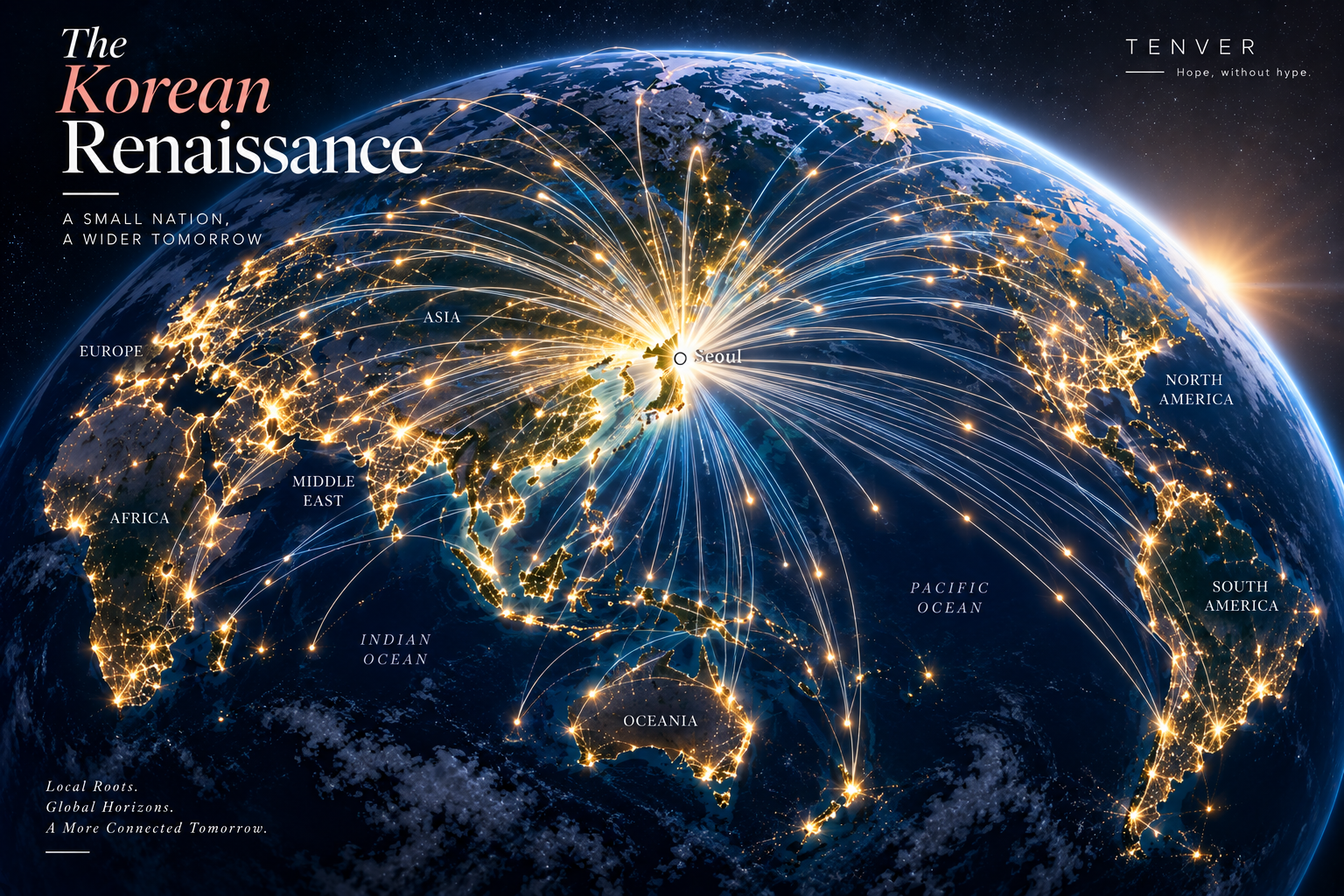
In 1951, the British newspaper The Times questioned whether democracy could take root in a Korea devastated by war. Seventy-five years later, what is happening in Korea? What are the different phenomena unfolding there today? Could a larger pattern already be taking shape—one we have yet to recognize?
On October 1, 1951, as armistice negotiations were under way during the Korean War, The Times of London published an editorial titled “War and Peace in Korea.”
Amid stalled negotiations, the editorial argued that it was time to reconsider whether the United Nations should continue pursuing its goal of a “unified, independent and democratic” Korea. It also expressed deep doubt that stable democracy could take root in Korea given the conditions at the time.
“To hope that a stable democracy will spring from this political dunghill is to expect a rose to grow in a garbage heap.”
Seventy-five years later, the irony of those words is difficult to miss. Yet the judgment should not be dismissed too easily.
The year 1951 was only six years removed from the end of World War II. The Cold War confrontation between the United States and the Soviet Union was rapidly intensifying, and the Korean Peninsula had become one of the places where that conflict was playing out most violently.
Barely liberated from colonial rule, the peninsula was divided and, only a few years later, engulfed in war. Countless people were killed or driven from their homes. The fighting stopped with the signing of the armistice in 1953, but Korea’s economic situation remained dire. In the early 1950s, South Korea’s GNI per capita stood at just $67. Under such conditions, it was not easy to be optimistic about the prospects for stable democracy.
Korea’s future was not a concern for Koreans alone. Young people from many countries had fought in the Korean War, and many had lost their lives. How the war would end, and what kind of future would emerge on the peninsula, had become questions for the international community as well.
In 1951, the world was looking at Korea with one question in mind:
Could democracy truly take root in a society that had endured colonial rule, war, division, and poverty?
The economic transformation of the next seventy-five years alone would make Korea an important case in the history of modern development. Within the span of a single lifetime, a country devastated by war and dependent on foreign aid became a high-income industrial economy.
So, 75 years later, perhaps it is worth looking again at what is happening in a country where even a single rose — democracy taking root — was once thought unlikely to grow.
From Capability to Trust
With limited natural resources, Korea turned early to producing goods for export.
At first, labor-intensive products competing largely on price dominated its exports. Over time, Korea built competitiveness in automobiles, shipbuilding, electronics, semiconductors, and other industries.
But what matters in these more recent changes is not simply that more Korean products are being sold.
Korean semiconductors help underpin the global digital economy. Korean shipyards build high-value vessels such as LNG carriers. Korean automobiles compete in major markets around the world.
In defense and nuclear power, the nature of the choice changes.
Buying a weapons system is not a one-time purchase. It brings with it a long-term relationship involving maintenance, replacement parts, training, and operating systems.
Nuclear power represents another level of commitment.
The Czech Republic’s choice of Korea Hydro & Nuclear Power for the new Dukovany nuclear project means entrusting a Korean company with the construction of a strategic energy project whose development will unfold over decades.
The world is no longer simply buying things made in Korea. It is beginning to entrust Korea with things that matter.
Not Because They Need To, but Because They Want To
Yet another change was taking place somewhere entirely different.
In 2003, Dae Jang Geum—a historical drama set in a sixteenth-century Korean royal palace and centered on food and medicine—reached audiences across Asia and beyond. This was before today’s global streaming environment existed.
In 2012, Gangnam Style spread with astonishing speed to audiences around the world through digital platforms.
BTS later built a vast global fan base, showing that interest in Korean popular culture could endure rather than disappear as a passing craze.
In 2020, Parasite became the first non-English-language film to win the Academy Award for Best Picture. The following year, Squid Game became Netflix’s most-watched non-English-language television series.
Korean-produced culinary content also drew global attention. In 2024, Culinary Class Wars ranked No. 1 on Netflix’s global Non-English TV list for three consecutive weeks.
That same year, novelist Han Kang became the first Korean to receive the Nobel Prize in Literature. Literature written in Korean had traveled through translation to readers around the world—and all the way to the Nobel Prize.
Then another change appeared. Korean culture was beginning to become material for content created outside Korea itself. In 2025, KPop Demon Hunters, produced in the United States by Sony Pictures Animation, placed K-pop and elements of Korean culture at the center of its story and became a global phenomenon.
These changes did not stop with content. Korean cosmetics have found consumers across global markets, while foods such as ramyeon and gim—Korean roasted seaweed—have increasingly become part of everyday consumption abroad.
If the choices we saw earlier in industry were made largely by governments and corporations, here ordinary consumers around the world are seeking out Korean culture and Korean products. They are choosing them not simply out of necessity, but according to their own preferences.
From Watching Korea to Coming to Korea
Some choices go a step further.
Alongside growing exposure to Korea through dramas, K-pop, food, and other forms of culture, more people are also choosing to visit Korea itself.
Other choices require still more time and effort.
The number of people studying Korean around the world has been rising. In 2025, roughly 240,000 people studied Korean through the government-supported King Sejong Institute network, while the number of international students in Korea exceeded 250,000.
There is no reason to assign too much meaning to these numbers. Japan, Germany, France, and other countries host more international students than Korea, and the reasons people learn Korean cannot be reduced to an interest in Korean popular culture.
Still, learning a language requires an investment of time and effort. Studying in another country demands even more—time, money, and opportunity cost.
Taken one by one, each of these phenomena unfolding around the world can be explained on its own. But place them side by side, and a different question emerges.
It is like pointillism: up close, the individual dots may seem meaningless. Step back, and an image that had gone unnoticed begins to appear.
Why are such different changes involving Korea appearing at roughly the same time? Do they merely happen to overlap? Or is a larger pattern already taking shape—one we have not yet seen?
Perhaps These Stories Should Not Be Connected
The fact that several unrelated changes happen to involve the same country does not make them a single historical phenomenon. To treat them as a single phenomenon requires a more demanding standard.
And yet, if choices made in different markets, for different reasons, repeatedly point to the same place, the story changes.
Korea.
In One Garden?
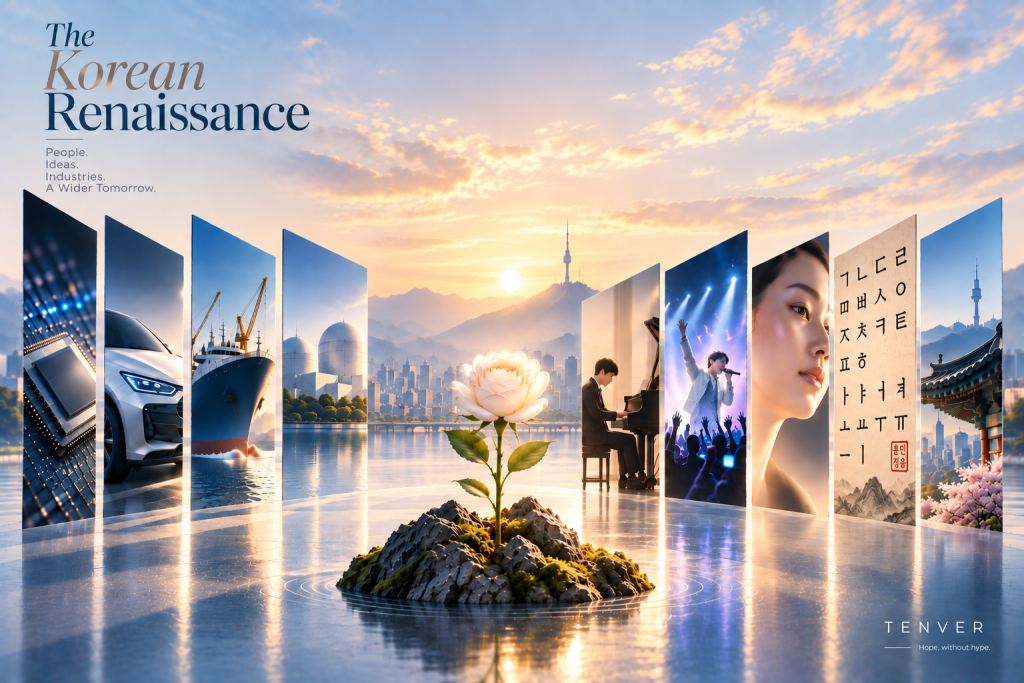
In 1951, The Times compared Korea to a wasteland in which a rose could scarcely be expected to grow. Seventy-five years later, if we borrow that metaphor once more, the question is no longer simply whether a single rose has bloomed there. Different kinds of flowers are now appearing together in the same garden.
From here, however, we need to shift our perspective.
How should we understand a Korea in which different flowers are blooming at the same time?
First, an important distinction. We are not asking what caused these changes or how they were produced. We are asking what is happening in this garden now, and how it is unfolding. In other words, this is a question about the phenomenon, not its causes.
That means several things need to be established.
First, are these changes actually appearing across multiple fields? Second, have they persisted rather than disappearing as temporary phenomena? Finally, are changes that began in different fields remaining confined to those fields, or are they expanding beyond them and beginning to intersect?
We need to answer these three questions in order to judge whether the changes that seem scattered around us are simply separate developments occurring at the same time, or whether they are related phenomena.
The first two questions are relatively clear from the cases we have seen. The last requires a closer look.
By connection, we do not mean that a change in one field directly causes a change in another. What we are asking is whether changes that began in different fields are moving beyond their original domains, expanding into others, and beginning to intersect along the way.
This matters because such movement may offer an important clue to whether the changes we see today will remain temporary or continue into the future. If such movement continues to appear across multiple fields, we have grounds for judging that these are not merely individual changes coinciding by chance, but part of a larger pattern.
In some areas, this movement is already visible. Interest in Korean culture is extending into the consumption of products such as food and cosmetics, visits to Korea itself, and the study of Korean. Interest that began with K-pop and the screen is expanding into different kinds of behavior—consumption, travel, and language learning. And works such as KPop Demon Hunters show that Korean culture is becoming source material for creators outside Korea.
A similar expansion can be seen in industry. Trust built over decades in Korean technology and quality through automobiles, electronics, and other products has helped provide a foundation for Korea to be chosen in fields that demand deep technical capability and long-term cooperation—from semiconductors and shipbuilding to defense and nuclear power.
None of this means that every change began from a single cause, or that all of them are directly connected. What matters is that some movements that began independently have already moved beyond their original domains and begun to intersect.
If, after examining these three conditions, we step back and see a larger pattern taking shape, how should we understand it? And beyond that, what should we call it?
The Names We Already Have
Korea’s industrialization and economic growth have been called the “Miracle on the Han River.” The global spread of Korean popular culture has been given the name Hallyu, or the Korean Wave. Korea’s international influence through culture and values has been described through the concept of soft power, while the image and reputation Korea has built in the world have been discussed in terms of nation branding.
These names and concepts describe Korea’s changes individually. Even these four, taken together, do not fully explain the range of phenomena involving Korea today.
So perhaps another name is needed—one that allows us to see them together. A new name can help us recognize movements that once seemed scattered as parts of a larger pattern.
This Is Not Unique to Korea
Are the changes we have seen really unique to Korea?
Japan offers one of the closest comparisons. Japanese automobiles and electronics have been highly regarded in world markets for decades, while anime and Japanese food have become deeply embedded in global culture.
There are other examples as well. Germany emerged from the ruins of war as a prosperous democracy. Taiwan developed democracy while becoming a central part of the global semiconductor supply chain. Singapore became a global center of trade, logistics, and finance within a generation.
If the argument of this essay were that Korea had entered a golden age, these examples would pose a serious challenge to that claim.
Korea, after all, faces population decline and aging, social conflict and inequality, political polarization, pressure from industrial competition, and geopolitical risk—all at the same time.
But the argument here is not that Korea has been more successful than other countries.
Our interest lies in the phenomena involving Korea today: how they are expanding, where they intersect, and how these movements may continue.
Across the cases we have seen, movements that began in different fields are reaching beyond their original boundaries and beginning to intersect. And they have continued over a substantial period of time rather than remaining confined to one or two areas.
Naming History While It Is Still Unfolding
In 1941, while America’s global role was still taking shape, Henry R. Luce gave his argument a name.
The American Century.
Luce was not simply observing a phenomenon unfolding in the United States. He was making an argument about the role America should play in the world. Drawing on American economic and political power, he urged the country to move beyond isolationism and assume a more active international role.
Our purpose differs from Luce’s intent. We are not arguing about what Korea should do. We are observing the phenomena involving Korea and asking what larger pattern may be emerging from them.
If the changes we have seen have endured over time, expanded into different fields, and begun to intersect, then we must go one step further.
At some point, observation requires judgment.
Can these phenomena now be seen as part of a pattern too substantial to ignore? And if so, what should we call it?
Still, naming a phenomenon while it is unfolding requires caution. A temporary change can be mistaken for a historical turning point. Yet, as Luce’s example shows, some names are proposed while change is still under way.
Living in the midst of an era is a reason for caution. It is not necessarily a reason for silence.
TENVER therefore proposes a name.
The Korean Renaissance.
Why Renaissance?
Here, Renaissance means “rebirth.”
The European Renaissance involved the rediscovery and revival of the culture and ideas of antiquity. In that sense, what is happening in Korea today differs from the European Renaissance.
What we mean by this term is not a revival of the culture and ideas of the past, but rebirth in its most literal sense—being born anew.
Korea’s transformation over the past seventy-five years cannot be explained by economic growth alone. A country that once lay in the ruins of war built an industrial economy and a democratic society, and has now emerged as a place whose technology, culture, and even language are being chosen around the world.
This essay calls this rebirth—the emergence of a Korea qualitatively different from the Korea of the past—a Renaissance.
The name is not a conclusion. It is a proposal.
The Rose and the Garden, Once More
Could a rose called democracy ever bloom from the ruins? That was the doubt The Times expressed about Korea. But the flower did bloom. It was a flower born of a struggle for democracy in which blood was shed.
Look at that once-ruined ground today, and a garden comes into view, with many different flowers growing together.
For seventy-five years, Korea has continued to transform, offering its own answer to the doubt.
The Korean Renaissance.

Sources & Further Reading
- The Times — “War and Peace in Korea,” October 1, 1951, p. 5. The Times Digital Archive. Original consulted by TENVER.
- United Nations General Assembly — Resolution 376(V), “The Problem of the Independence of Korea,” 1950.
- United Nations — Korean Armistice Agreement / Security Council records, 1953.
- World Bank — Republic of Korea overview, including GNI per capita of $67 in the early 1950s.
- Korea Ministry of Trade, Industry and Energy — Official industrial and export data, including shipbuilding and LNG-carrier milestones.
- Czech Ministry of Industry and Trade — Official documentation on the Dukovany nuclear project and KHNP.
- Nobel Prize — Han Kang, Nobel Prize in Literature 2024.
- King Sejong Institute Foundation — Official statistics on the global King Sejong Institute network and learners.
- Study in Korea / Ministry of Education — Official statistics on international students in Korea.
- Joseph S. Nye Jr. / Harvard Kennedy School — Background on the concept of soft power.
- WIPO — Background on nation branding.
- Henry R. Luce — “The American Century,” LIFE, February 17, 1941. Original article consulted by TENVER.
- The Metropolitan Museum of Art — Historical background on the Renaissance and the rediscovery of classical antiquity.
- Korea Democracy Foundation — Historical background on Korea’s democratization movement.
답글 남기기